
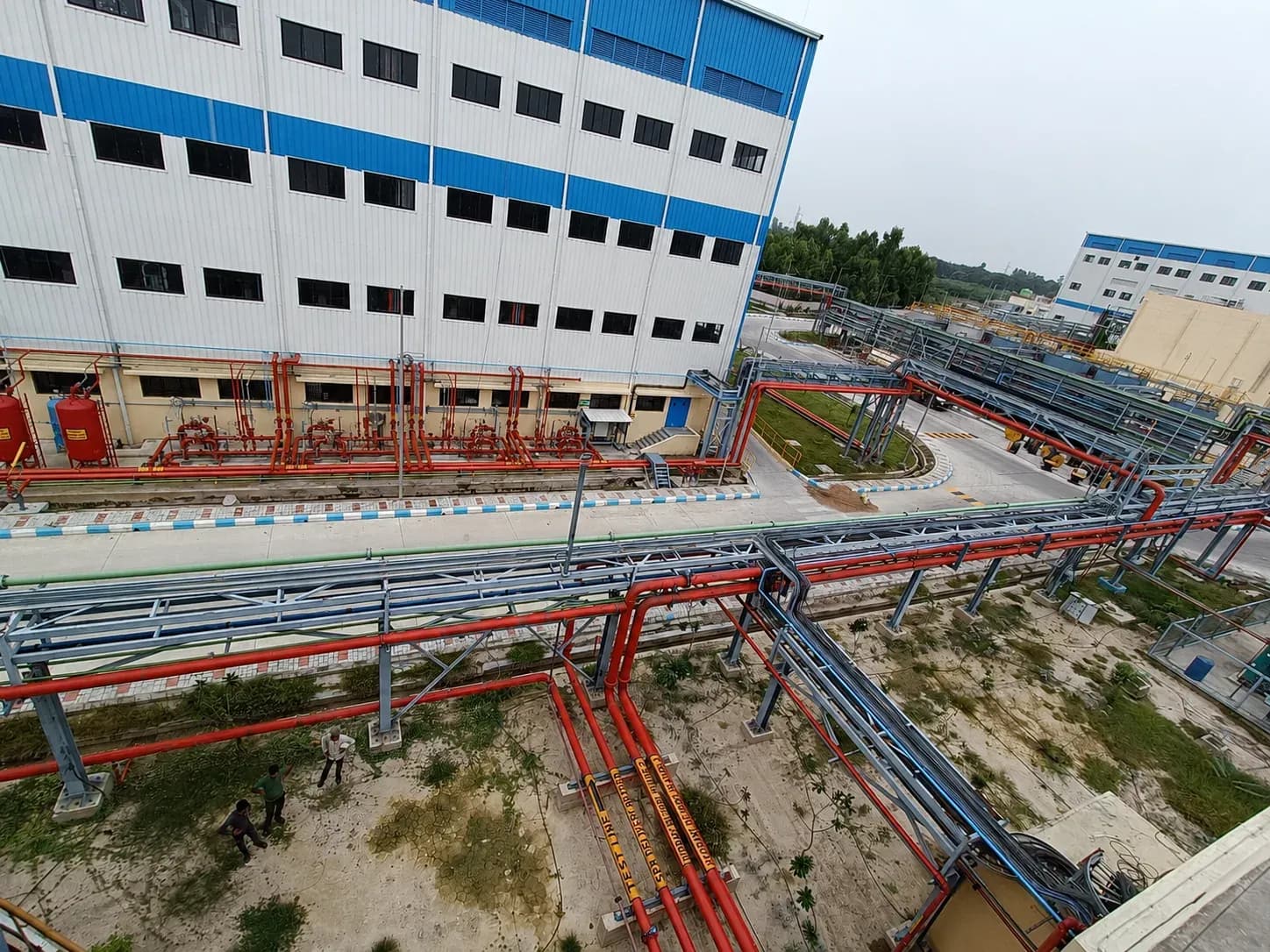
Fire Hydrant System
A pumped ring main held at pressure, with hydrants, monitors and hose stations spaced so every part of the plant can be reached — the water supply every other system relies on.
At a glance
- Governing standard
- NFPA 24
- Designed to
- NFPA 24, OISD-STD-117, IS 13039, OISD-STD-116, NBC 2016 Part 4
- Equipment source
- Our own works
How it works

A hydrant system is the water supply that everything else leans on: a pumped ring main held at pressure, with hydrants, monitors and hose stations spaced so that any point of the plant can be reached by two streams from different directions.
The ring is the important part. Sectional valves let a damaged length be isolated without losing supply to the rest of the site, which is why a ring is specified over a branched main wherever the layout allows it. Pump sets are sized for the largest single risk plus a hose allowance, with a jockey pump holding standby pressure so the main pumps only start on a real demand.
Main components
- The fire water reservoir and pump house.
- The ring main, with sectional valves.
- Hydrant valves, hose boxes with hoses and branch pipes.
- Water monitors for large-volume streams at tanks, gantries and process units.
Testing and maintenance
- Run the pumps routinely, and test flow and pressure at hydrants and monitors periodically.
- Operate every hydrant and sectional valve so none seizes.
- Inspect hoses and branch pipes, and keep hose boxes complete.
| Outlet | Use |
|---|---|
| Single-headed hydrant | One hose stream at a point |
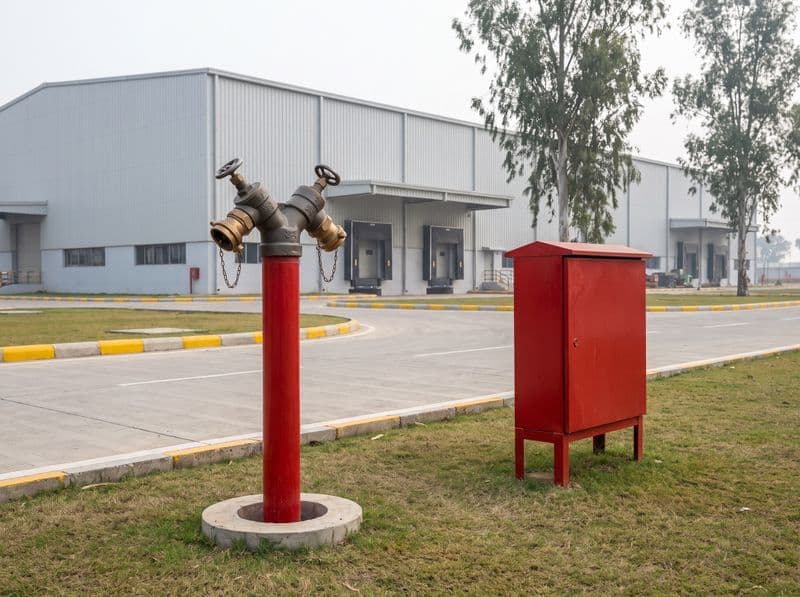
| Double-headed hydrant | Two hose streams from one riser |
| Water monitor | A large, fixed-position stream for tanks, gantries and process units, manned or remote-operated |
| Hose reel | First-aid firefighting by site staff |
Scope we take
- 1
Design
Ring main layout, hydrant and monitor spacing, the water demand of the largest risk, and pump and reservoir sizing.
- 2
Procurement
Pipe, isolation valves, hydrant valves, monitors, hose boxes and fittings.
- 3
Installation
The ring main above or below ground — wrapped and coated where buried, with thrust blocks at bends — and the hydrants and monitors along it.
- 4
Testing
Hydrostatic test of the network and flushing before anything is connected.
- 5
Commissioning
Flow and pressure tests at hydrants and monitors, with the pumps running as they would in a fire.
- 6
Handover
As-built drawings, test records and operating and maintenance manuals, with training for the people who will run the system.
Equipment used
Grooved Fittings · 15
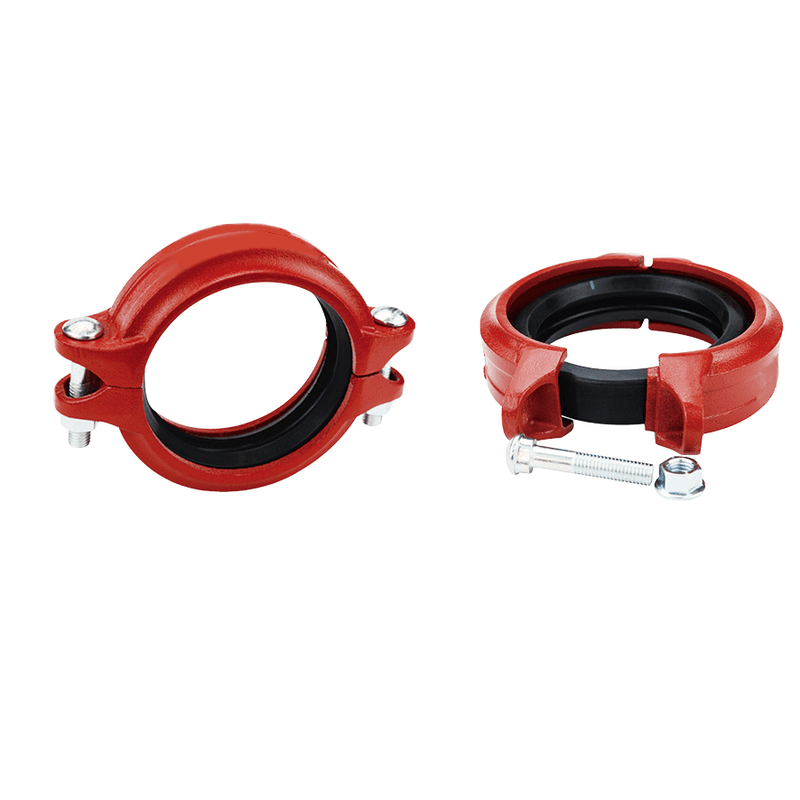 Tyco make

Standard Duty Rigid Coupling
300 psi rating, 25 to 300 mm
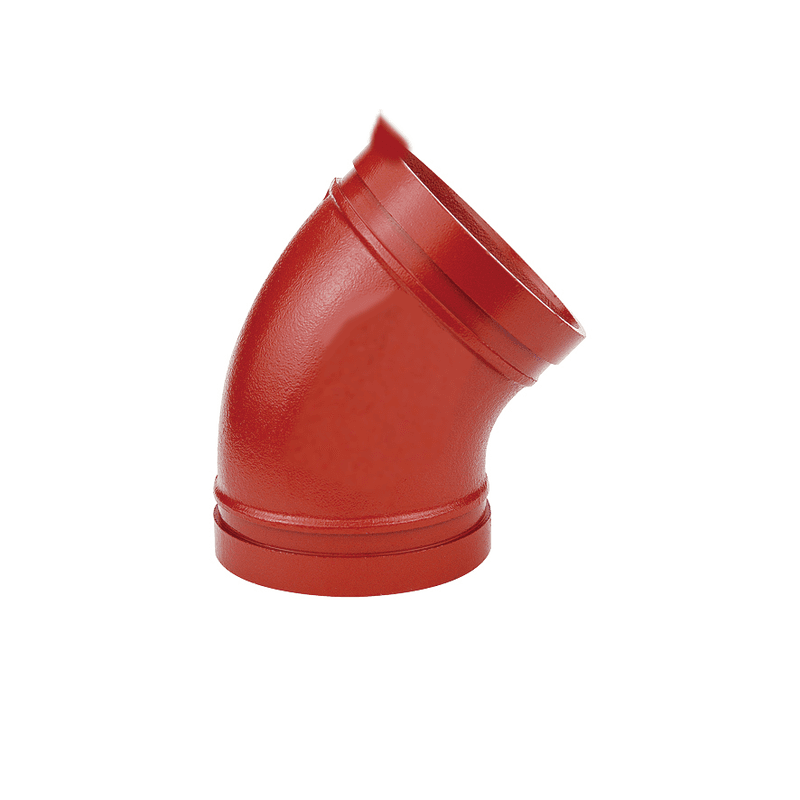 Tyco make
45 Degree Elbow
Grooved both ends, 25 to 300 mm
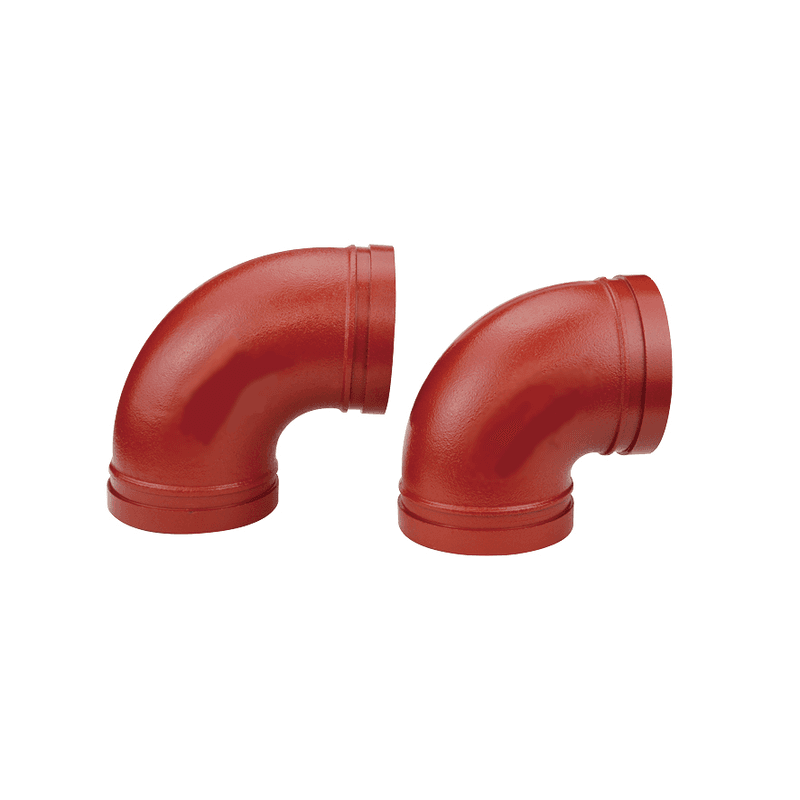 Tyco make
90 Degree Elbow
Grooved both ends, 25 to 300 mm
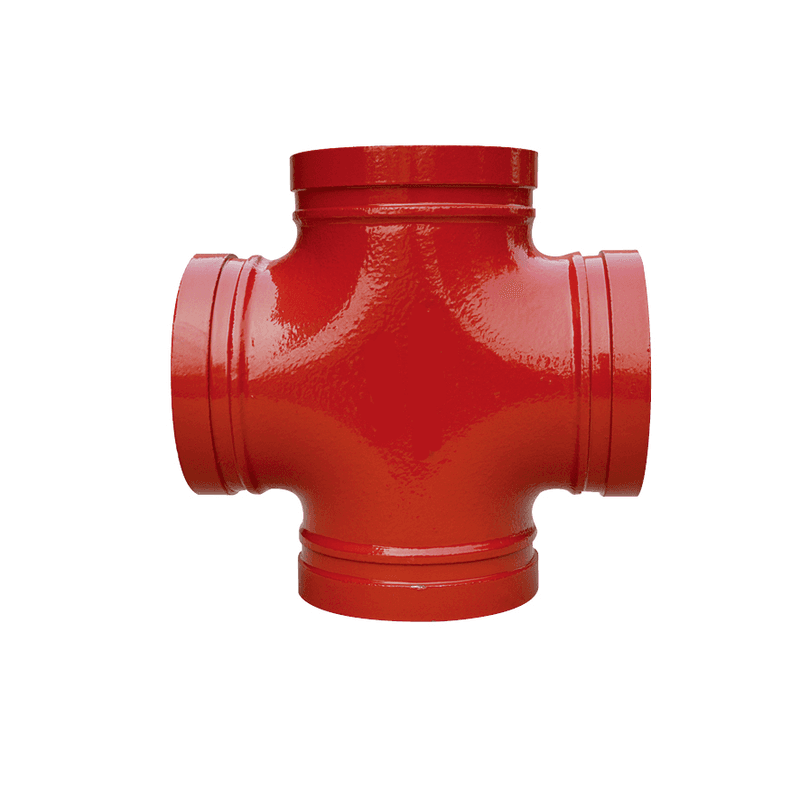 Tyco make
Cross Outlet Grooved
Four-way, grooved, 25 to 200 mm
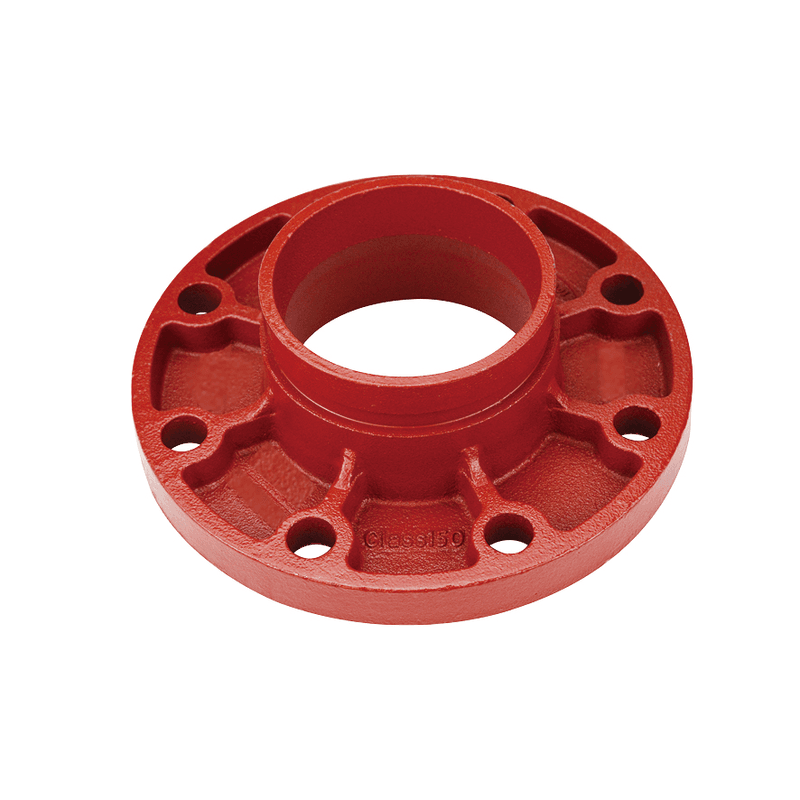 Tyco make
Flange Adaptor Class 150
Grooved to ANSI Class 150 flange, 25 to 300 mm
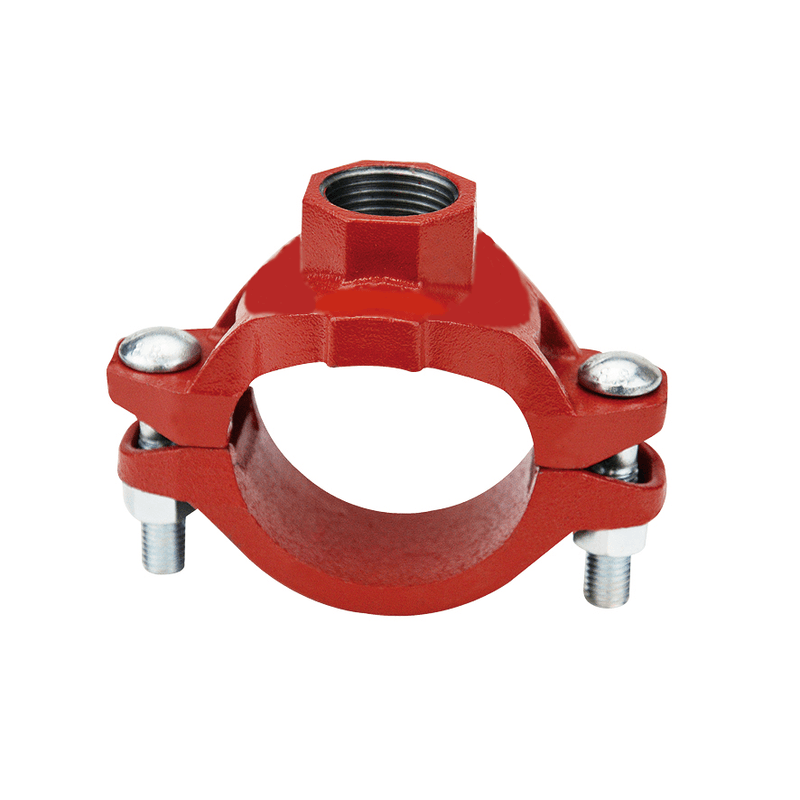 Tyco make
Outlet Threaded
Grooved run, threaded branch, 25 to 200 mm
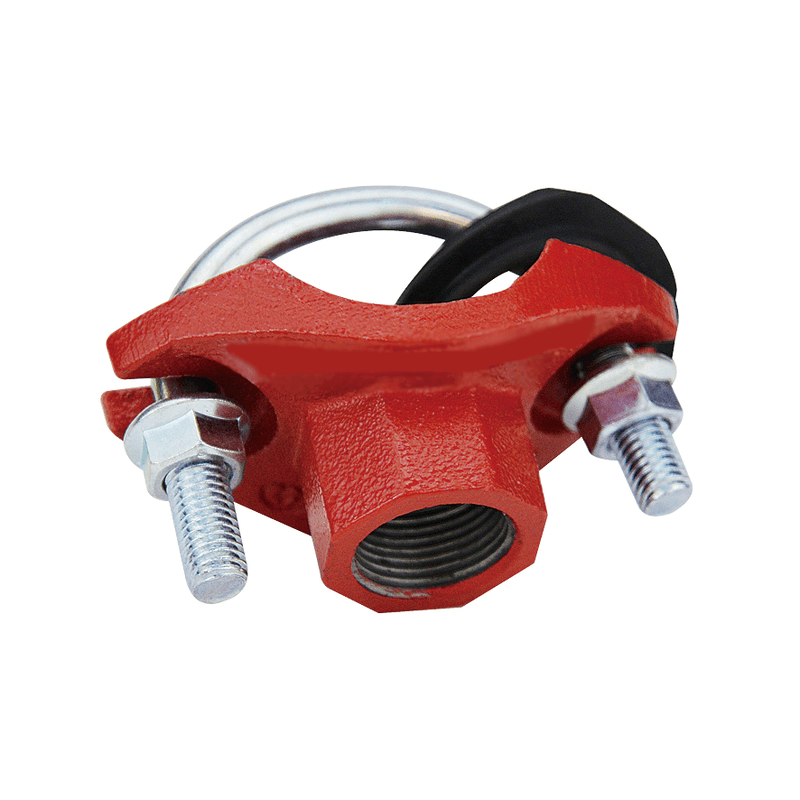 Tyco make
U-Bolt Outlet Threaded
U-bolt clamp, threaded branch, 25 to 200 mm
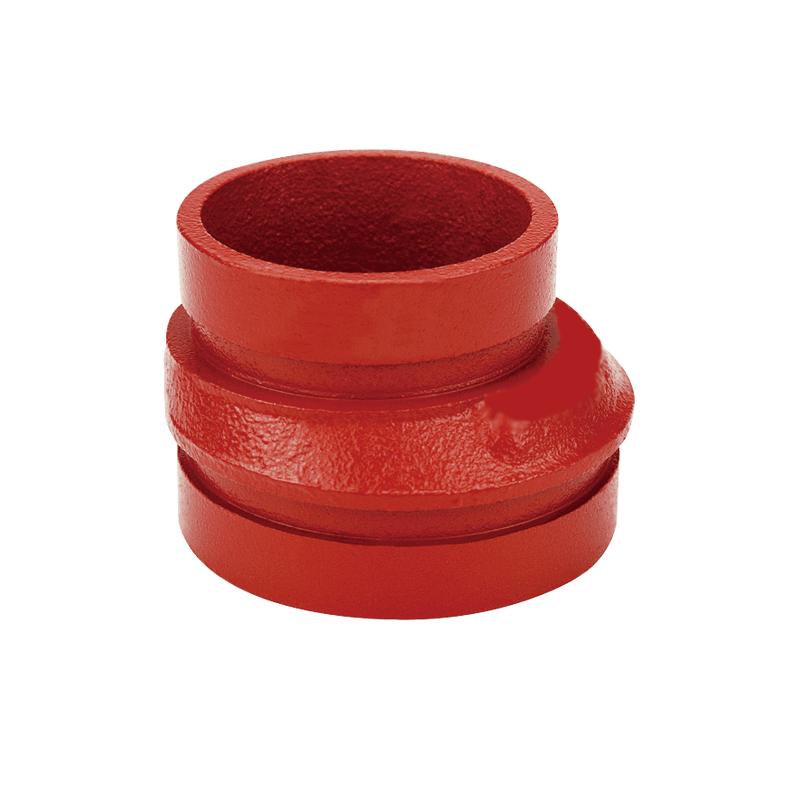 Tyco make
Grooved Eccentric Reducer
Flat bottom, grooved, 50 × 40 to 300 × 200 mm
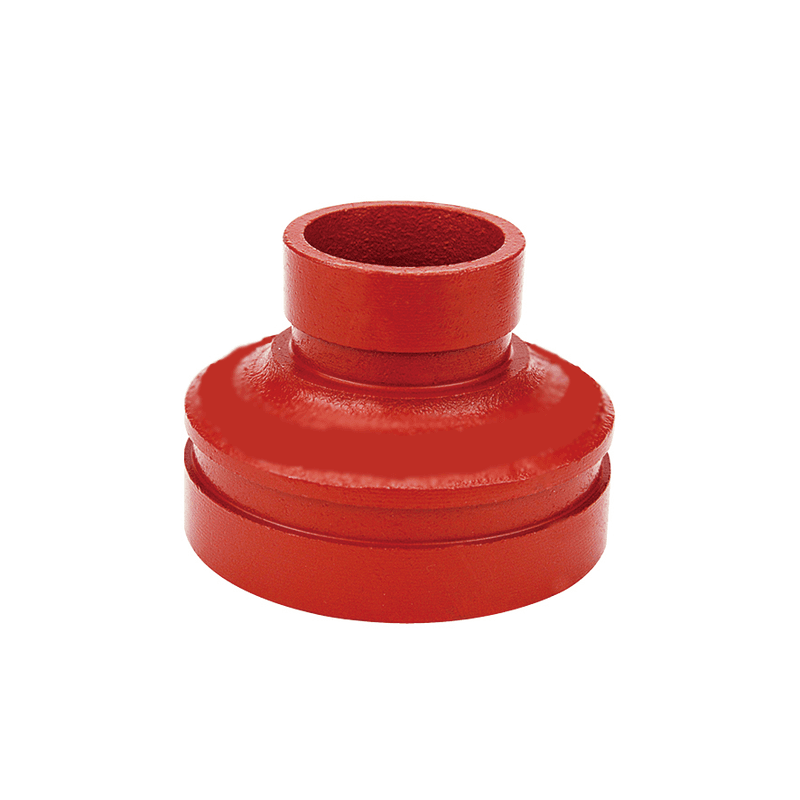 Tyco make
Reducer Grooved
Concentric, grooved, 50 × 40 to 300 × 200 mm
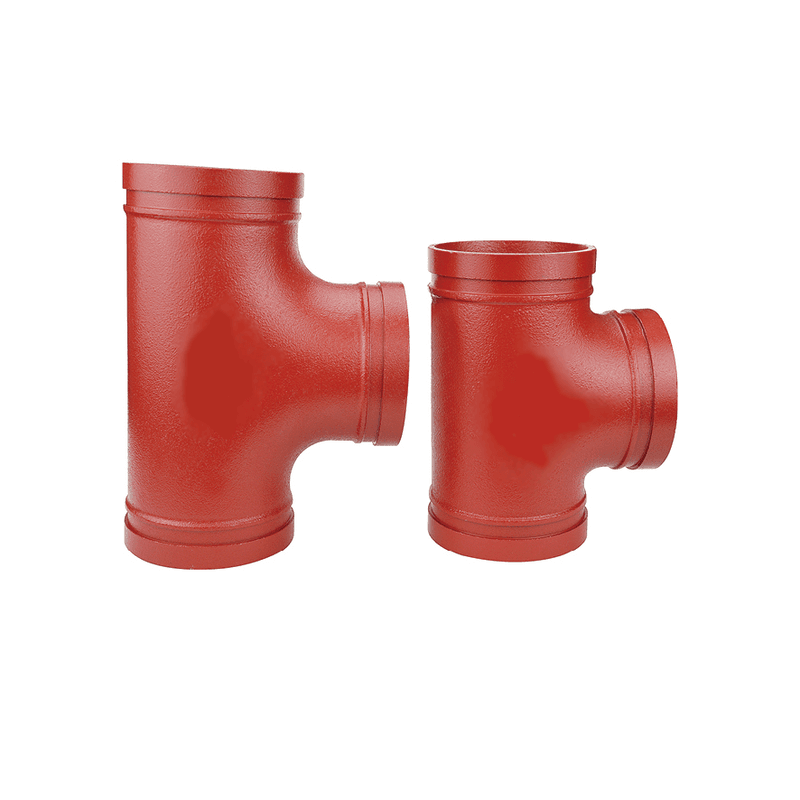 Tyco make
Grooved Tee
Equal tee, grooved, 25 to 300 mm
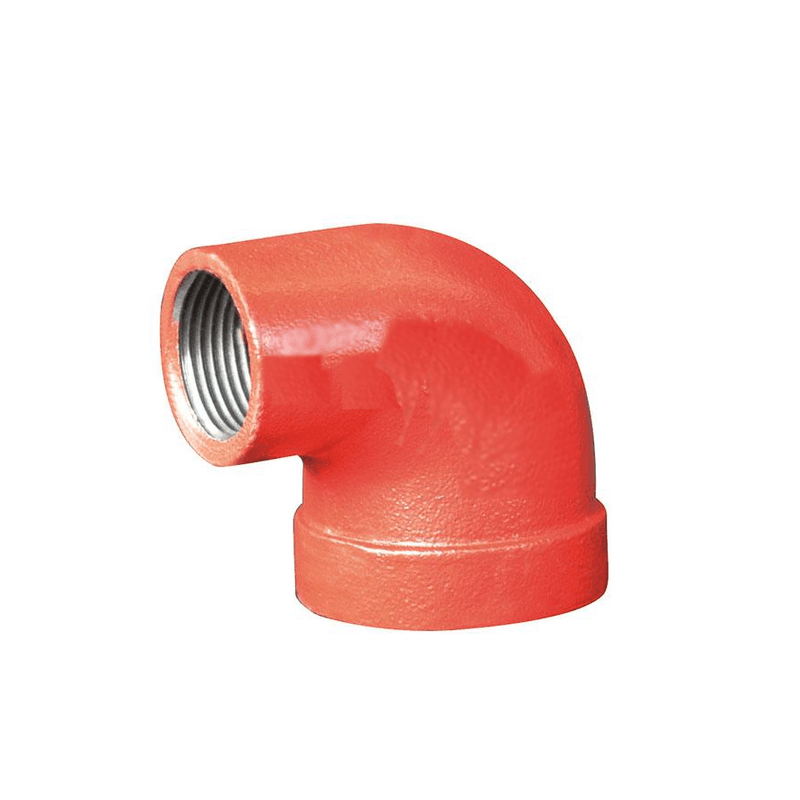 Tyco make
Thread 90 Degree Reducing Elbow
90°, NPT or BSP threaded, 15 to 100 mm
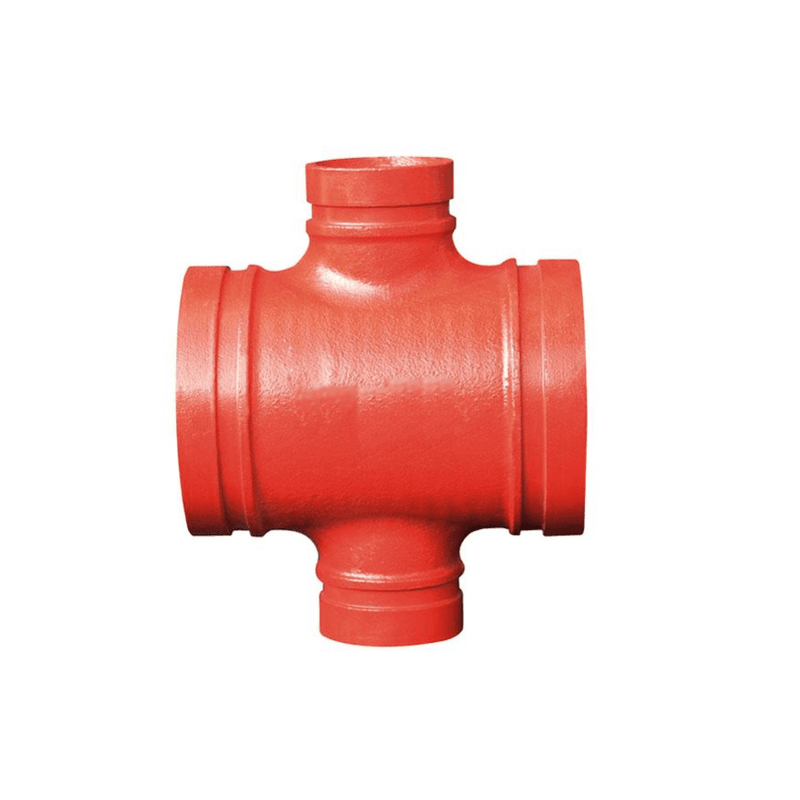 Tyco make
Reducing Cross
Four-way, grooved all ends
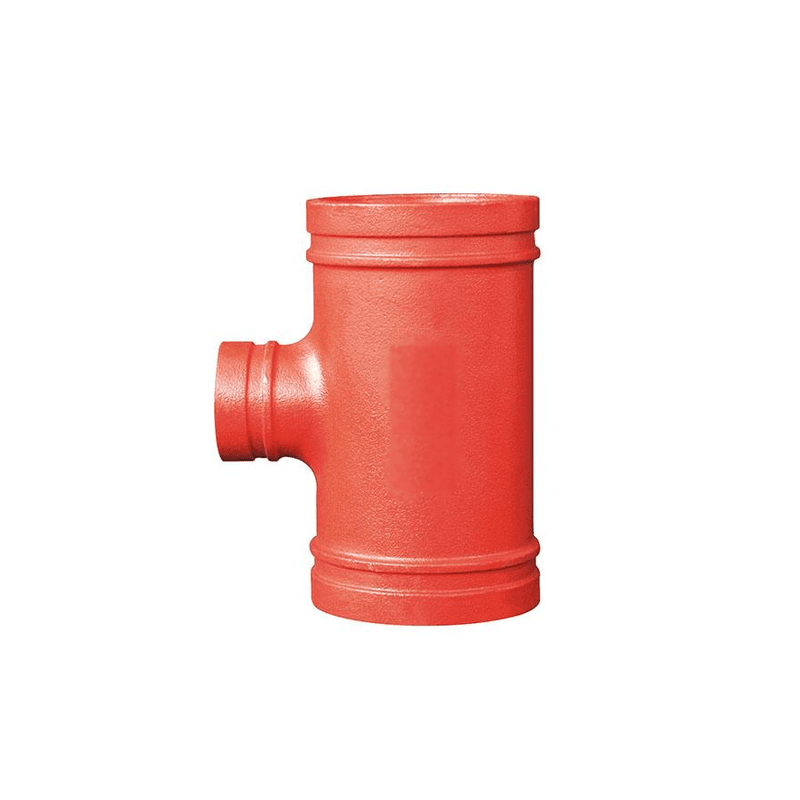 Tyco make
Grooved Reducing Tee
Grooved, 50 × 25 to 300 × 200 mm
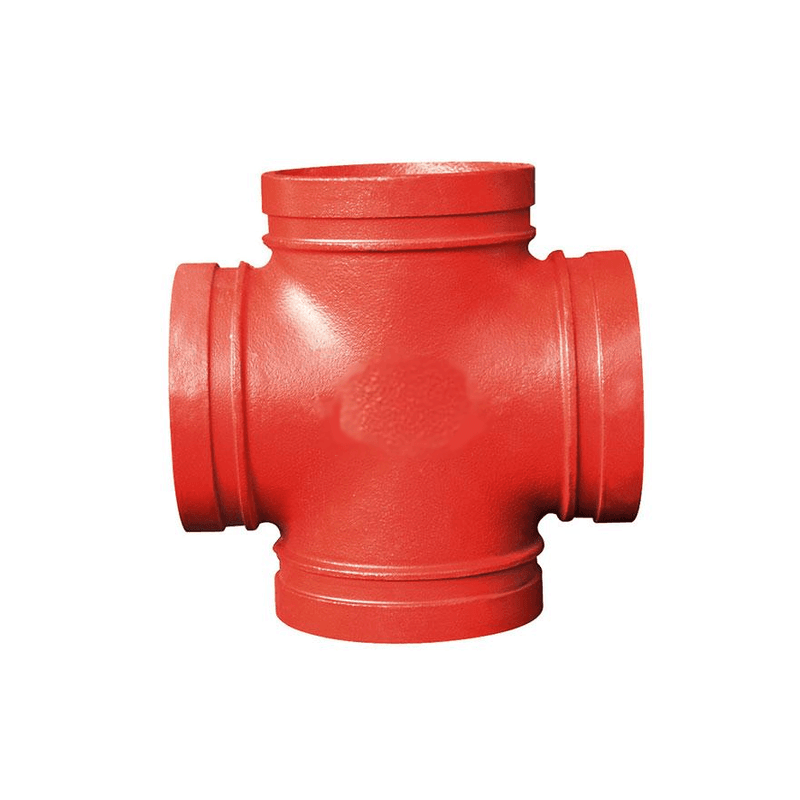 Tyco make
Equal Cross
Grooved all four ends, 25 to 200 mm
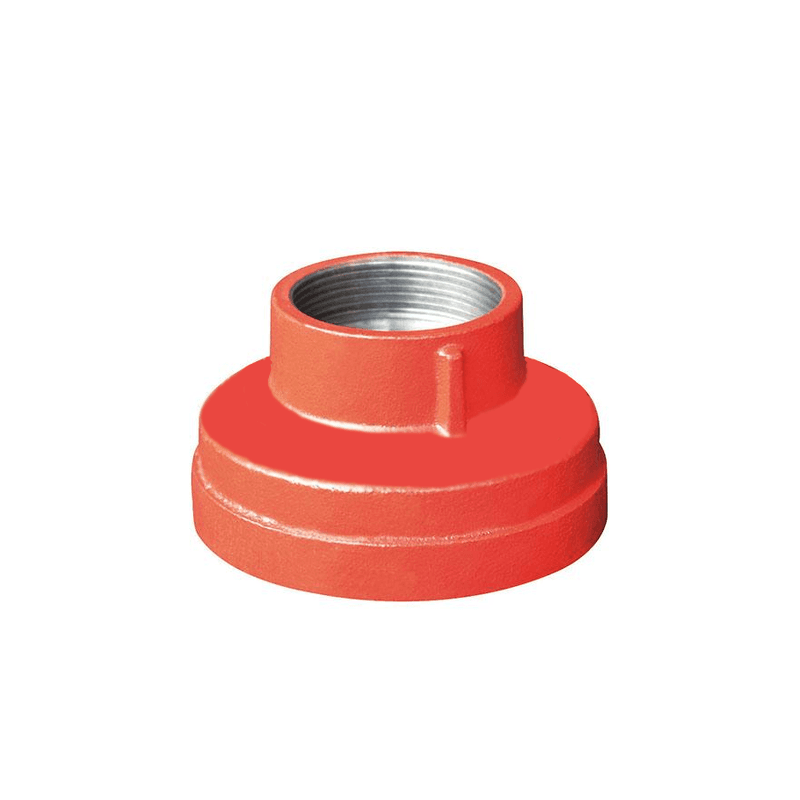 Tyco make
Threaded Concentric Reducer
NPT or BSP threaded, 15 to 100 mm
Strainers · 6
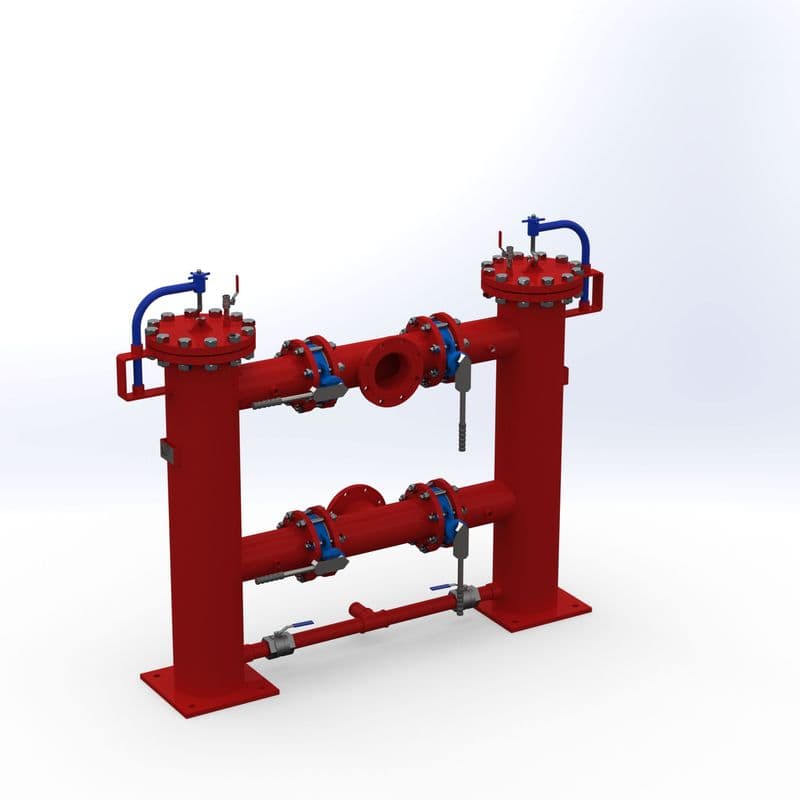
Fabricated Duplex Strainer
Twin baskets, cleaned without shutting down
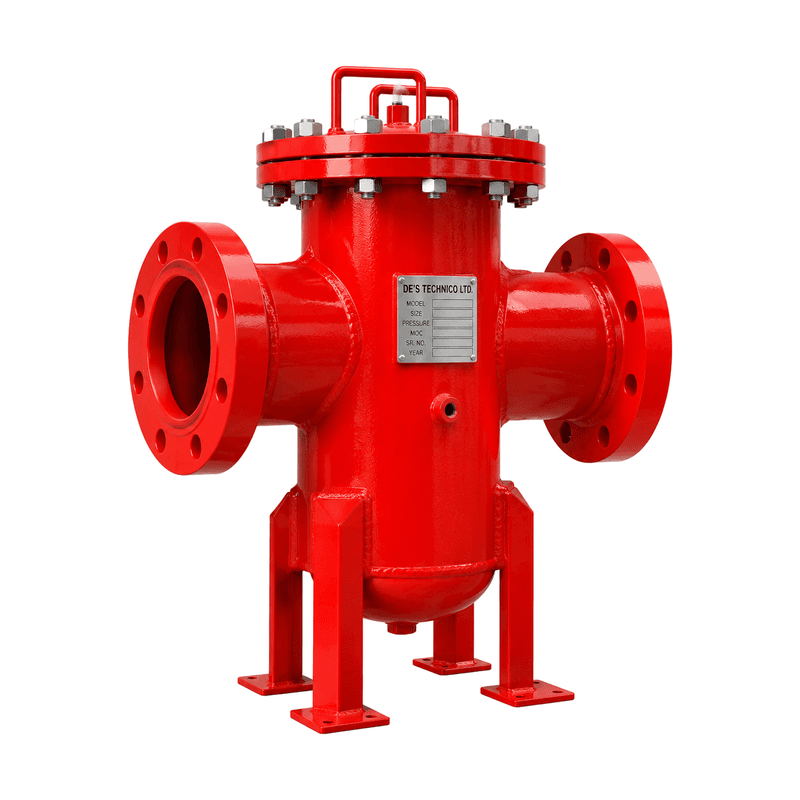
Fabricated Basket Strainer
Top-removal basket, 2" to 24"
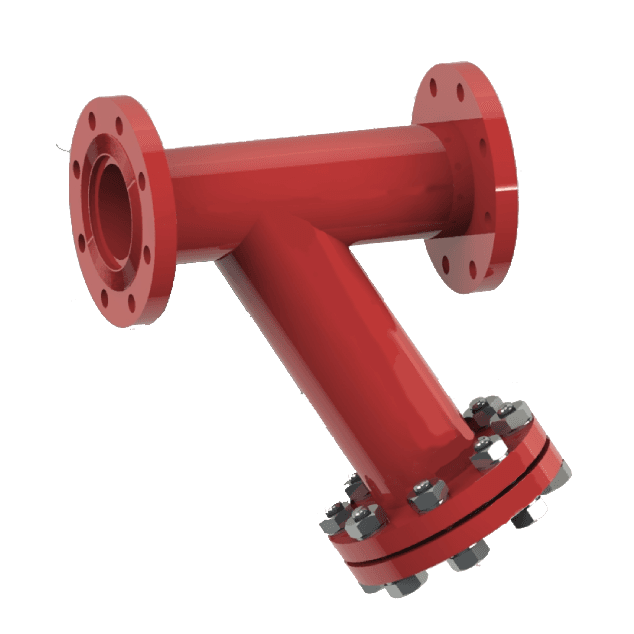
Fabricated Y Strainer
1" to 24", ASME Class 150 to 2500
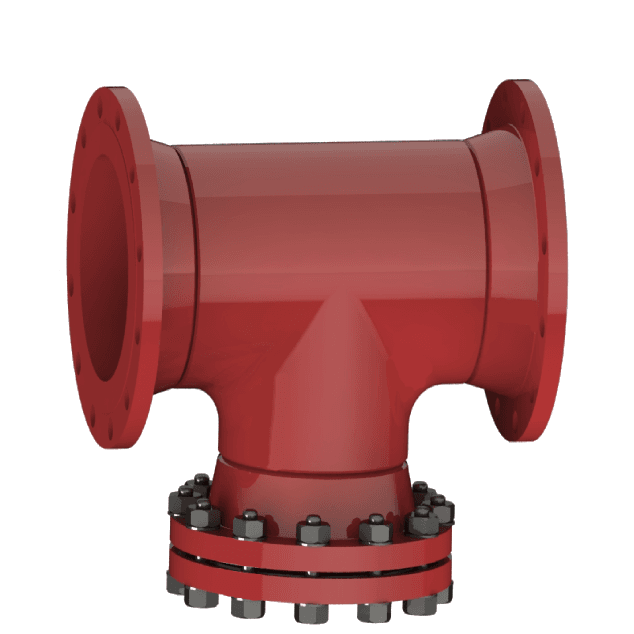
Fabricated Tee Strainer
Graded filtration, 2" to 24", ASME 150 to 600
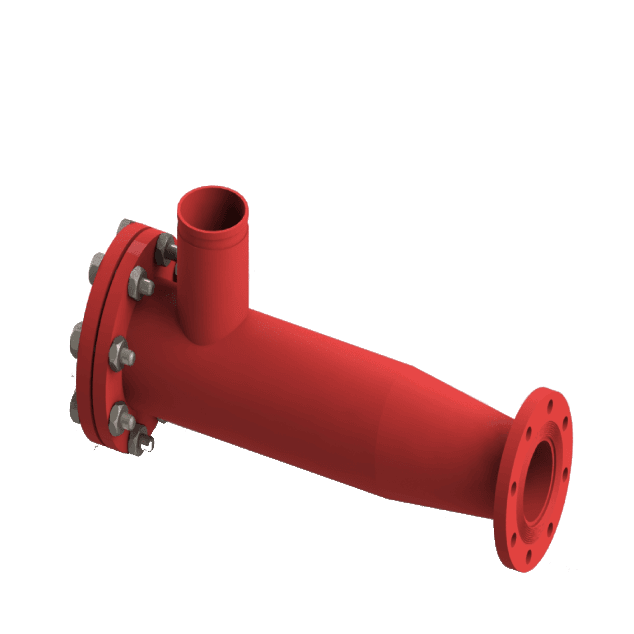
Fabricated Inline Strainer
Inline, 15 to 150 mm, 40 to 100 mesh
Strainer
Y-type, 1" to 24", threaded, socket weld or flanged
Standards
- NFPA 24Private fire service mains and their appurtenances.
- OISD-STD-117Fire protection facilities for petroleum depots and terminals.
- IS 13039External hydrant systems — provision and maintenance.
- OISD-STD-116Fire protection facilities for refineries and oil and gas processing plants.
- NBC 2016 Part 4Fire and life safety in buildings.
| Parameter | Figure | Source |
|---|---|---|
| Residual pressure at the hydraulically remotest point | 7 kg/cm² | OISD-STD-116 / OISD-STD-117 |
| Fire water storage | 4 hours at the design flow | OISD-STD-116 / OISD-STD-117 |
| Hydrant spacing | 30 m in hazardous areas, 45 m in non-hazardous areas | OISD-STD-116 / OISD-STD-117 |
| Distance of hydrants and monitors from the hazard | At least 15 m | OISD-STD-117 |
Service and maintenance
A fire protection system only performs if it is kept in the condition it was commissioned in. Inspection, testing and maintenance to the intervals the code sets — under an annual maintenance contract or as a single visit.
| Task | Interval | Reference |
|---|---|---|
| Inspect hydrants, hose boxes, hoses and branch pipes | Monthly | IS 13039 |
| Operate hydrant and sectional valves | Quarterly | NFPA 25 |
| Flow test at hydrants and monitors | Annually | NFPA 25 |
| Hydrostatic test of hoses | Annually | IS 13039 |
Images · 7
Fire hydrant ring main across a plant
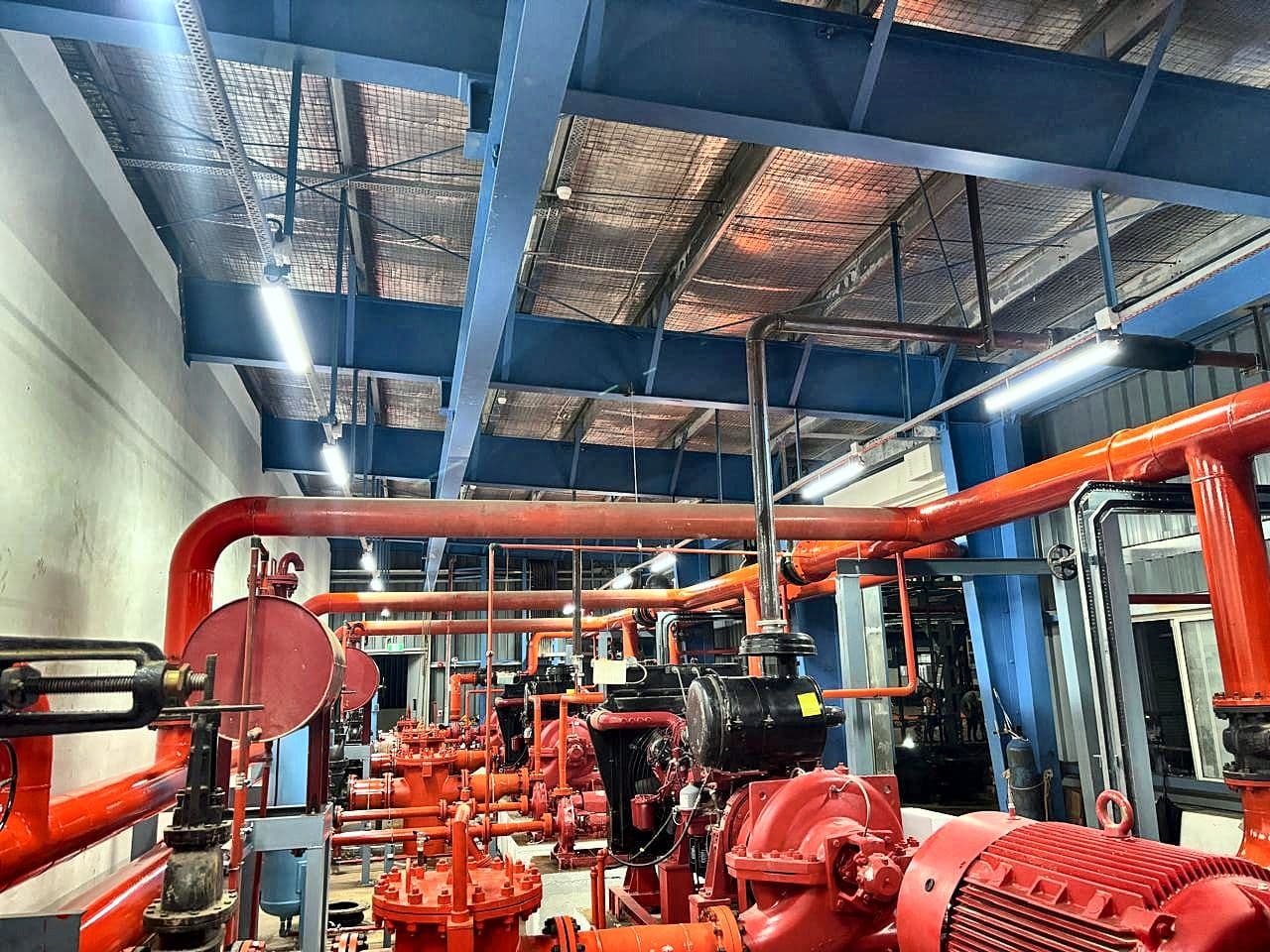
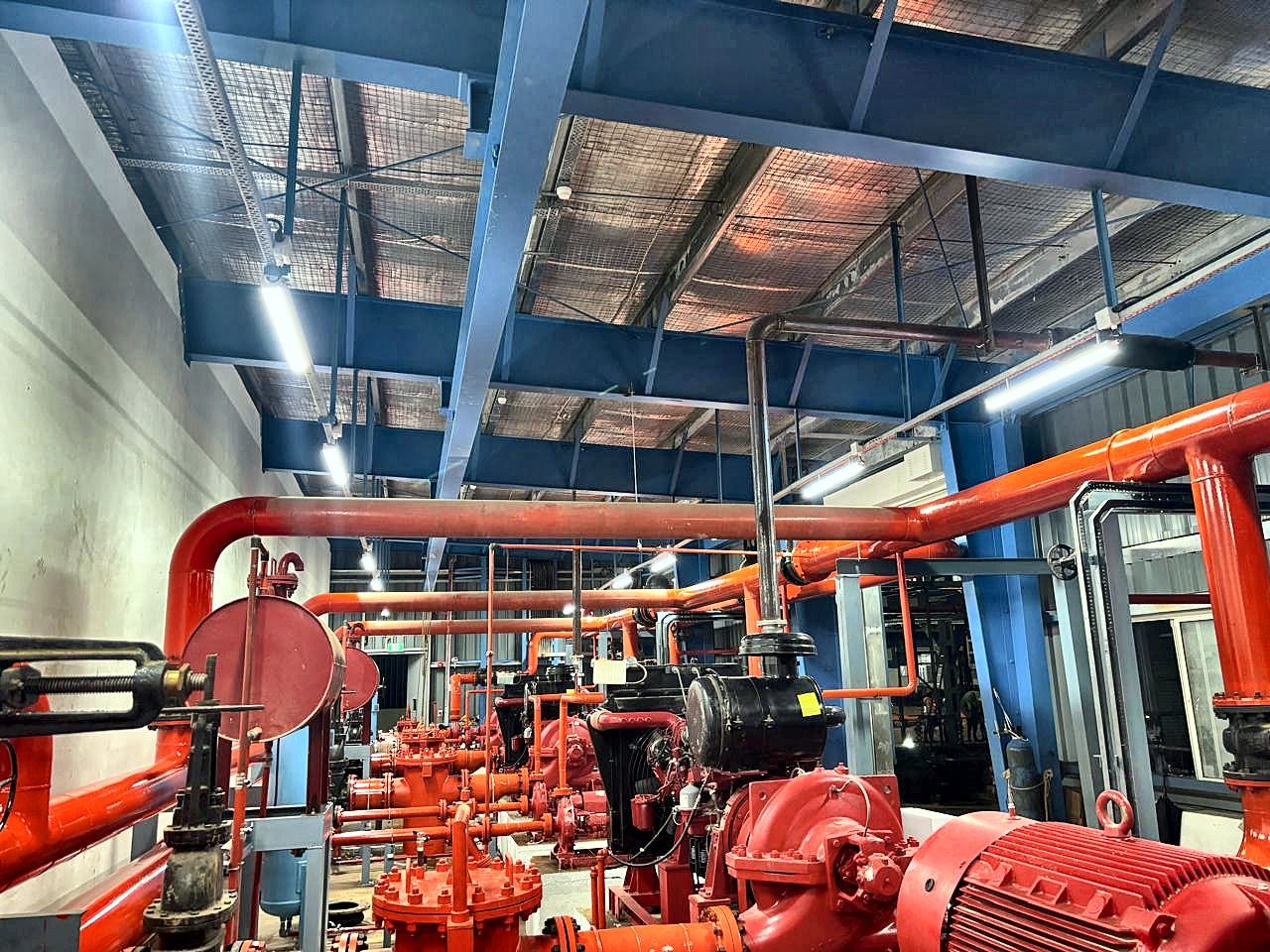
Fire water pump house with pumps, strainer and header piping
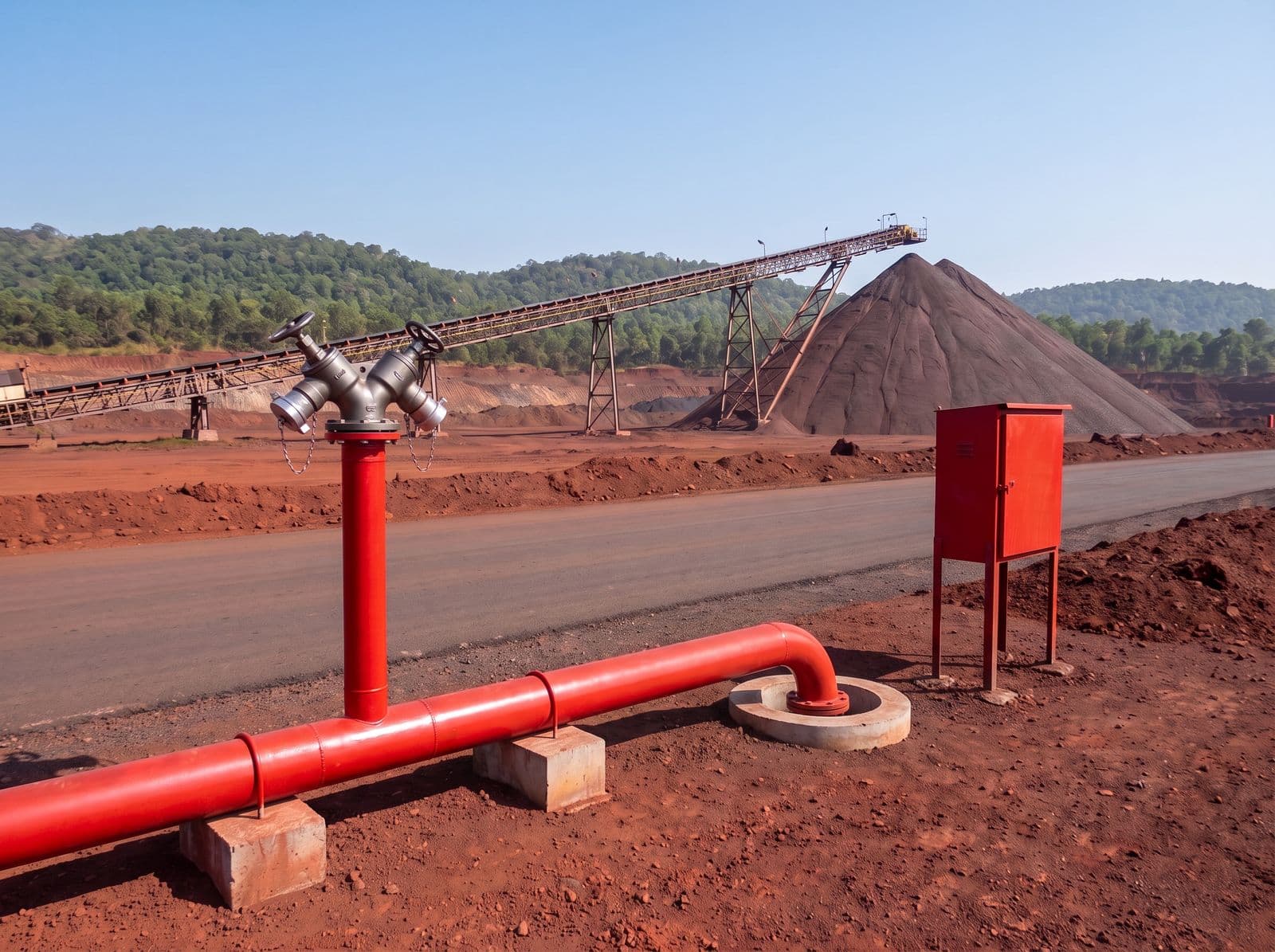
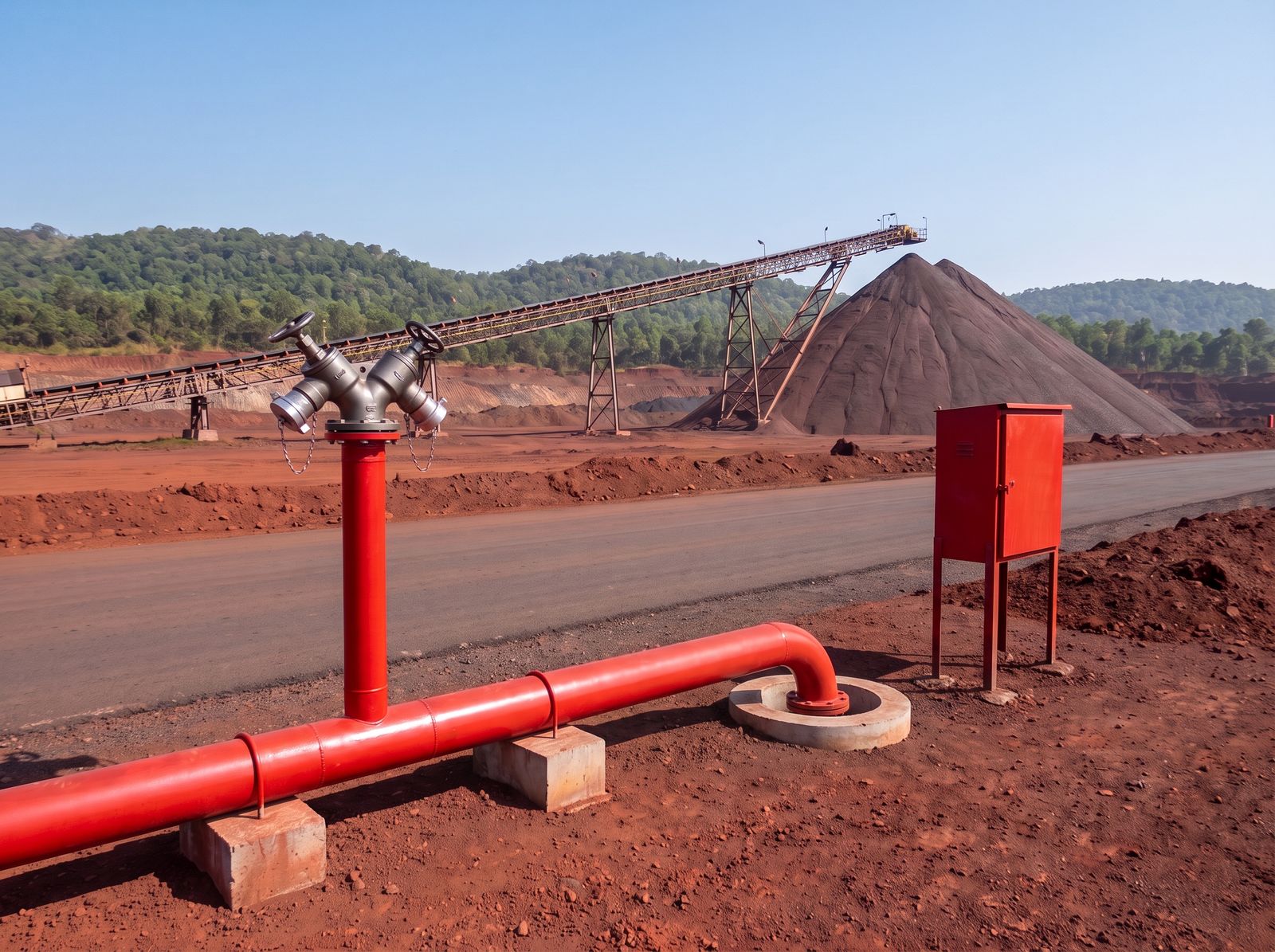
Stand-post hydrant with a double-headed landing valve and hose box beside an iron ore mine road
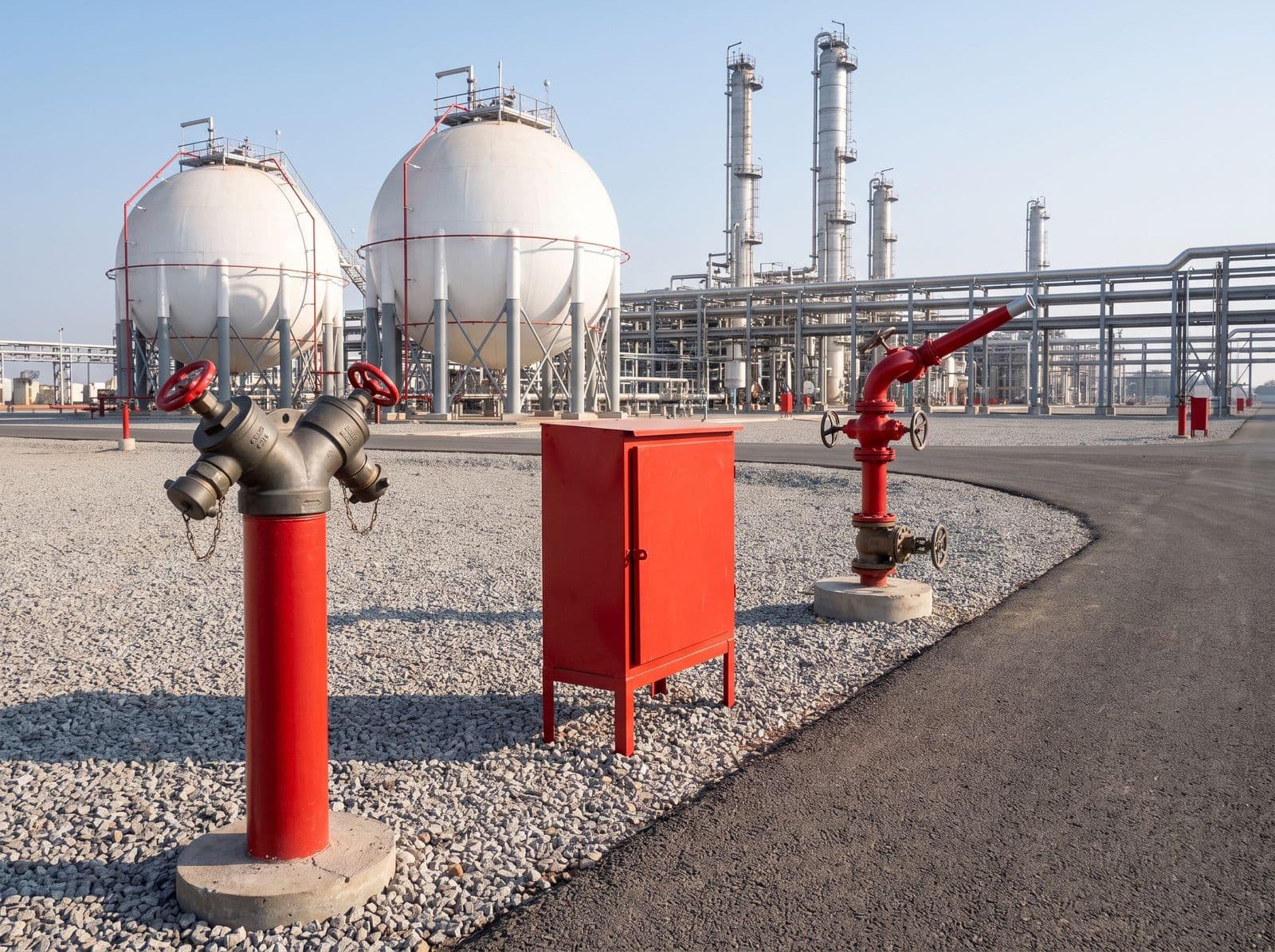
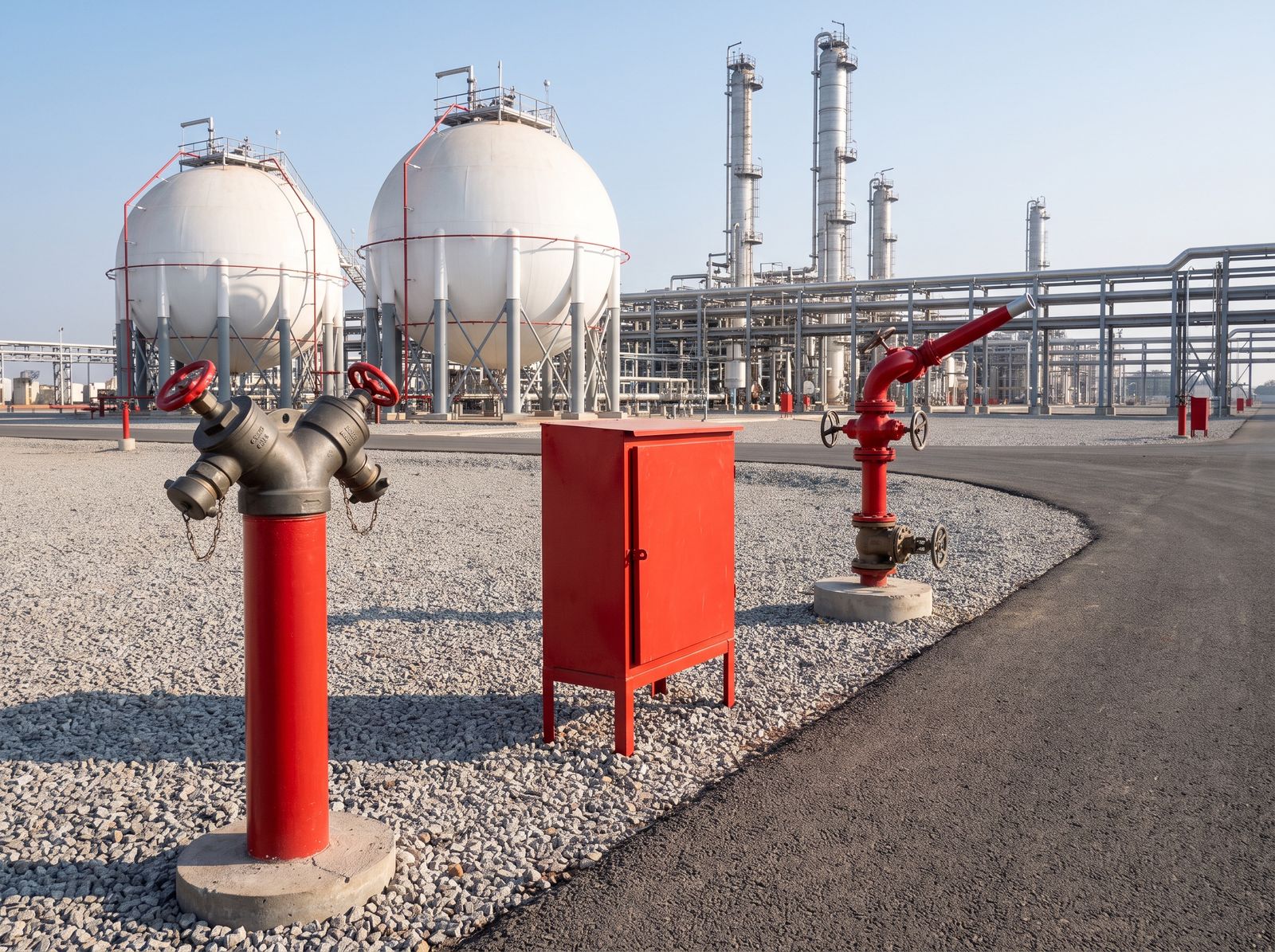
Stand-post hydrant, hose box and water monitor beside a road at an LPG plant with Horton spheres
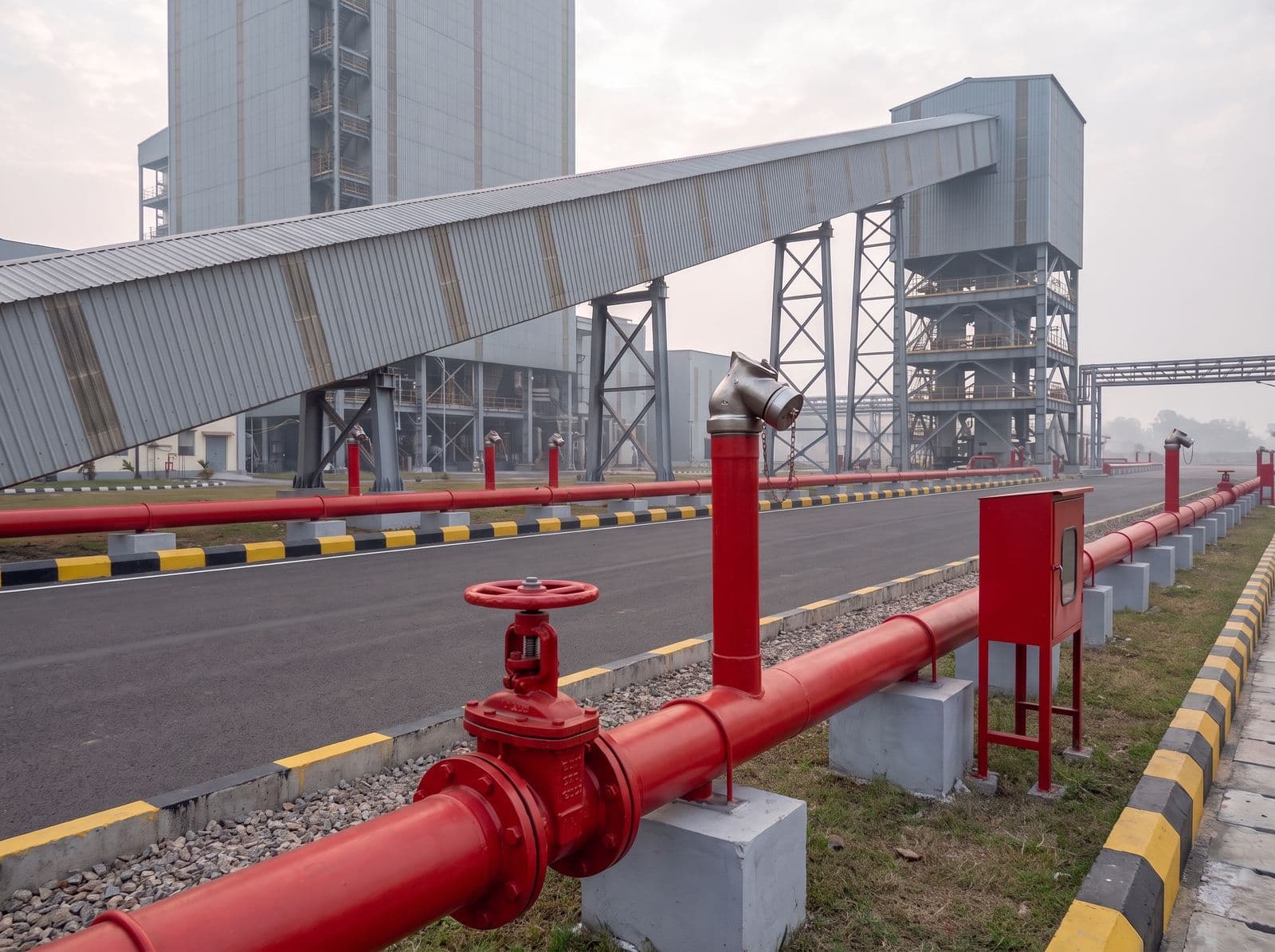
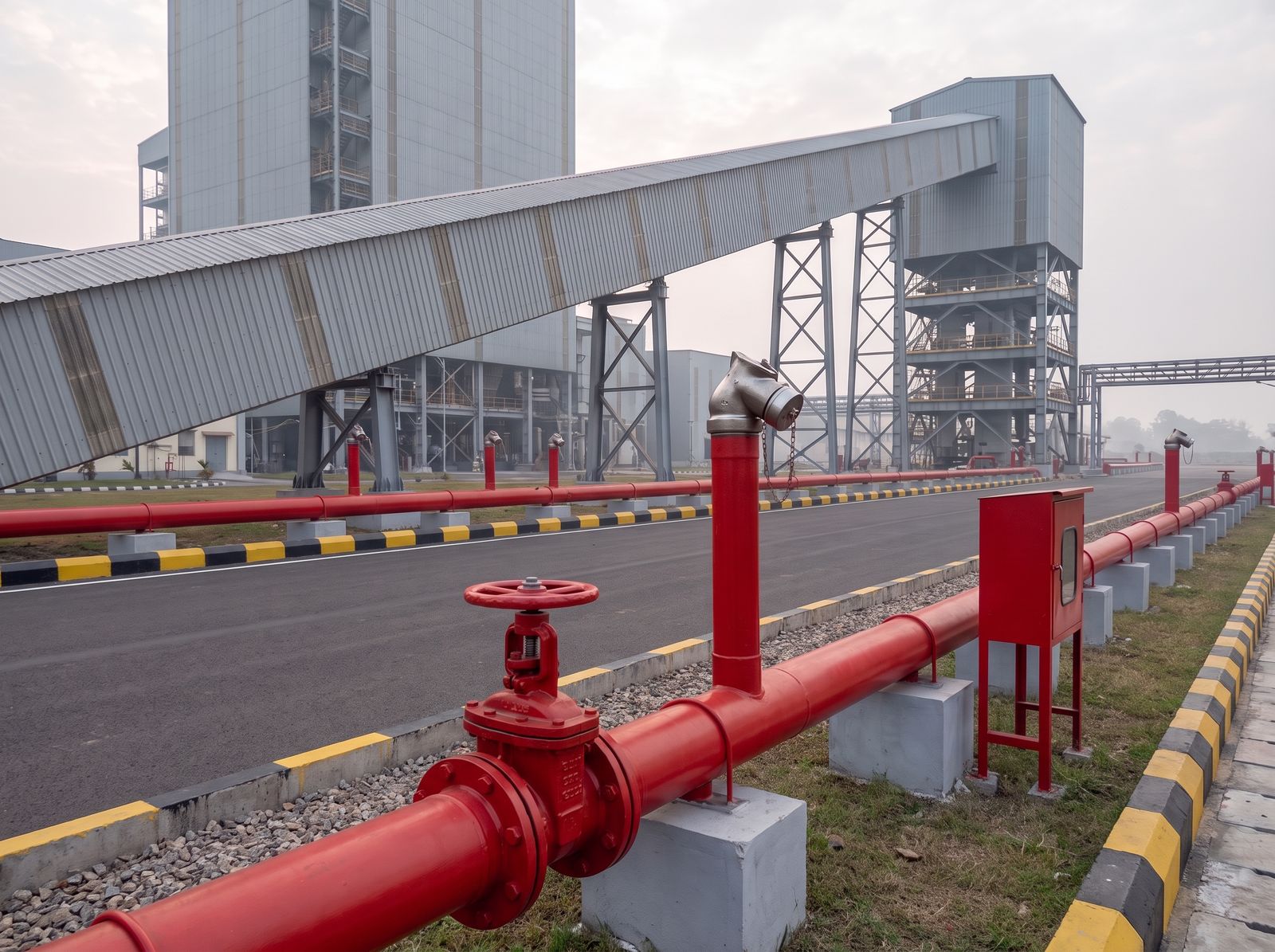
Overground hydrant main with an isolation valve beneath a coal conveyor gallery
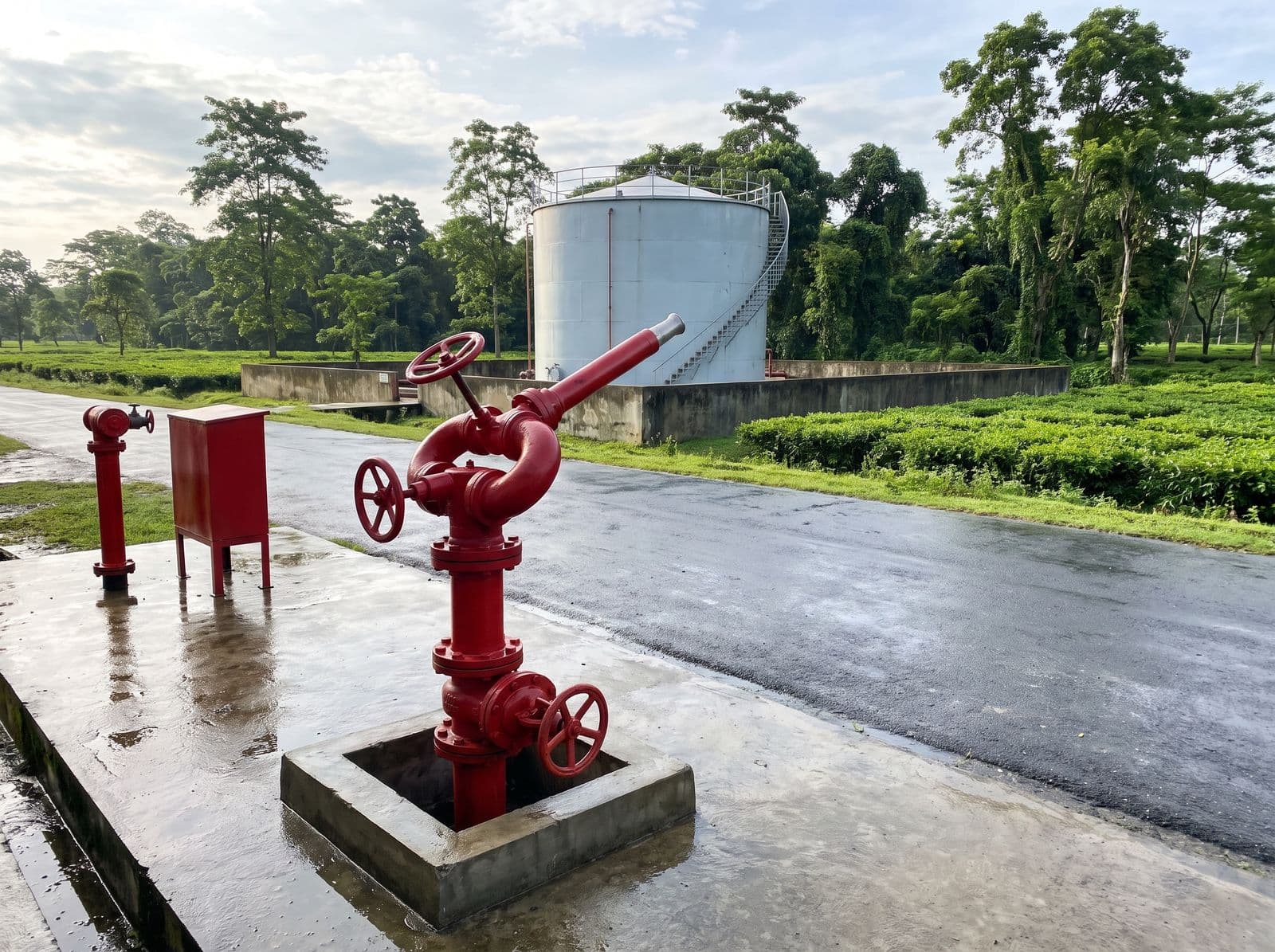
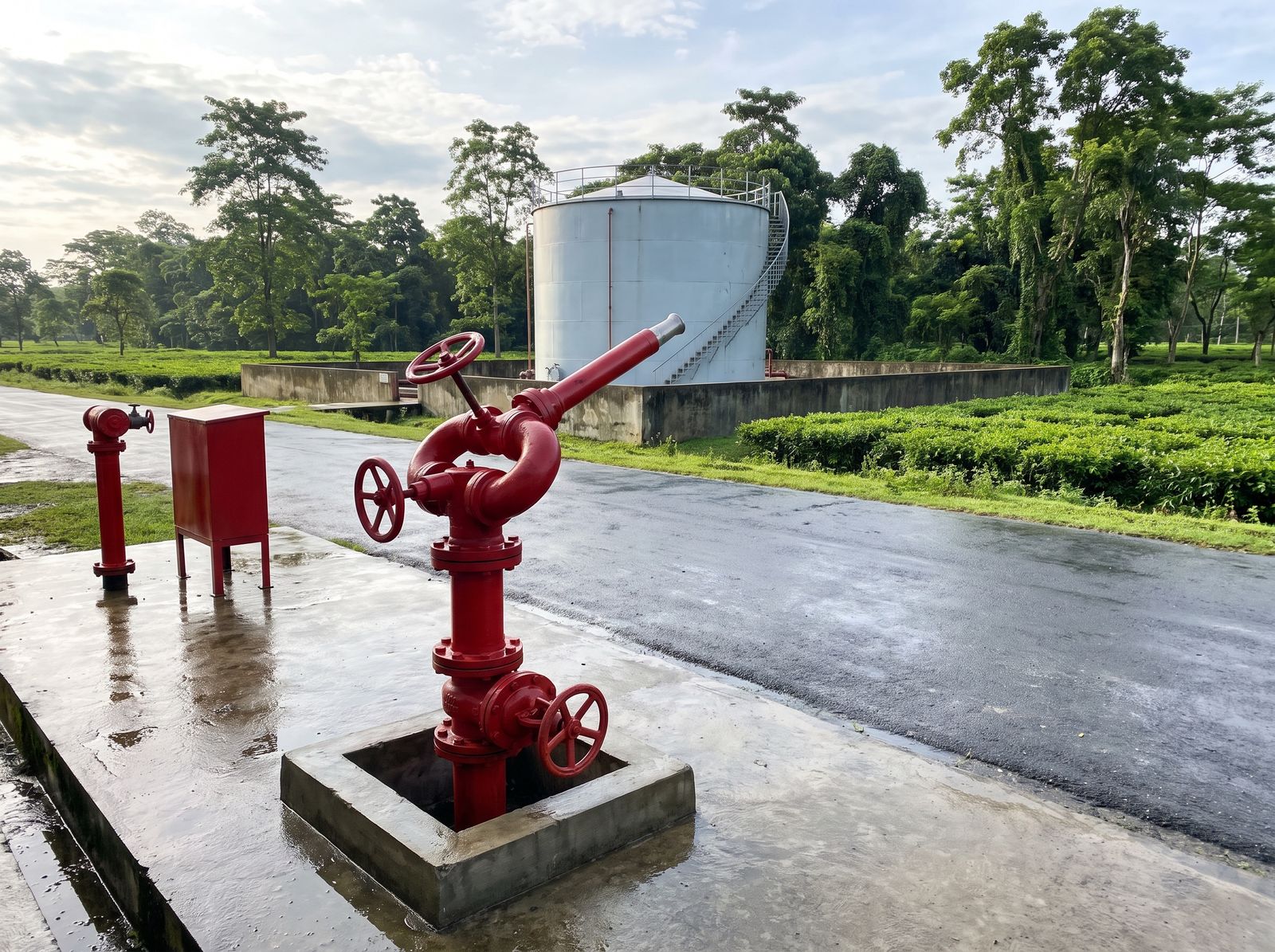
Fixed water monitor beside a crude oil storage tank, with a hydrant post and hose box
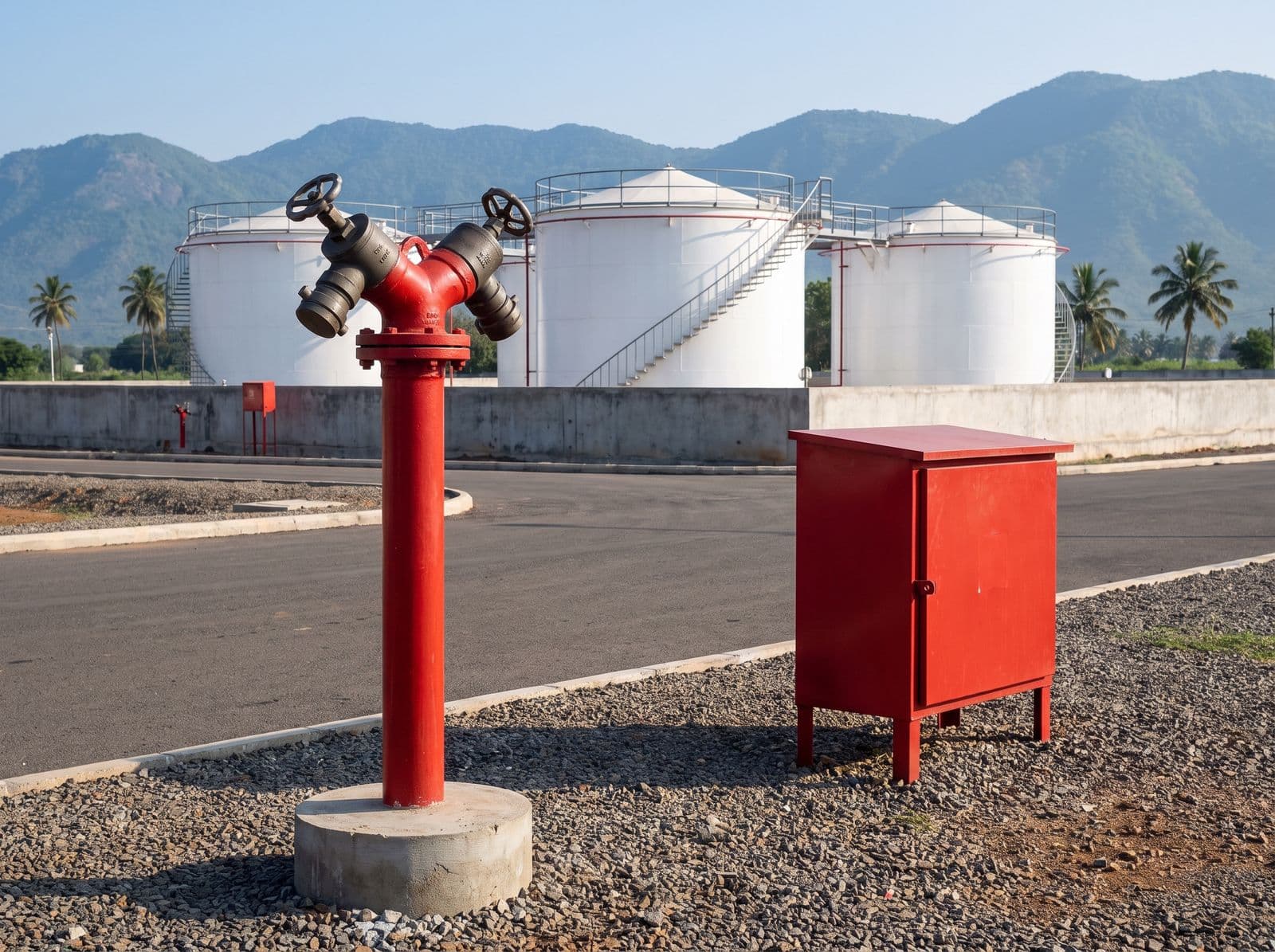
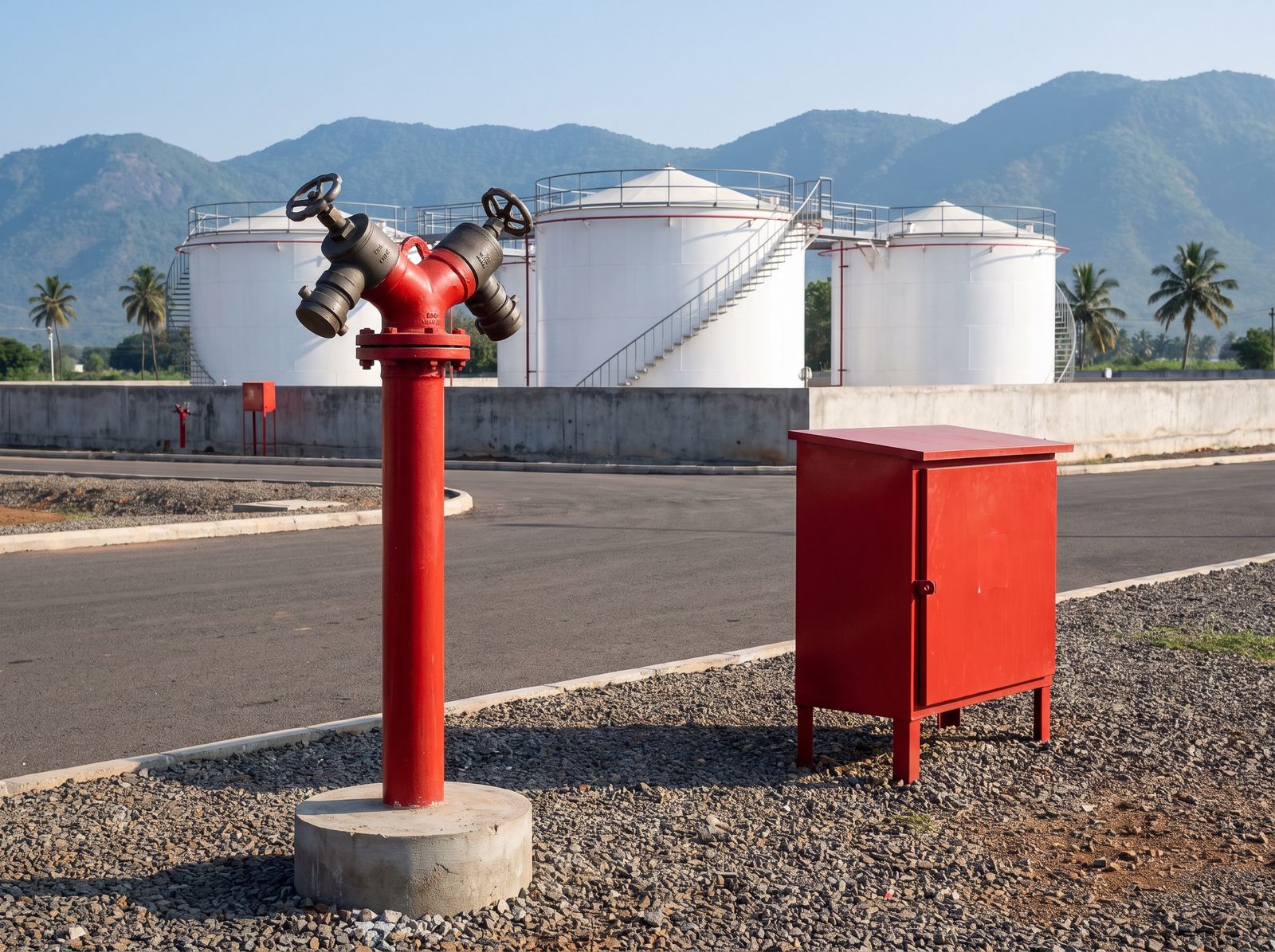
Stand-post hydrant and hose box beside a depot road with cone-roof tanks and hills behind

Why De’s Technico
Equipment from our own catalogue
Strainers are made in our own works, so supply and execution answer to one schedule.
7 installations on record
Our project record lists 7 hydrant system installations, from design through commissioning.
One contract, design to handover
A lump-sum turnkey scope on single-window responsibility: design, engineering, supply, installation and commissioning answer to one schedule.
In fire protection since 1988
More than 35 years of designing and executing fire detection and protection systems for high-hazard industry.
Questions we are asked
Why a ring main rather than a branched one?
Every point on a ring is fed from two directions, and sectional valves let a damaged length be isolated without losing water to the rest of the site.
What pressure must the network hold?
In the Indian oil and gas sector OISD sets 7 kg/cm² at the hydraulically remotest point, with the design flow running.
How far apart are hydrants?
Under OISD, 30 m apart in hazardous areas and 45 m in non-hazardous areas, and at least 15 m from the hazard they protect.
Should the main be buried or above ground?
Either. Buried mains are wrapped and coated against corrosion and anchored at bends; above-ground mains are easier to inspect but need protection from impact and, in cold climates, freezing.
What is a monitor for?
A large-volume fixed stream that one person — or a remote control — can direct onto a tank, gantry or process unit, from a safe distance.
Related systems
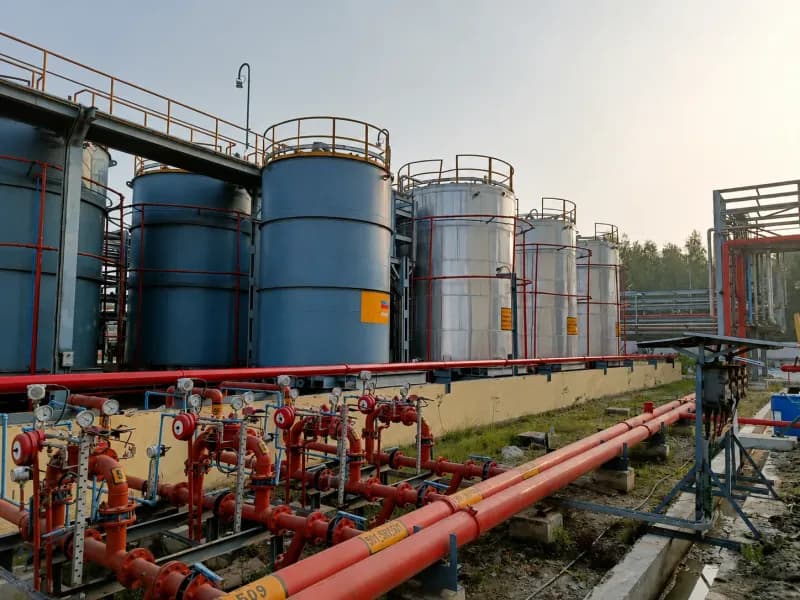 Fire Water Spray SystemMedium and high velocity spray for vessels, transformers and process equipment.
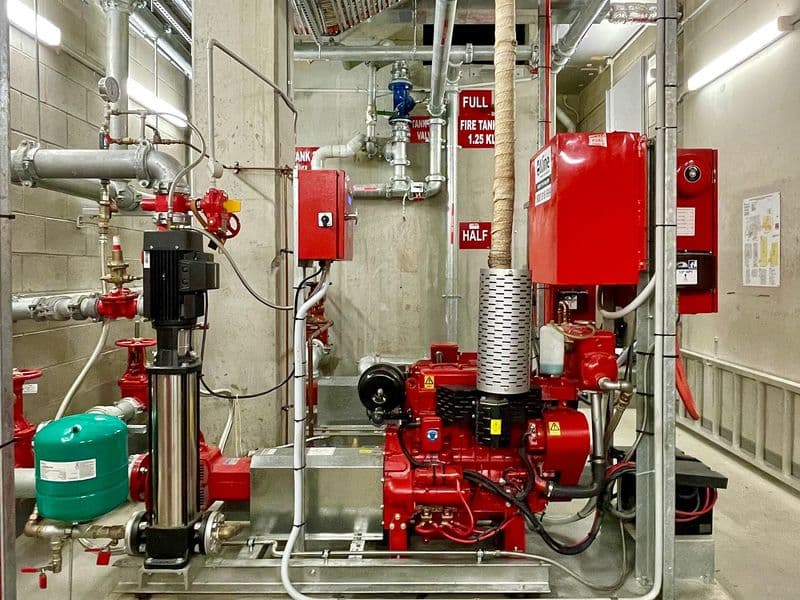 Fire Pump House and ReservoirPumps, drivers, suction reservoir and controls — the source everything else runs on.
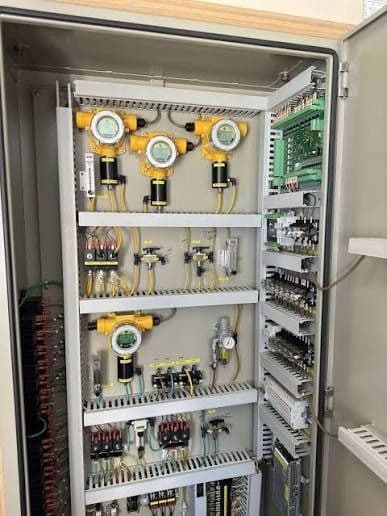 Gas Detection SystemFlammable and toxic gas detection for process areas, with alarm and shutdown.
Projects with this system
 Berger Paints
Hydrant system — Berger Paints
Fire hydrant system for Berger Paints at three sites. · Sandila, Anand, Naltali
 GAIL
GAILHydrant system — GAIL
Fire hydrant system for GAIL at Vijaipur. · Vijaipur
 Airports Authority of India
Hydrant system — Airports Authority of India
Fire hydrant system for Airports Authority of India at Kolkata. · Kolkata
 TISCO
TISCOHydrant system — TISCO
Fire hydrant system for TISCO at Noamundi. · Noamundi
 BHEL
BHELHydrant system — BHEL
Fire hydrant system for BHEL at Haldia. · Haldia
 IOCL
IOCLHydrant system — IOCL
Fire hydrant system for IOCL at six sites. · Coimbatore, Quilon, Hasimara, Dharmanagar, Kalyani, Goindwal
 Oil India
Hydrant system — Oil India
Fire hydrant system for Oil India at Duliajan. · Duliajan
Considering us for a turnkey scope?
Send the hazard, the code and the site. Our engineers reply with a scheme and a price.