
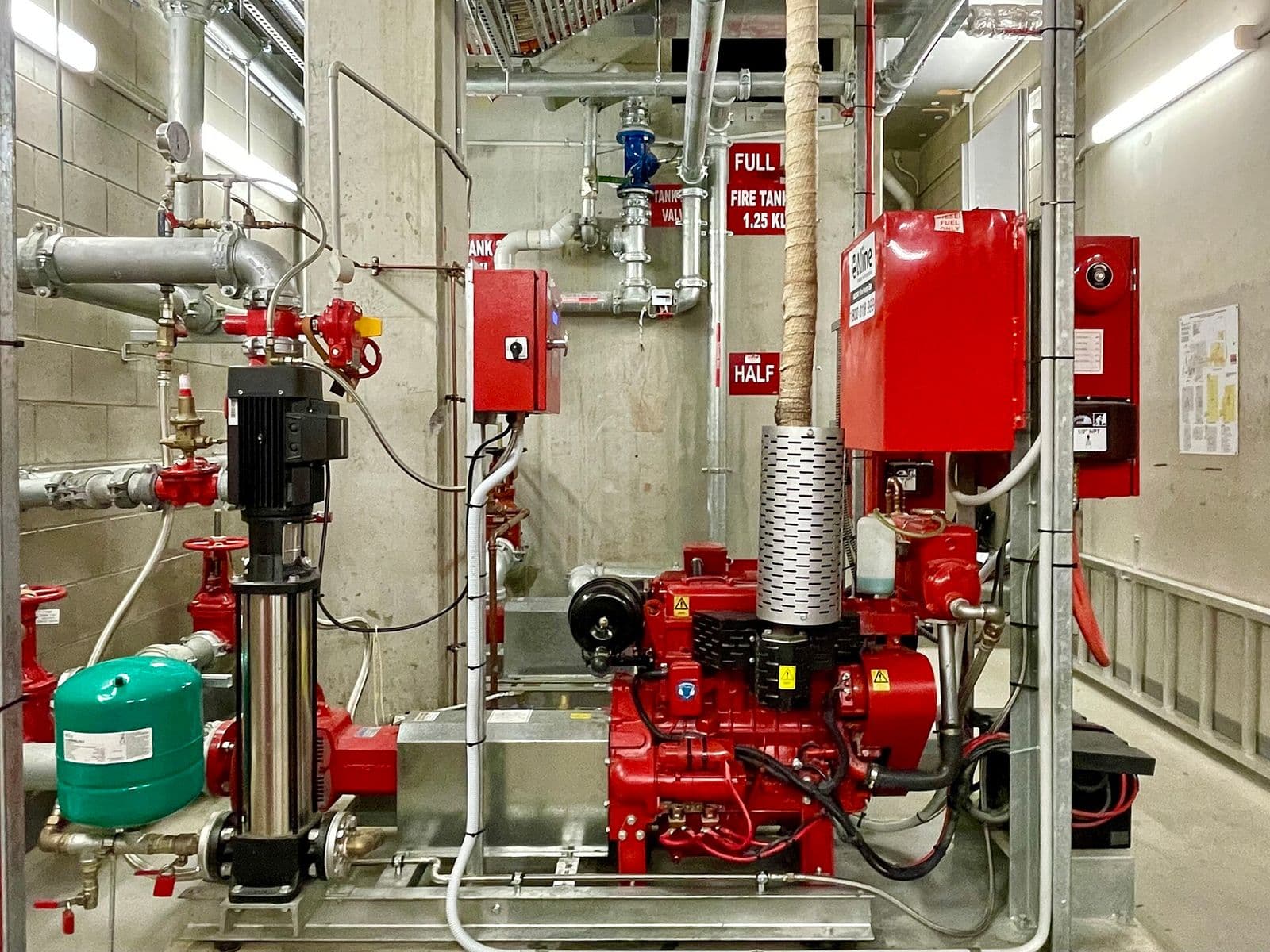
Fire Pump House and Reservoir
The reservoir, pumps, drivers and controls that supply every system on the site, with a standby that does not depend on the same power source.
At a glance
- Governing standard
- NFPA 20
- Designed to
- NFPA 20, NFPA 22, NFPA 25
- Equipment source
- Our own works
How it works

Everything downstream depends on this: if the pumps do not start or the reservoir is short, no system on the site performs as designed.
A pump house typically holds a duty pump, a standby driven by a different power source — commonly a diesel engine so a mains failure does not disable the site — and a jockey pump that maintains standby pressure without cycling the main sets. Reservoir capacity is set by the largest single fire scenario running for its design duration, with makeup arranged so the store is replenished while it is being drawn down.
Pumps are proven by flow test against their rated curve, not by starting them.
Main components
- The reservoir, with makeup to refill it.
- A jockey pump to hold standby pressure.
- Main pumps: electric duty, and a standby with its own diesel engine, fuel tank and batteries.
- Controllers and pressure switches that start the pumps in sequence.
- A test header or flow meter for performance testing.
Testing and maintenance
- Run the pumps routinely, including the diesel on its own batteries.
- Test pump performance at rated flow and at overload at least once a year.
- Check fuel, batteries, coolant and the automatic start on pressure drop.
| Pump | Role | Starts when |
|---|---|---|
| Jockey | Holds standby pressure against small leaks | Pressure dips slightly |
| Main, electric | Supplies the design flow | Pressure falls further, or on a fire signal |
| Standby, diesel | Supplies the design flow if the electric pump or its power fails | Pressure keeps falling, or the main pump fails |
Scope we take
- 1
Design
The demand of the largest single fire scenario, pump selection, reservoir capacity for the design duration, and the pump house layout.
- 2
Supply
Main electric and diesel pumps, jockey pump, controllers, valves and instrumentation.
- 3
Erection
Pump sets aligned on their foundations, suction and delivery pipework, and the diesel fuel and exhaust systems.
- 4
Testing
Hydrostatic test of the pump house pipework.
- 5
Commissioning
Pump performance at rated and overload points, automatic start on pressure drop, and changeover between drivers.
- 6
Handover
As-built drawings, test records and operating and maintenance manuals, with training for the people who will run the system.
Equipment used
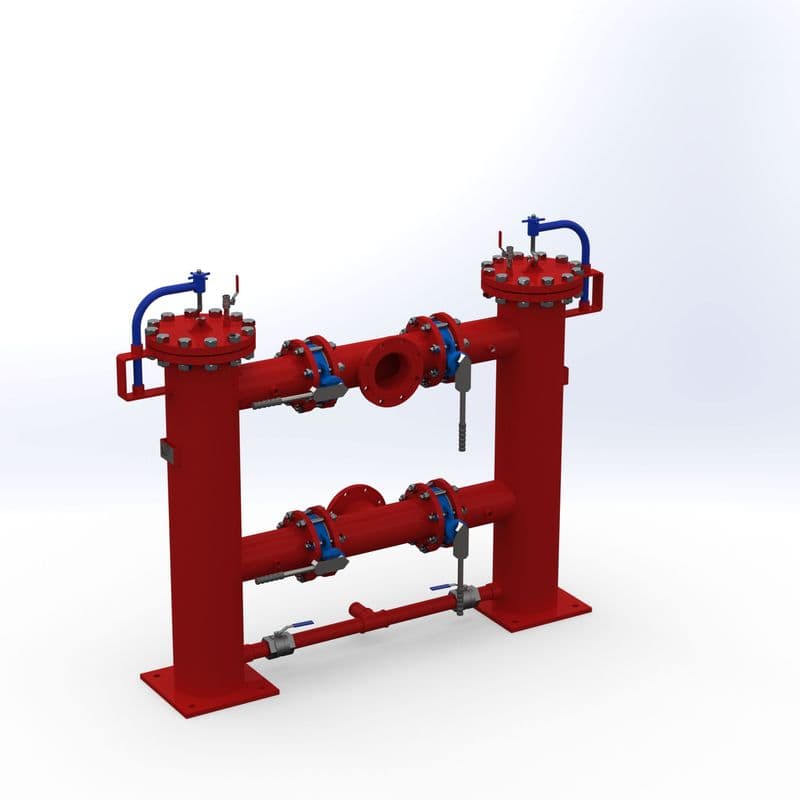
Fabricated Duplex Strainer
Twin baskets, cleaned without shutting down
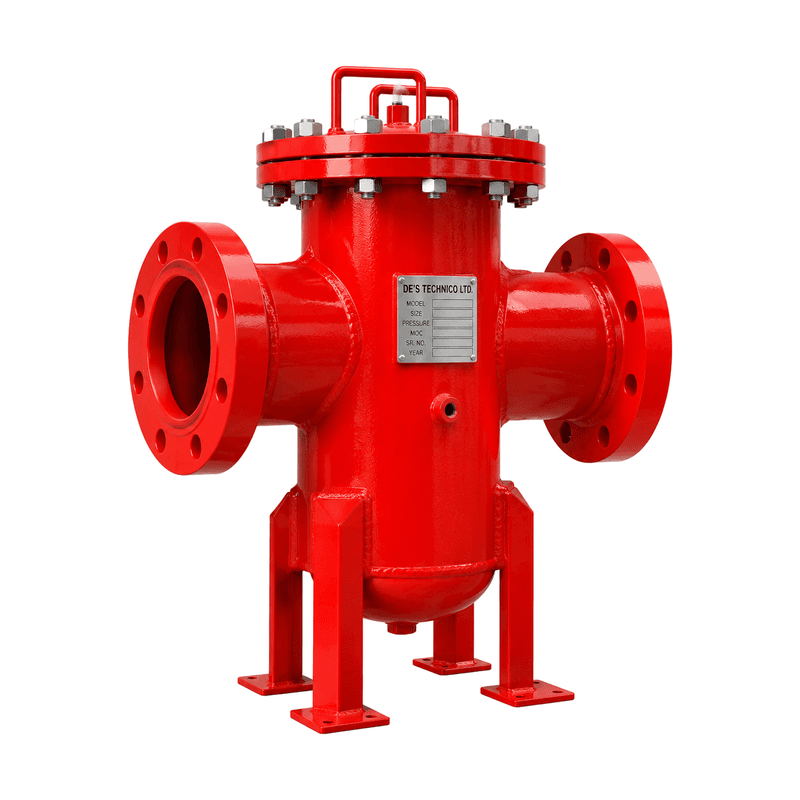
Fabricated Basket Strainer
Top-removal basket, 2" to 24"
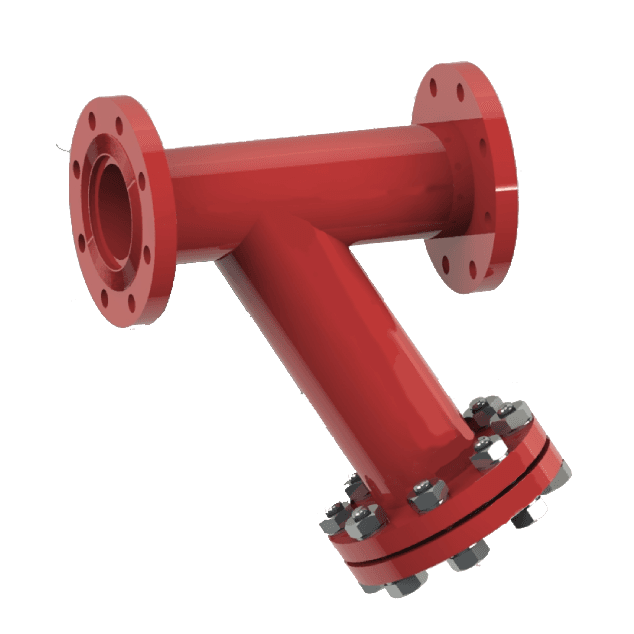
Fabricated Y Strainer
1" to 24", ASME Class 150 to 2500
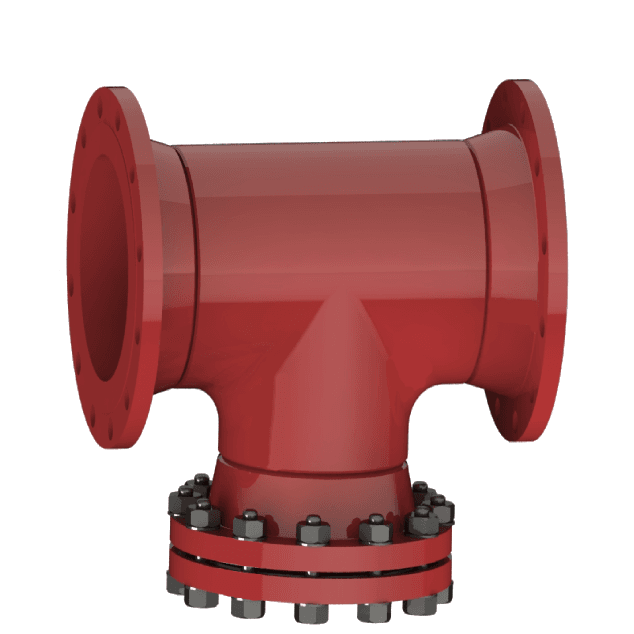
Fabricated Tee Strainer
Graded filtration, 2" to 24", ASME 150 to 600
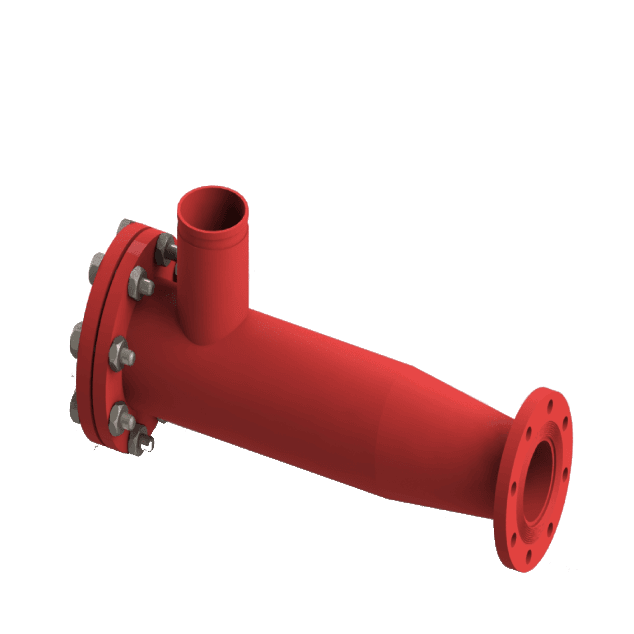
Fabricated Inline Strainer
Inline, 15 to 150 mm, 40 to 100 mesh
Strainer
Y-type, 1" to 24", threaded, socket weld or flanged
Standards
- NFPA 20Stationary pumps for fire protection.
- NFPA 22Water tanks for private fire protection.
- NFPA 25Inspection, testing and maintenance of water-based systems.
| Parameter | Figure | Source |
|---|---|---|
| Pump performance at 150% of rated flow | At least 65% of rated pressure | NFPA 20 |
| Shut-off (churn) pressure | Not more than 140% of rated pressure | NFPA 20 |
| Diesel fuel tank | 5.07 L per kW of engine rating, plus allowances for expansion and sump | NFPA 20 |
| Fire water storage, oil and gas sector | 4 hours at the design flow | OISD-STD-116 / OISD-STD-117 |
Service and maintenance
A fire protection system only performs if it is kept in the condition it was commissioned in. Inspection, testing and maintenance to the intervals the code sets — under an annual maintenance contract or as a single visit.
| Task | Interval | Reference |
|---|---|---|
| Run the diesel pump (no-flow test) | Weekly | NFPA 25 |
| Run the electric pump (no-flow test) | Monthly | NFPA 25 |
| Flow test at rated and 150% flow | Annually | NFPA 25 |
| Check fuel, batteries, coolant and automatic starting | Weekly | NFPA 25 |
Where it applies
Images · 3
Diesel fire pump set in a pump room
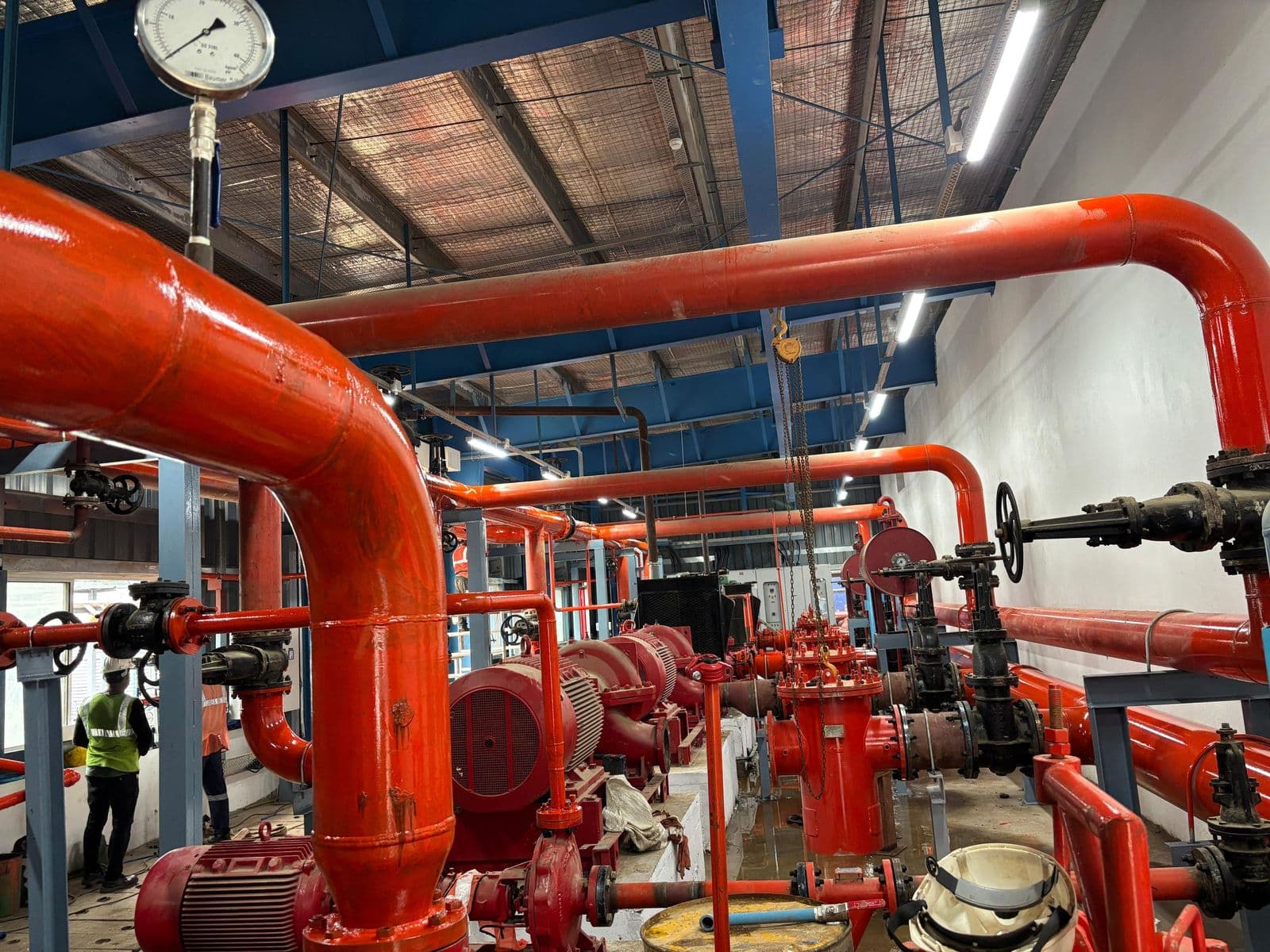
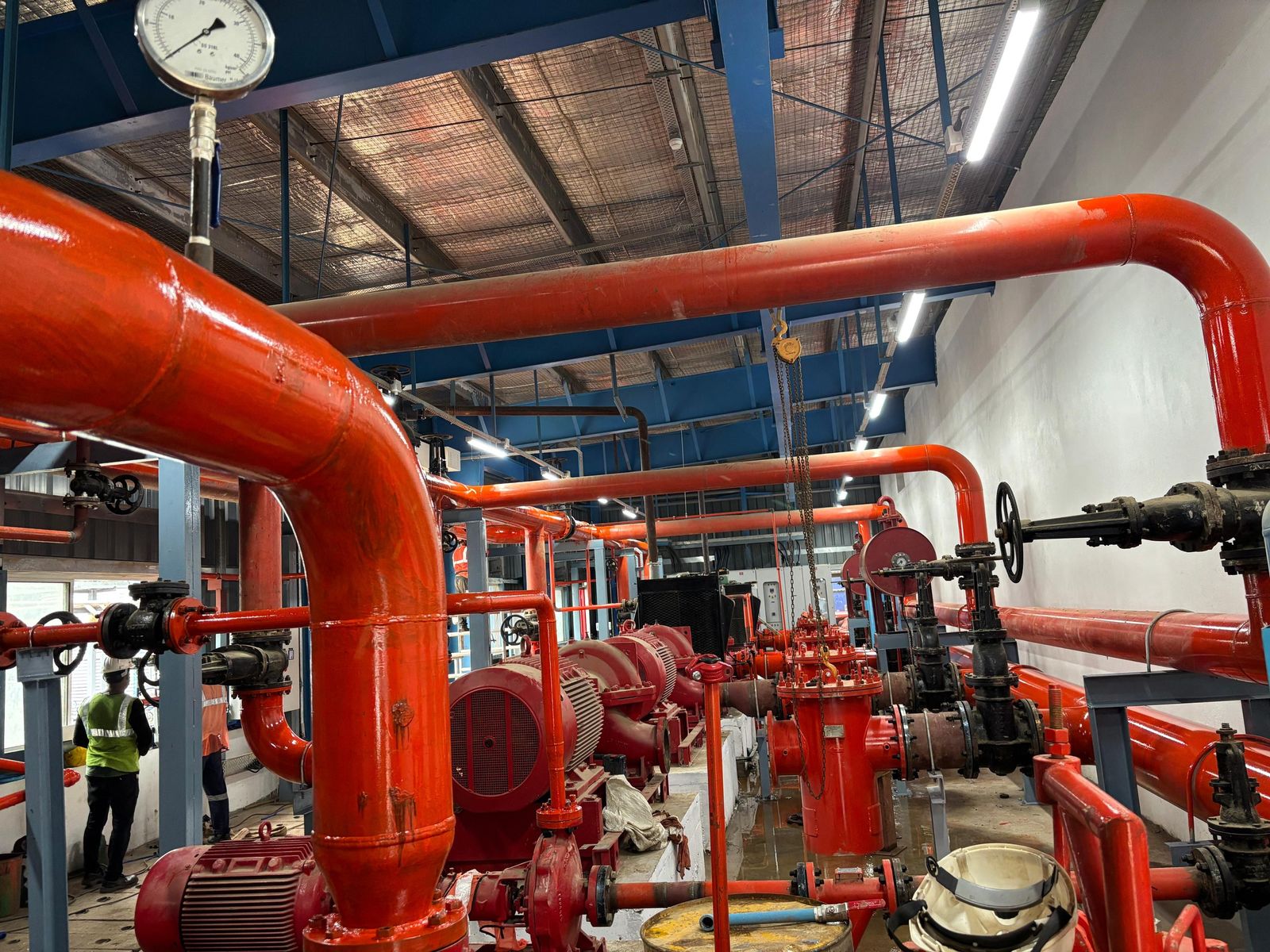
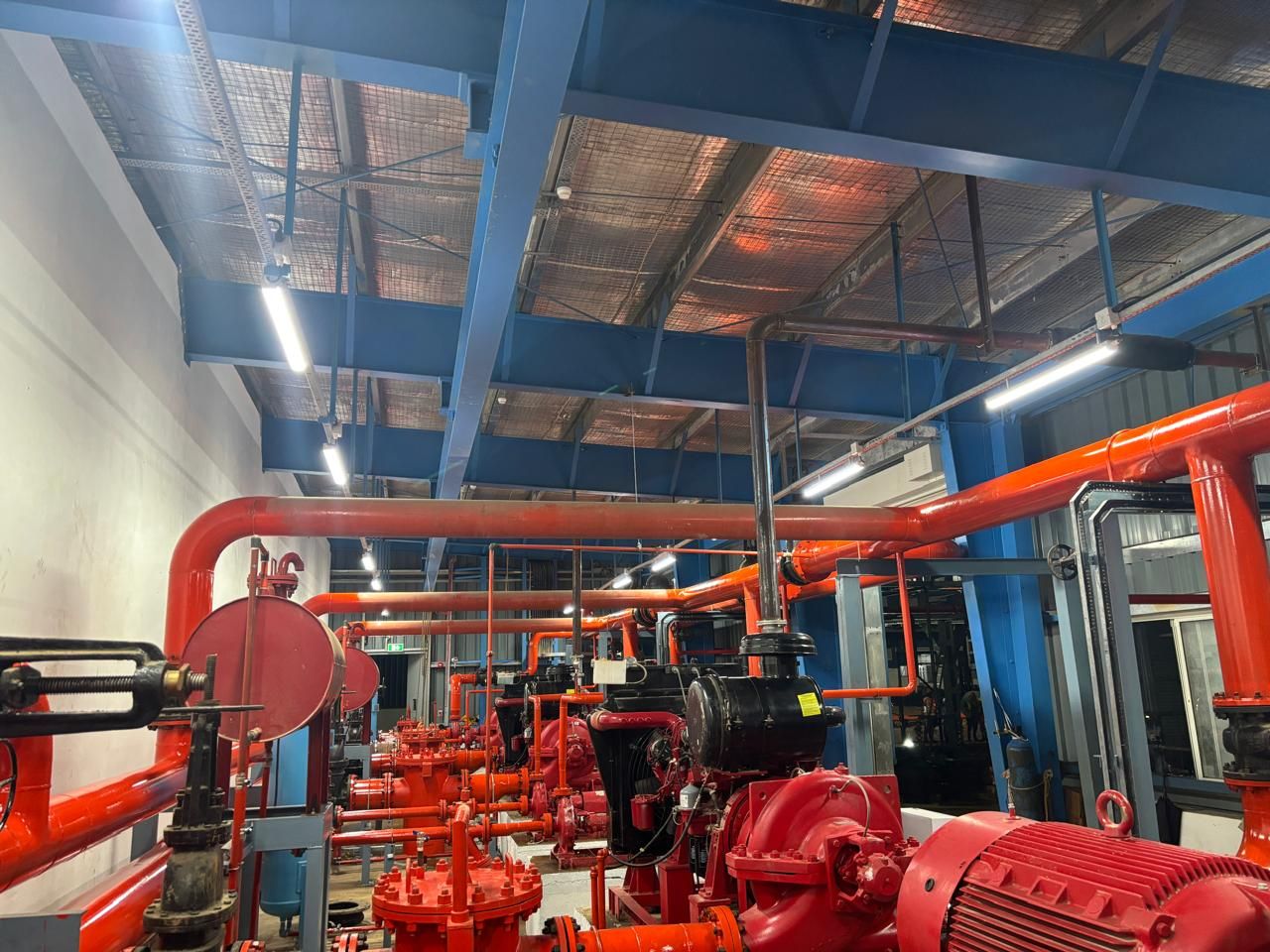
Fire water pump house with pumps, strainer and header piping
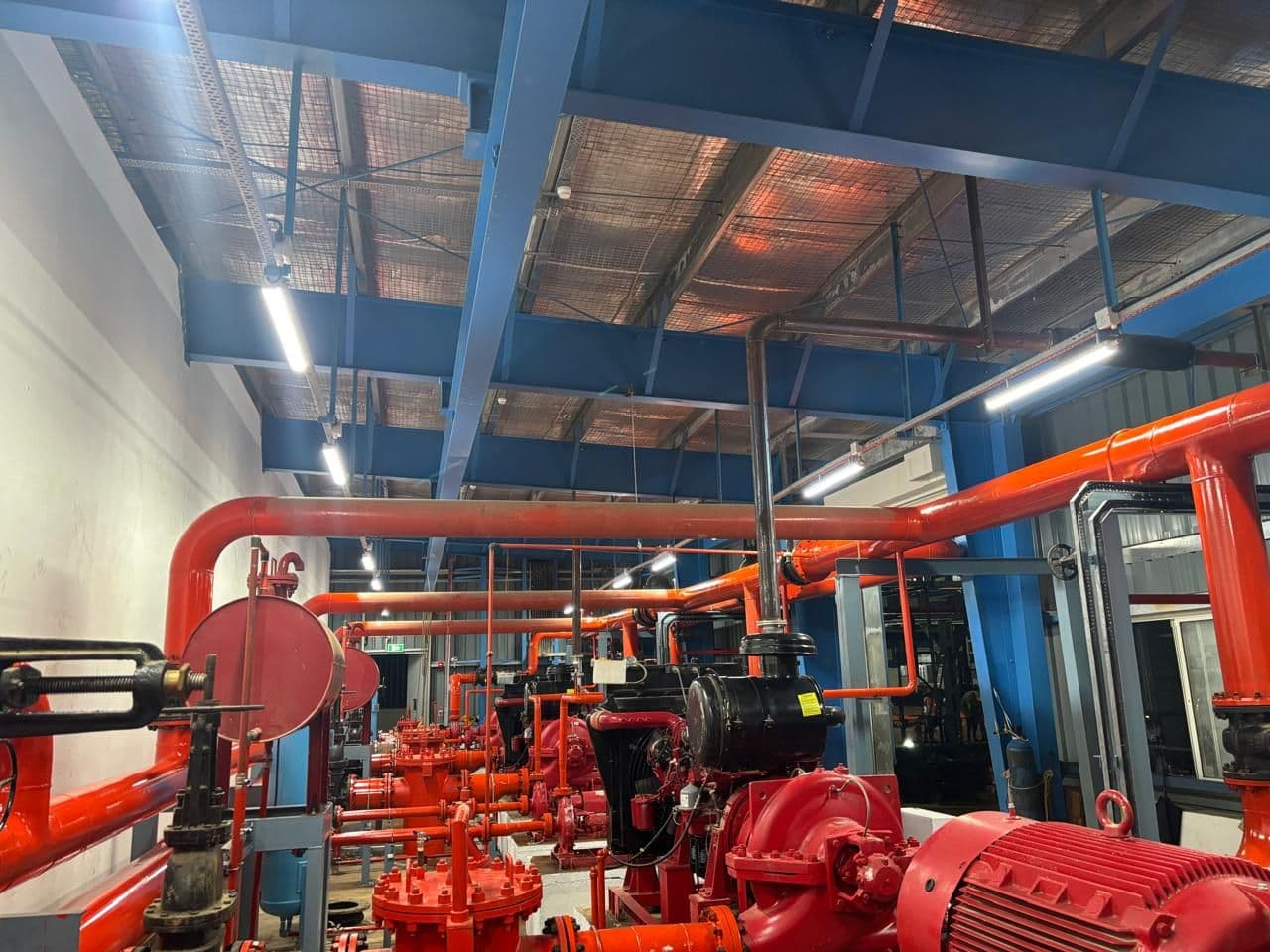
Fire pumps and header piping inside the pump house

Why De’s Technico
One contract, design to handover
A lump-sum turnkey scope on single-window responsibility: design, engineering, supply, installation and commissioning answer to one schedule.
Equipment from our own catalogue
Strainers are made in our own works, so supply and execution answer to one schedule.
In fire protection since 1988
More than 35 years of designing and executing fire detection and protection systems for high-hazard industry.
Questions we are asked
Why a diesel standby pump?
So a mains power failure — which can happen in the same event as the fire — does not leave the site without water.
What does the jockey pump do?
It makes up small leaks and holds the network at standby pressure, so the main pumps do not start and stop unnecessarily.
How big must the reservoir be?
Large enough for the largest single fire scenario at its design flow for the required duration — four hours in the Indian oil and gas sector under OISD.
How often should the pumps run?
Under NFPA 25, the diesel pump weekly and the electric pump monthly, with a full flow test every year.
What does the annual flow test prove?
That the pump still delivers its rated flow at rated pressure, and at least 65% of rated pressure at 150% of rated flow, as NFPA 20 requires.
Related systems
Considering us for a turnkey scope?
Send the hazard, the code and the site. Our engineers reply with a scheme and a price.