
Foam Based Fire Fighting System
Foam proportioned into the fire water and discharged over storage tanks, bunds and loading areas, where a burning flammable liquid has to be smothered rather than cooled.
At a glance
- Governing standard
- NFPA 11
- Designed to
- NFPA 11, NFPA 16, OISD-STD-116, OISD-STD-117
- Equipment source
- Our own works
How it works

Foam works by floating a blanket over a burning liquid: it separates the fuel from the air, suppresses the vapour that is actually burning, and cools the surface underneath. The system has three jobs to do in order — proportion the concentrate into the water at the right ratio, carry the solution to the hazard, and aspirate it into finished foam at the discharge point.
Proportioning is done here with a bladder tank and ratio controller: water pressure squeezes an elastomeric bladder holding the concentrate, and the controller meters it into the stream across a wide range of flow without a concentrate pump. Discharge devices vary by hazard — foam chambers on a fixed roof tank, pourers over a floating roof, makers on a bund wall, and foam-water sprinklers overhead.
The ratio matters more than the volume. A system proportioning at 3% delivers a different blanket from one at 6%, and the concentrate has to match both the fuel and the discharge device.
Main components
- The water supply, usually from the plant hydrant ring main.
- The proportioner: a bladder tank with ratio controller, or an inline inductor.
- Foam concentrate storage.
- Solution mains to the protected hazards.
- Discharge devices: foam makers, pourers and chambers on tanks, foam-water sprinklers, and monitors.
Testing and maintenance
- Test proportioning at the intervals the code sets, checking the concentration of the solution produced.
- Have a sample of the foam concentrate tested each year; it degrades in storage.
- Inspect vapour seals on fixed-roof discharge devices, and flush the system after every discharge.
| Method | How it works | Suits |
|---|---|---|
| Bladder tank with ratio controller | Water pressure squeezes concentrate from a bladder into the ratio controller | Most fixed systems; no concentrate pump, wide flow range |
| Inline inductor | A venturi draws concentrate into the water stream | A single fixed discharge at constant flow |
| Balanced pressure | A concentrate pump with a pressure-balancing valve | Large systems serving several hazards |
| Premix | Foam solution stored ready-mixed | Small systems, such as rim seal protection |
| Foam | Expansion | Typical use |
|---|---|---|
| Low expansion | Up to 20:1 | Storage tanks, spills, loading gantries |
| Medium expansion | 20:1 to 200:1 | Bunds, pits and trenches, vapour suppression |
| High expansion | Above 200:1 | Hangars, warehouses and enclosed spaces |
Expansion ranges as NFPA 11 defines them.
Scope we take
- 1
Design
Tank and bund data, foam application rate and discharge time to the code, concentrate quantity, and proportioner and discharge device sizing.
- 2
Manufacture
Bladder tanks, ratio controllers, inductors, foam makers, pourers and chambers built in our own works.
- 3
Factory testing
Pressure vessels and assemblies tested before they leave the works.
- 4
Installation
Foam solution mains, discharge devices on the tanks and bunds, and the proportioning skid.
- 5
Commissioning
Line flushing, concentrate filling, and proportioning and discharge tests.
- 6
Handover
As-built drawings, test records and operating and maintenance manuals, with training for the people who will run the system.
Equipment used
Foam Equipment · 13
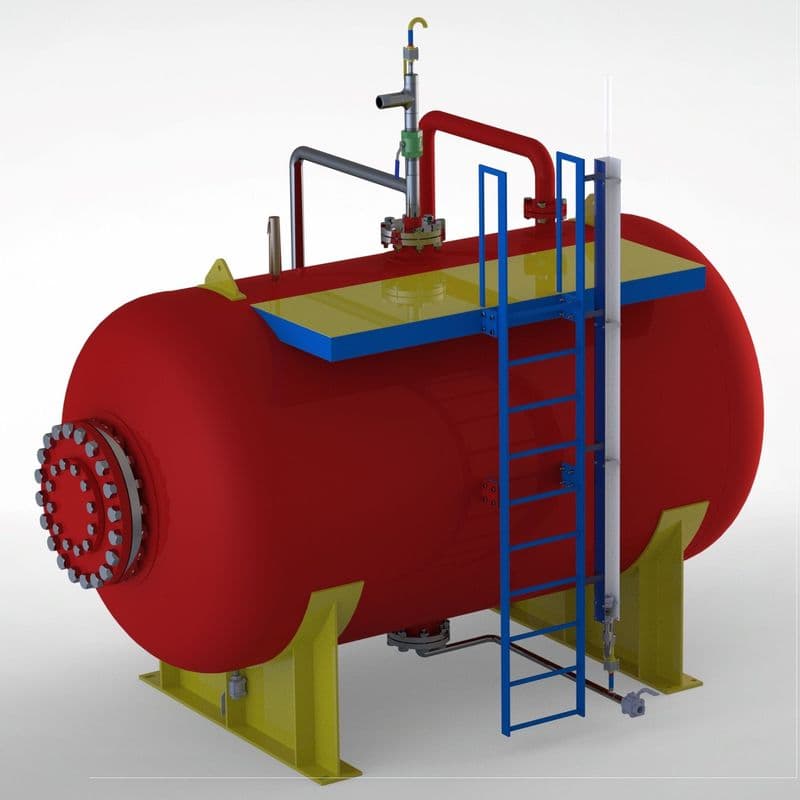

Foam Bladder Tank Horizontal with Ratio Controller
Horizontal, 1,000 to 15,000 litres
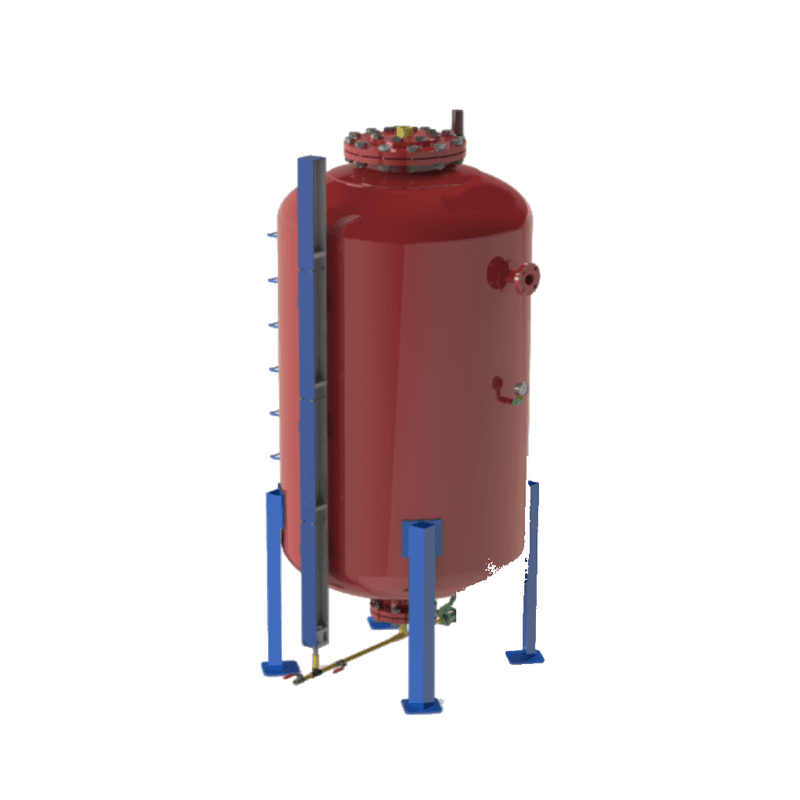
Foam Bladder Tank Vertical with Ratio Controller
Vertical, 200 to 7,500 litres
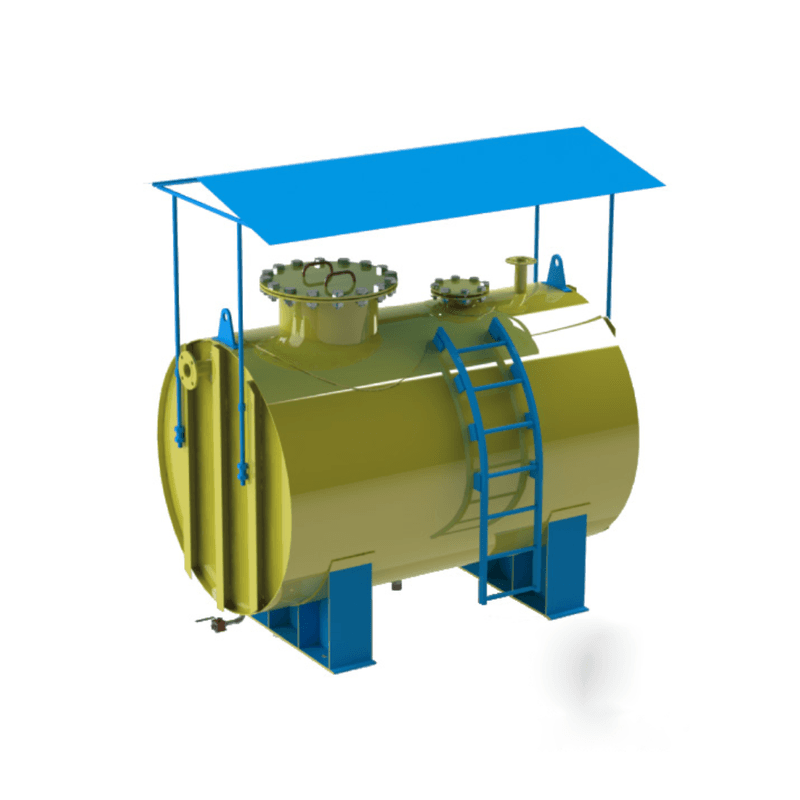
Foam Concentrate Tank
Atmospheric, horizontal, 200 to 10,000 litres
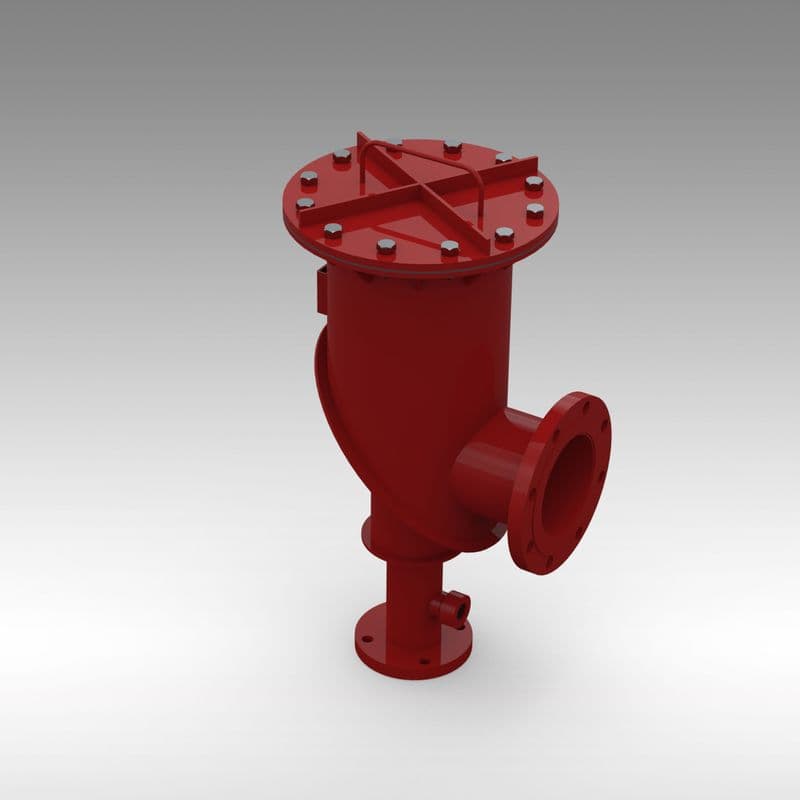
Foam Mixer (For fixed roof tank)
Fixed roof tanks, glass vapour seal, 50 to 150 NB
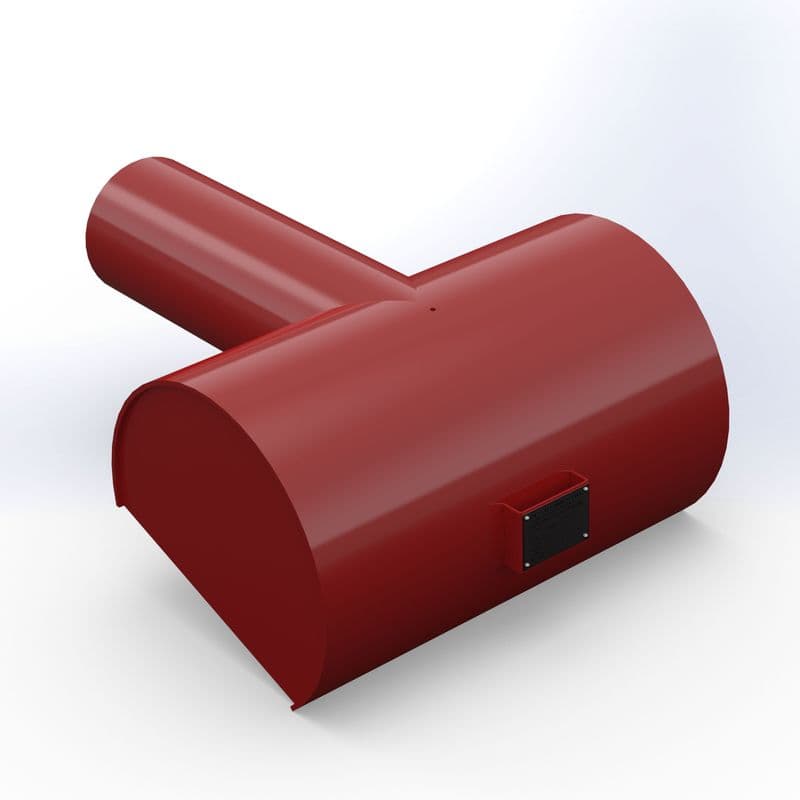
Foam Pourer Cone Roof Tank
For cone roof tanks, fixed orifice plate
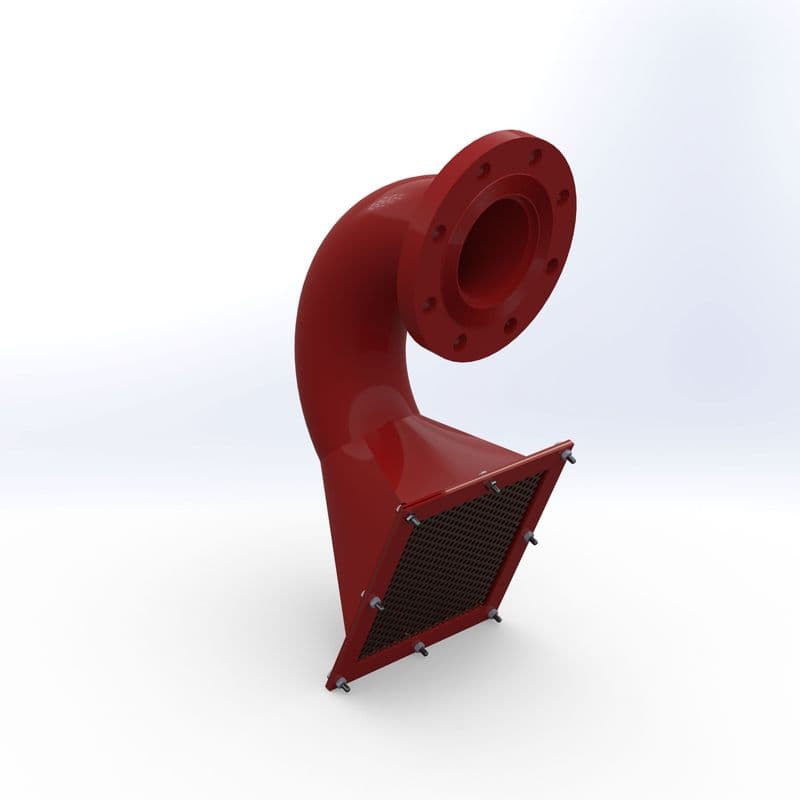
Foam Pourer Floating Roof Tank
For floating roof tanks, 50 to 80 NB inlet
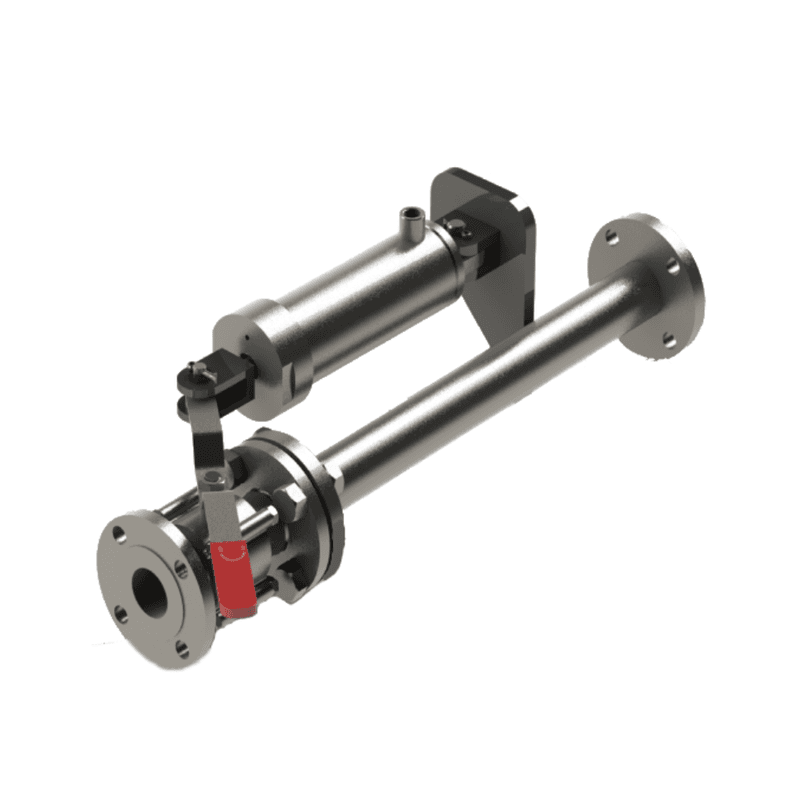
HOV (Hydraulically Operated Valve)
Auto open, manual close, 40 and 50 NB
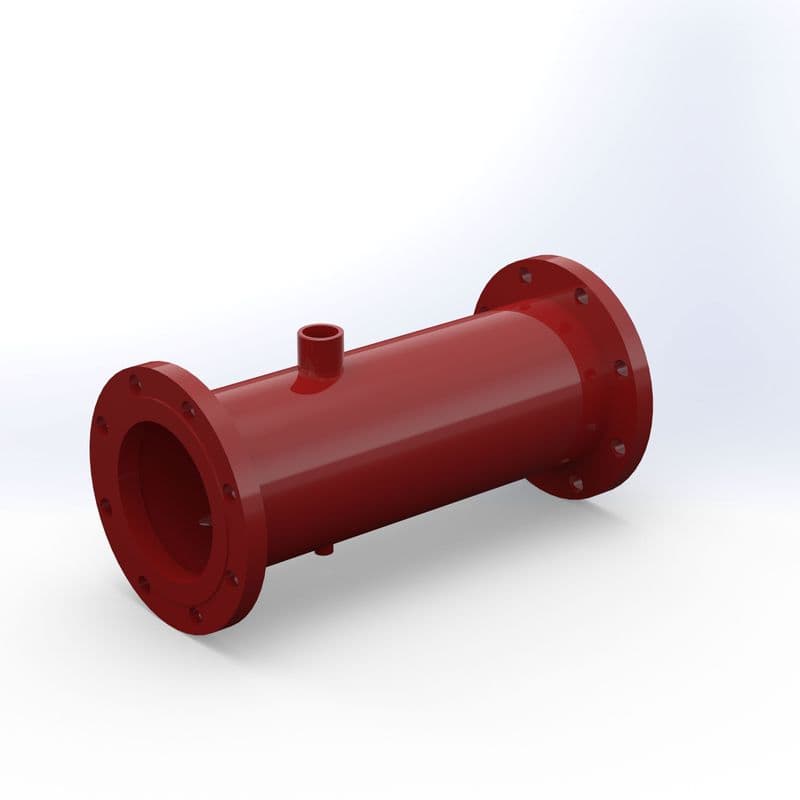
Foam Inductor
Inline, 3% or 6% induction, 50 to 200 NB
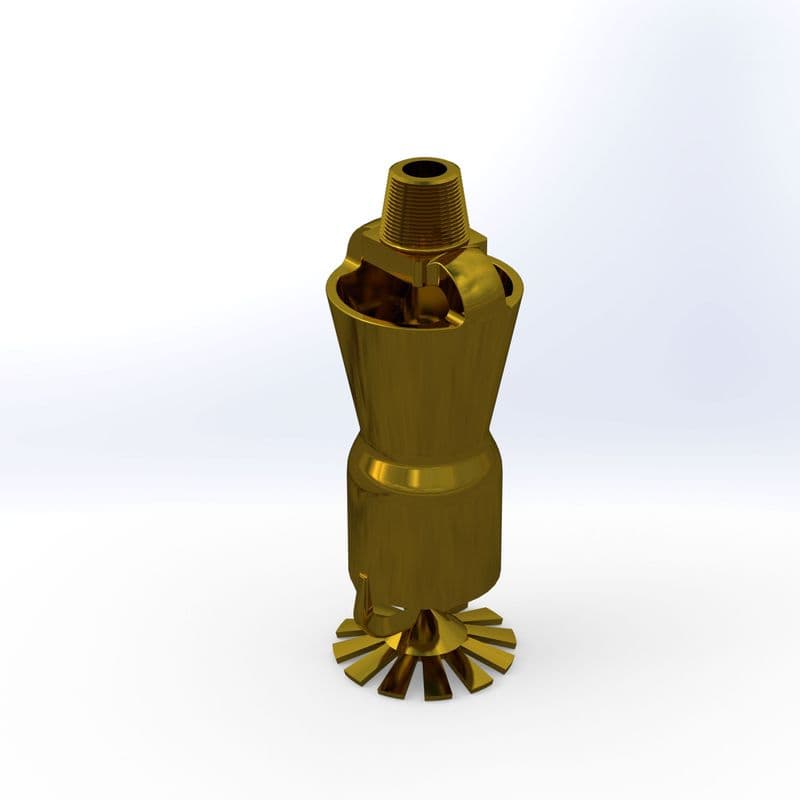
Foam Nozzle
Air-aspirating, upright and pendent, K-3.0
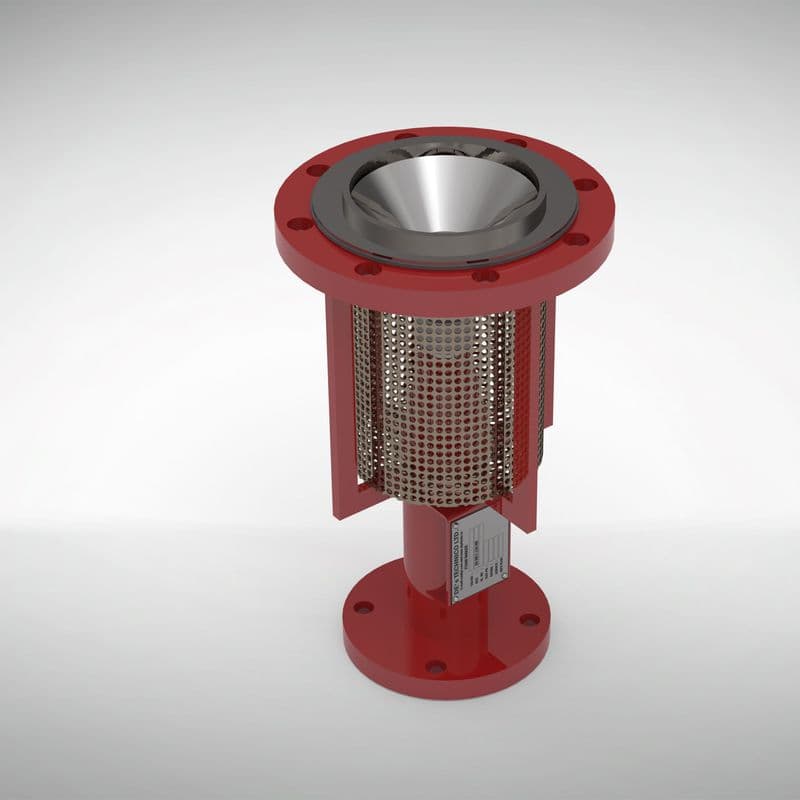
Foam Maker (For Floating Roof Tank)
For floating roof tanks, 50 to 80 NB inlet
Foam Pourer
Fixed roof tank application, with vapour seal
Foam Bladder Tank with Ratio Controller
Vertical 200 to 7,500 L, horizontal 1,000 to 15,000 L
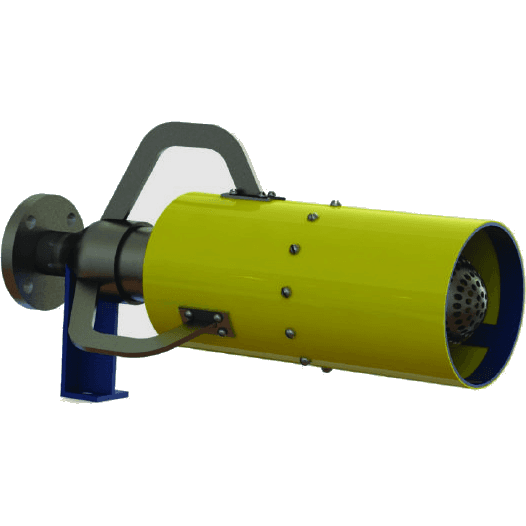
Medium Expansion Foam Generator
Stainless steel or galvanised iron shell
Spray Nozzles · 1
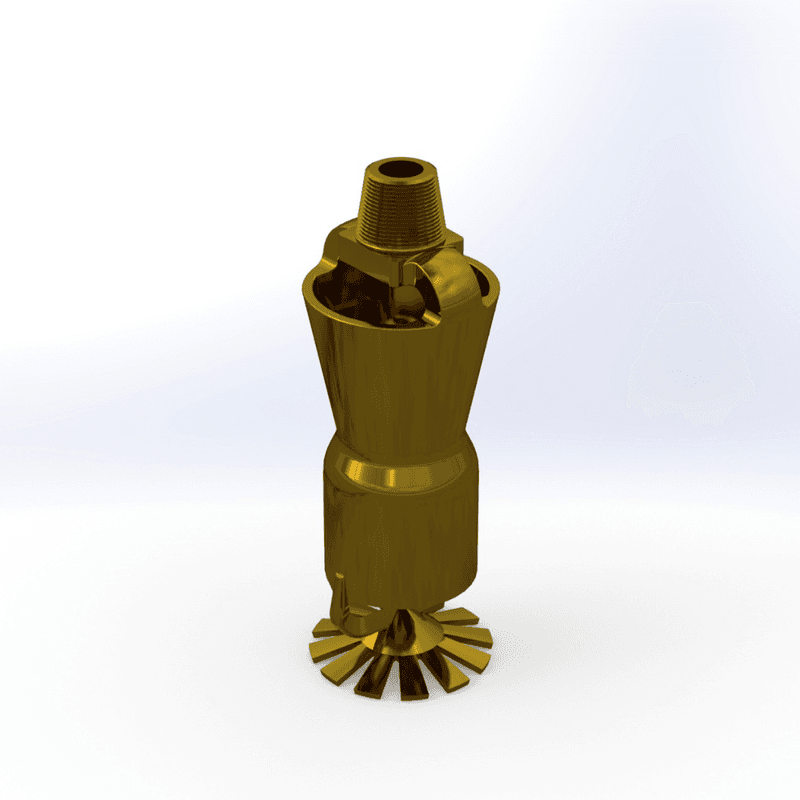
Sprinkler Foam-Water
Air-aspirating, upright and pendent, K-3.0
Standards
- NFPA 11Low-, medium- and high-expansion foam.
- NFPA 16Foam-water sprinkler and foam-water spray systems.
- OISD-STD-116Fire protection facilities for refineries and oil and gas processing plants.
- OISD-STD-117Fire protection facilities for petroleum depots and terminals.
| Parameter | Figure | Source |
|---|---|---|
| Fixed-roof tank, application rate | 4.1 L/min/m² of liquid surface (minimum) | NFPA 11 — fixed-roof tanks, foam discharge outlets |
| Discharge time, flash point 37.8–93.3 °C | 30 minutes | NFPA 11 — fixed-roof tanks |
| Discharge time, flash point below 37.8 °C, or crude oil | 55 minutes | NFPA 11 — fixed-roof tanks |
| Discharge outlets per tank | 1 up to 24 m diameter; 2 to 36 m; 3 to 42 m; 4 to 48 m; 5 to 54 m; 6 to 60 m | NFPA 11 — fixed-roof tanks |
| Proportioning | 3% or 6%, as the concentrate is listed | Foam concentrate listing |
Service and maintenance
A fire protection system only performs if it is kept in the condition it was commissioned in. Inspection, testing and maintenance to the intervals the code sets — under an annual maintenance contract or as a single visit.
| Task | Interval | Reference |
|---|---|---|
| Visual inspection of discharge devices, vapour seals and piping | Monthly to quarterly | NFPA 25 |
| Operational test of the proportioning system | Annually | NFPA 25 |
| Foam concentrate sample sent for laboratory testing | Annually | NFPA 11 |
| Flush the system and replace vapour seals | After every discharge | NFPA 11 |
Image
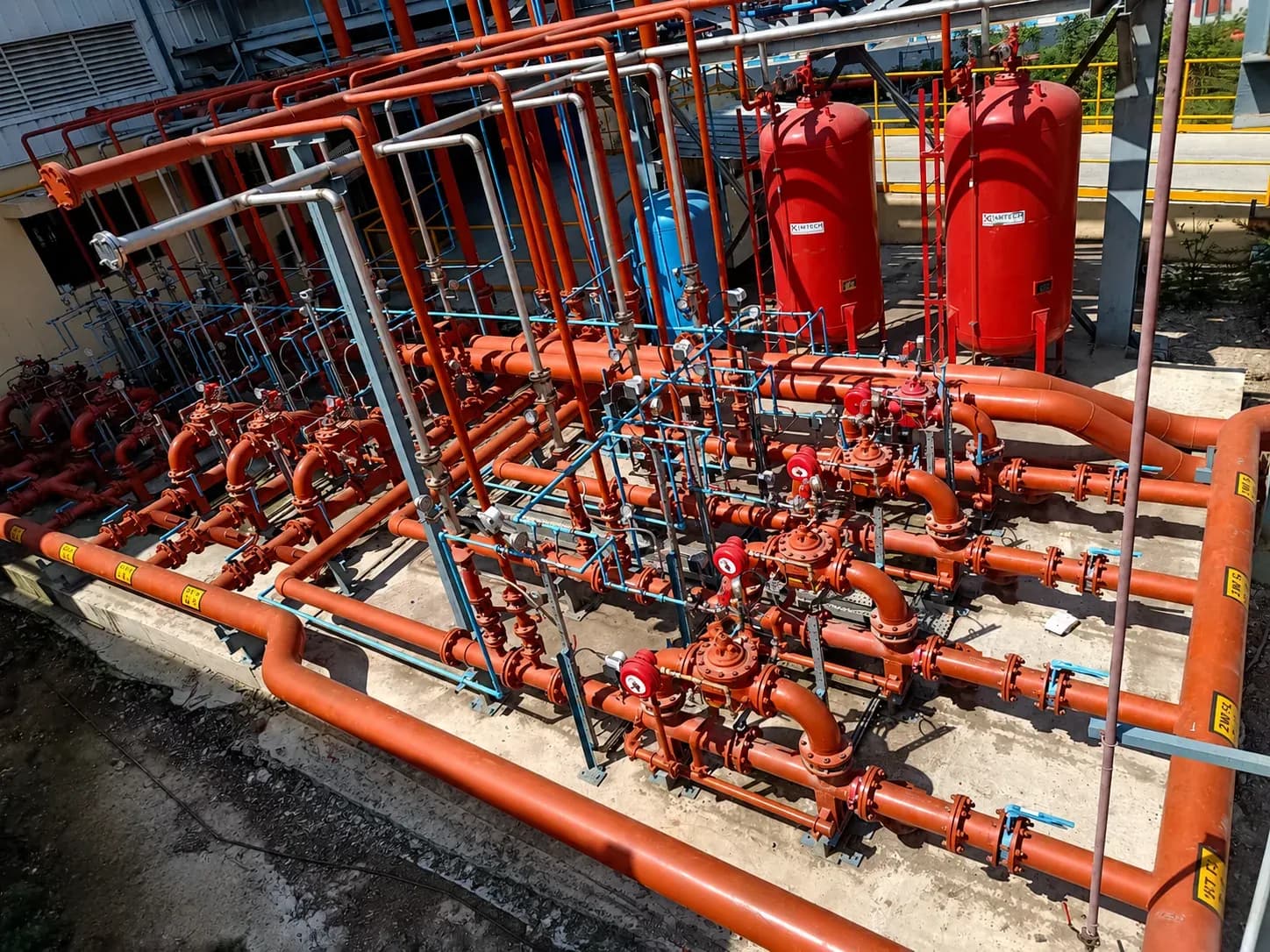
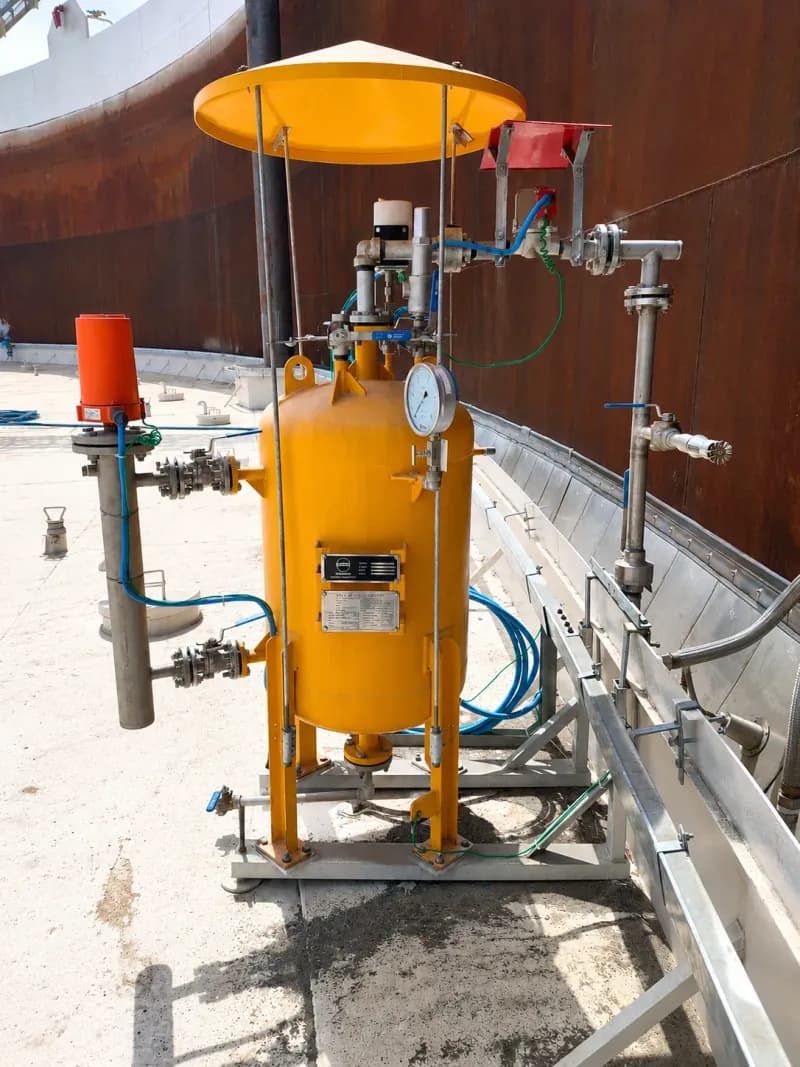
Foam fire fighting system installed at a tank farm

Video
Foam bladder tank — how it delivers concentrate
What a bladder tank stores, and how it puts foam concentrate into the line.
Why De’s Technico
Equipment from our own catalogue
Bladder tanks, ratio controllers, inductors, foam makers, pourers and chambers are made in our own works, so supply and execution answer to one schedule.
Built and tested in our works
Manufactured in two factory units of 48,000 and 30,000 sq ft, with in-house testing before despatch.
6 installations on record
Our project record lists 6 foam system installations, from design through commissioning.
One contract, design to handover
A lump-sum turnkey scope on single-window responsibility: design, engineering, supply, installation and commissioning answer to one schedule.
Questions we are asked
Why foam rather than water on a tank fire?
Most flammable liquids float on water and keep burning. Foam floats on the liquid instead, cutting off the air, suppressing the vapour that burns and cooling the surface.
What is the difference between 3% and 6% concentrate?
The proportion mixed into the water. A 3% concentrate needs half the storage of a 6% one for the same solution; the choice follows the concentrate’s listing and the hazard.
Do we need AR-AFFF or is AFFF enough?
Alcohol-resistant concentrate is needed for polar solvents such as alcohols and ketones, which break down ordinary foam. For hydrocarbons alone, AFFF is sufficient.
How long must a tank foam system run?
For fixed-roof tanks NFPA 11 sets 30 or 55 minutes depending on the flash point of the product; the design basis report states the figure for each tank.
Does foam concentrate expire?
It degrades in storage. A sample should be laboratory-tested every year, and the concentrate replaced when it falls out of specification.
Related systems
Projects with this system
Considering us for a turnkey scope?
Send the hazard, the code and the site. Our engineers reply with a scheme and a price.