
Sprinkler System
Heads that open one at a time over the fire, from a network charged with water, for warehouses and buildings — designed to the hazard and, in storage, to the commodity and stack height.
At a glance
- Governing standard
- NFPA 13
- Designed to
- NFPA 13, IS 15105, NBC 2016 Part 4
- Equipment source
- Our own works
How it works

A sprinkler system operates one head at a time. Each head is held closed by a glass bulb or fusible link that opens at its rated temperature, so only the heads over the fire discharge and the rest of the building stays dry.
Design follows the hazard classification and, in storage occupancies, the commodity and the stack height rather than the floor area — the same building can need very different densities depending on what is kept in it and how high it is piled. Wet, dry, pre-action and deluge variants differ in what is held in the pipe and what has to happen before water reaches the head.
Main components
- The water supply and pumps.
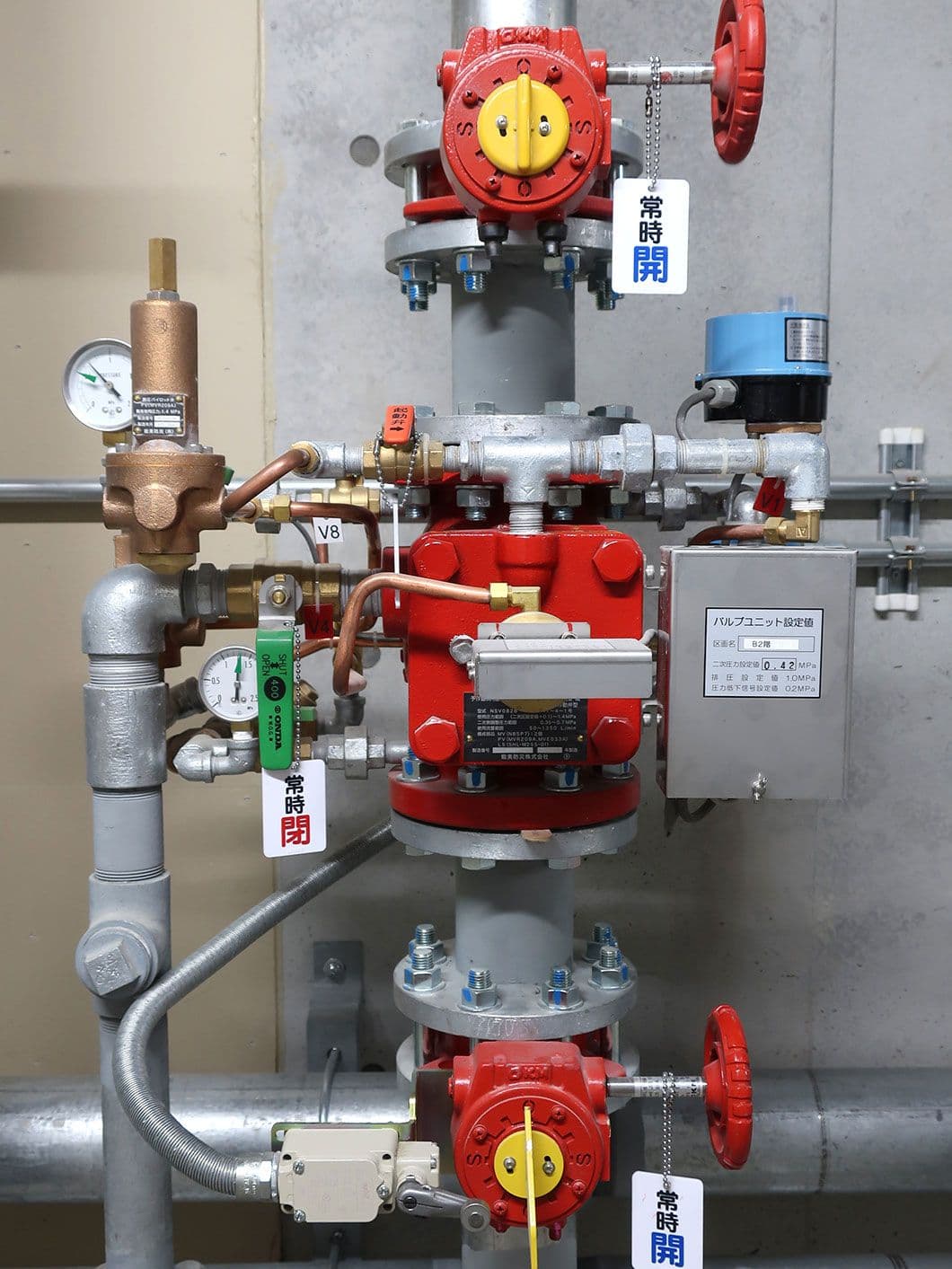
- Installation control valve sets, with alarm gong and flow switch.
- Mains, ranges and sprinkler heads.
- Test and drain valves, including the inspector’s test at the far end.
Testing and maintenance
- Test the alarm and flow switch routinely, and flow the inspector’s test periodically.
- Keep heads clear of storage, paint and dust, and keep spare heads and a head spanner on site.
- Replace any head that has operated, been damaged or corroded.
| Type | Pipework holds | Operates when | Suits |
|---|---|---|---|
| Wet | Water | A head fuses | Heated buildings |
| Dry | Air or nitrogen under pressure | A head fuses, air escapes and the valve opens | Unheated areas at risk of freezing |
| Pre-action | Air, supervised | Detection operates first, then a head fuses | Where accidental water is costly: data, archives |
| Deluge | Nothing — heads are open | Detection opens the valve; every head discharges | High hazards where fire spreads fast |
Scope we take
- 1
Design
Hazard classification, design density and area of operation, head type and spacing, and hydraulic calculation.
- 2
Supply
Installation control valve sets, sprinklers, pipe and hangers.
- 3
Installation
Mains, ranges and heads, supported and braced to the design.
- 4
Testing
Hydrostatic test and flushing.
- 5
Commissioning
Alarm valve, flow switch and water motor gong tests, and a flow test at the inspector’s test point.
- 6
Handover
As-built drawings, test records and operating and maintenance manuals, with training for the people who will run the system.
Equipment used
Deluge Valves & Systems · 1
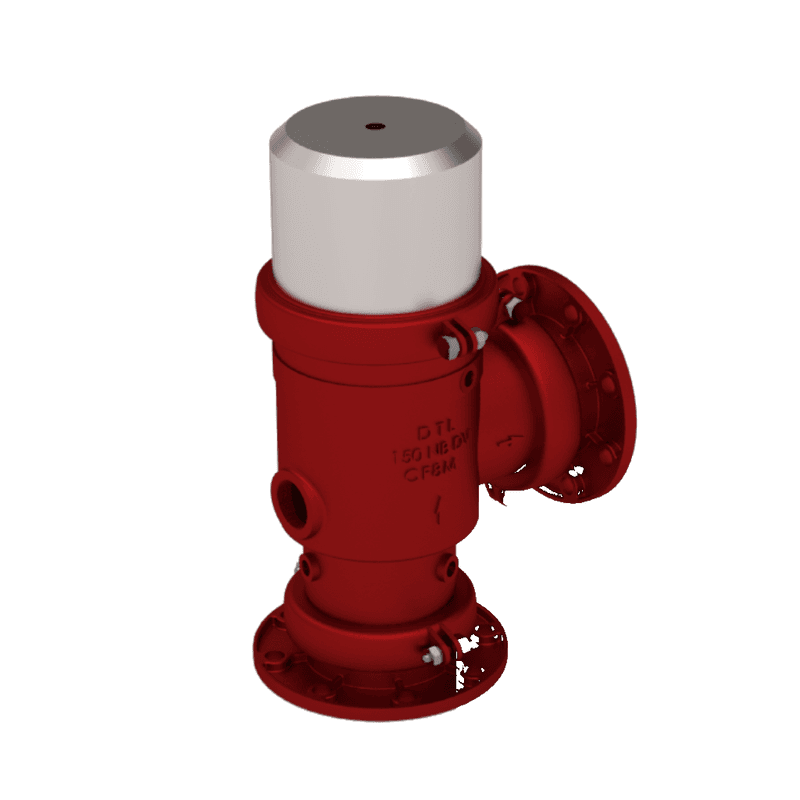

Deluge Valve Cast Carbon Steel (Model PD-CS)
Cast carbon steel, 80 to 200 mm, 250 psi
Spray Nozzles · 1
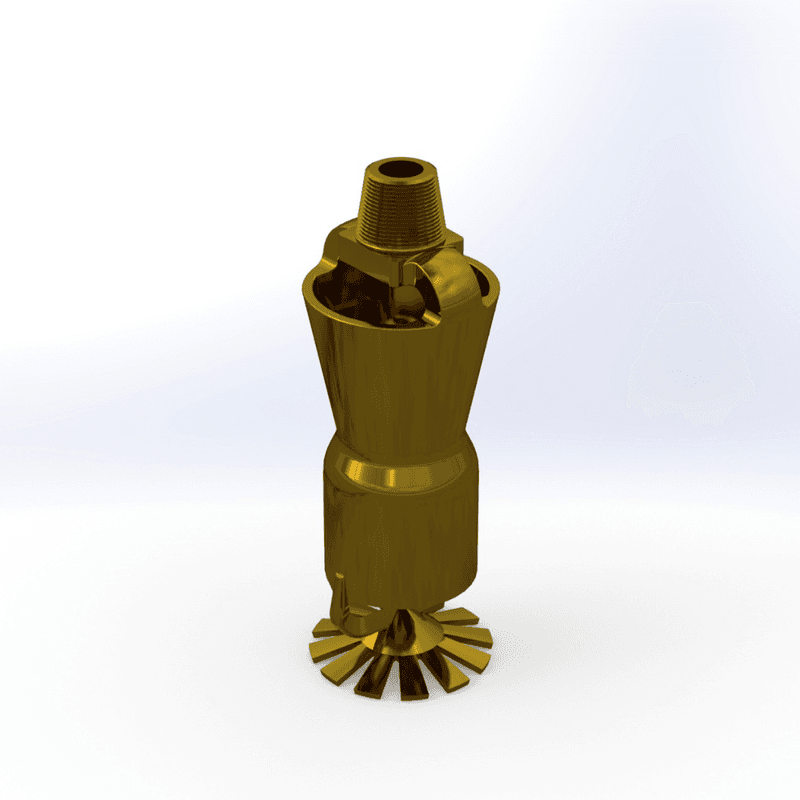 Tyco make
Sprinkler Foam-Water
Air-aspirating, upright and pendent, K-3.0
Standards
- NFPA 13Installation of sprinkler systems.
- IS 15105Design and installation of fixed automatic sprinkler systems.
- NBC 2016 Part 4Fire and life safety in buildings.
| Parameter | Figure | Source |
|---|---|---|
| Light hazard | 4.1 L/min/m² over 139 m² | NFPA 13 — density/area |
| Ordinary hazard group 1 / group 2 | 6.1 / 8.1 L/min/m² over 139 m² | NFPA 13 — density/area |
| Extra hazard group 1 / group 2 | 12.2 / 16.3 L/min/m² over 232 m² | NFPA 13 — density/area |
| Maximum area per standard spray sprinkler | Light 20.9 m² (hydraulically calculated); ordinary 12.1 m²; extra 9.3 m² | NFPA 13 |
Service and maintenance
A fire protection system only performs if it is kept in the condition it was commissioned in. Inspection, testing and maintenance to the intervals the code sets — under an annual maintenance contract or as a single visit.
| Task | Interval | Reference |
|---|---|---|
| Inspect control valves and gauges | Weekly to monthly | NFPA 25 |
| Test waterflow alarms | Quarterly | NFPA 25 |
| Main drain test | Annually | NFPA 25 |
| Inspect sprinkler heads for damage, paint and obstruction | Annually | NFPA 25 |
Images · 4
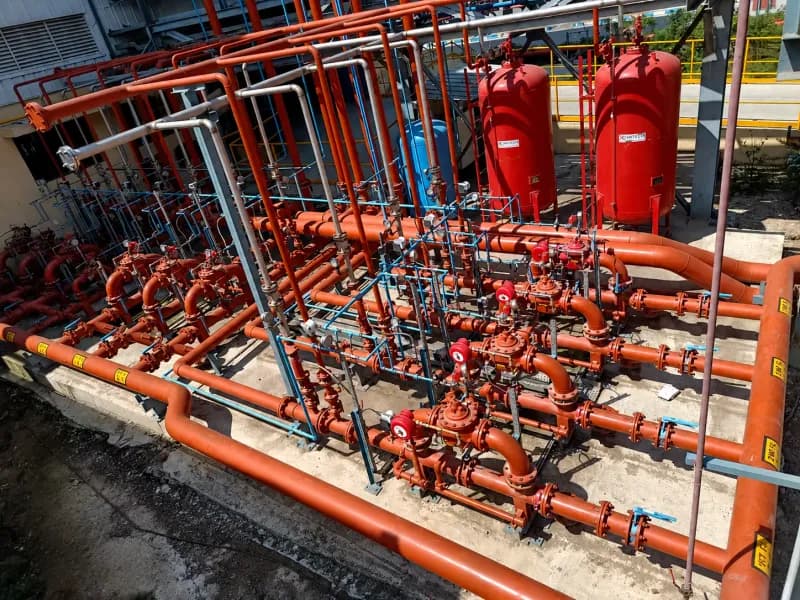
Sprinkler alarm valve set

Sprinkler pipework in a basement car park
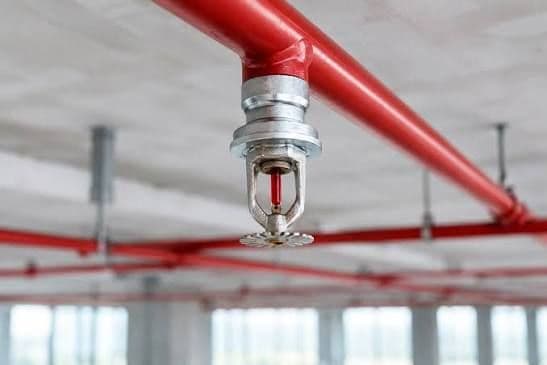
Pendent sprinkler head on a branch line
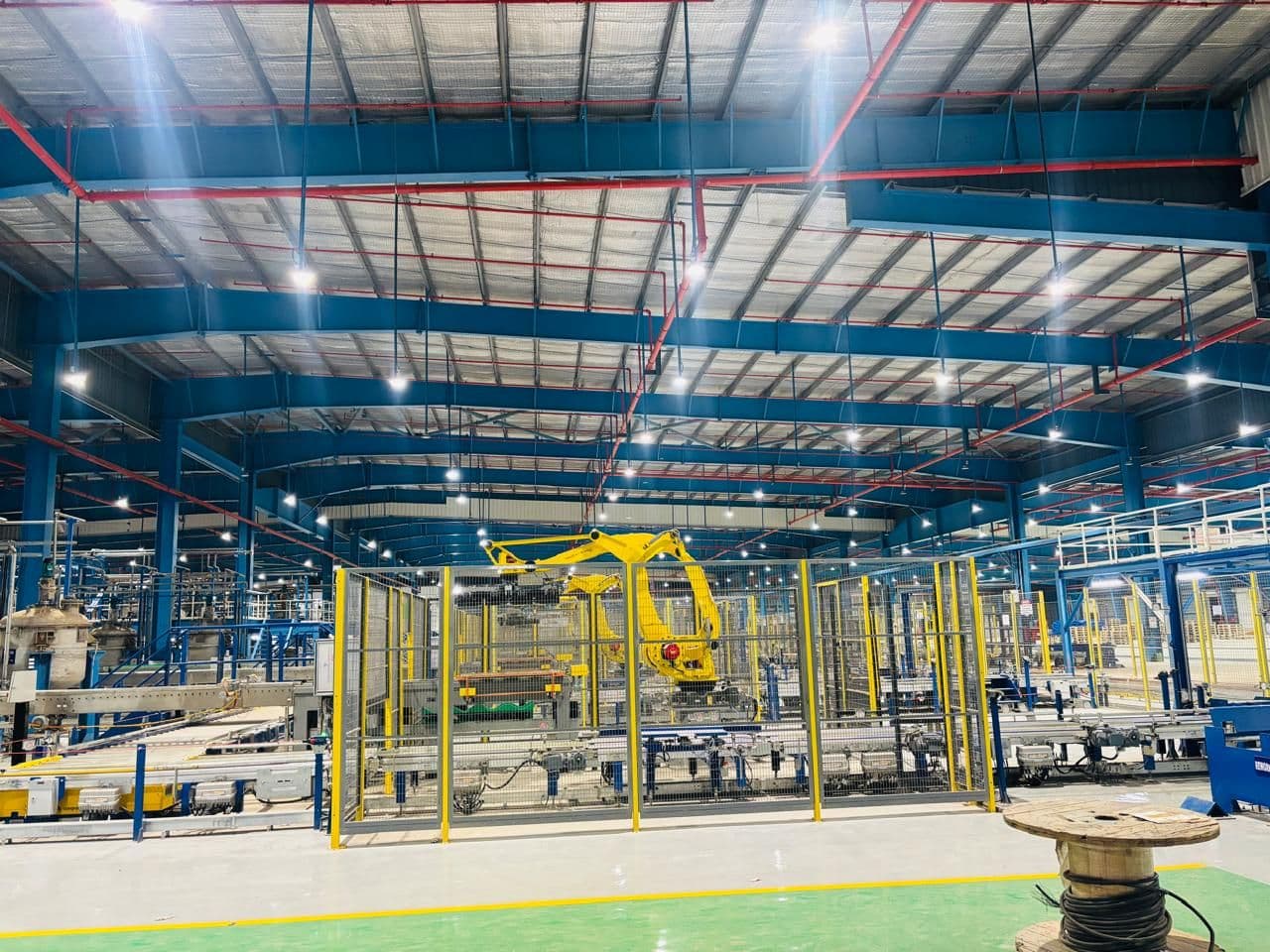
Sprinkler pipework over a production hall



Why De’s Technico
Equipment from our own catalogue
Foam-water sprinklers and deluge valves are made in our own works, so supply and execution answer to one schedule.
One contract, design to handover
A lump-sum turnkey scope on single-window responsibility: design, engineering, supply, installation and commissioning answer to one schedule.
Built and tested in our works
Manufactured in two factory units of 48,000 and 30,000 sq ft, with in-house testing before despatch.
In fire protection since 1988
More than 35 years of designing and executing fire detection and protection systems for high-hazard industry.
Questions we are asked
Do all the sprinklers go off at once?
No. In wet, dry and pre-action systems each head opens on its own when its bulb or link reaches its rated temperature, so only the heads over the fire discharge. Only a deluge system opens every head at once.
Which system suits an unheated warehouse?
A dry system, whose pipework holds air rather than water and so cannot freeze.
How is a warehouse sprinkler system sized?
By the commodity and how high it is stacked, not just the floor area. The same building can need very different densities depending on what is stored in it.
What is a pre-action system for?
Spaces where water released by accident would be costly, such as data rooms and archives. Detection has to operate before water enters the pipework.
Can a sprinkler head be painted over?
No. Paint changes how a head responds; any painted, damaged or corroded head should be replaced.
Related systems
 Foam Based Fire Fighting SystemBladder tanks, pourers and makers for tank farms, bund areas and loading gantries.
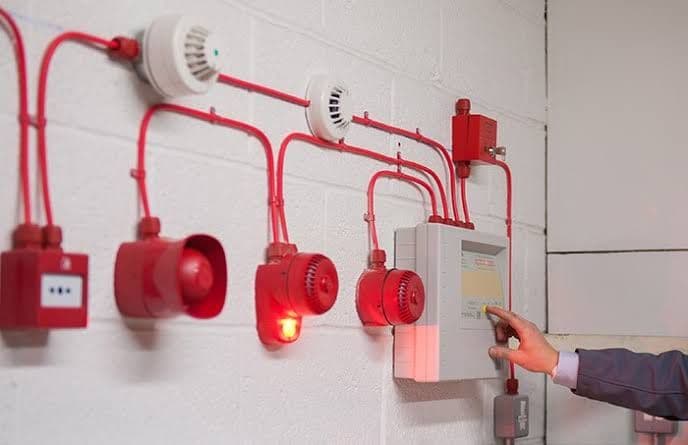 Fire Detection & Alarm SystemDetection and alarm, supplied and integrated under the same contract as the suppression system.
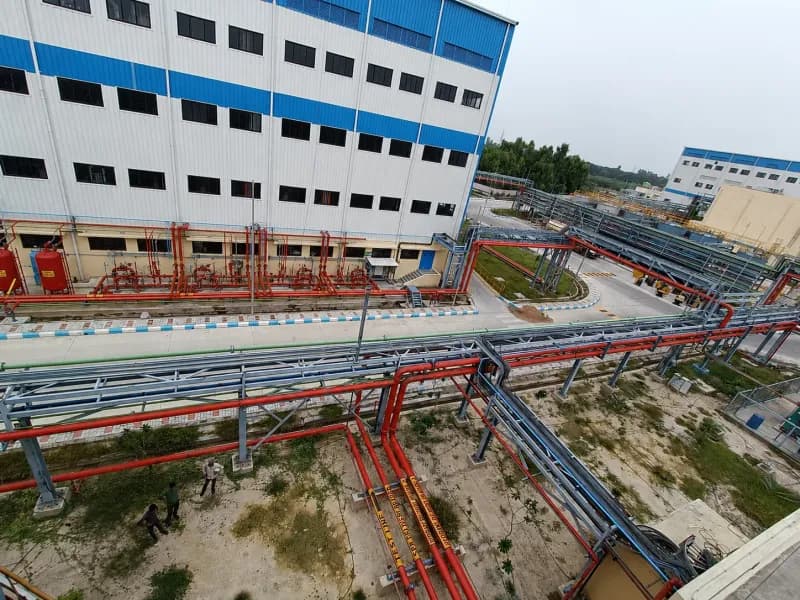 Fire Hydrant SystemPlant-wide ring main, hydrants, monitors and hose boxes, sized to the site.
Considering us for a turnkey scope?
Send the hazard, the code and the site. Our engineers reply with a scheme and a price.