
Fire Detection & Alarm System
DTL does not manufacture detection. Where a scheme calls for it, panels and field devices from represented brands are supplied, installed and integrated under the same contract as the suppression system.
At a glance
- Governing standard
- NFPA 72
- Designed to
- NFPA 72, IS 2189, NBC 2016 Part 4
How it works

A detection and alarm system finds a fire early, raises the alarm, and sets off everything else that has to happen: releasing a suppression system, shutting down ventilation, closing fire doors and telling people to leave.
What it is made of
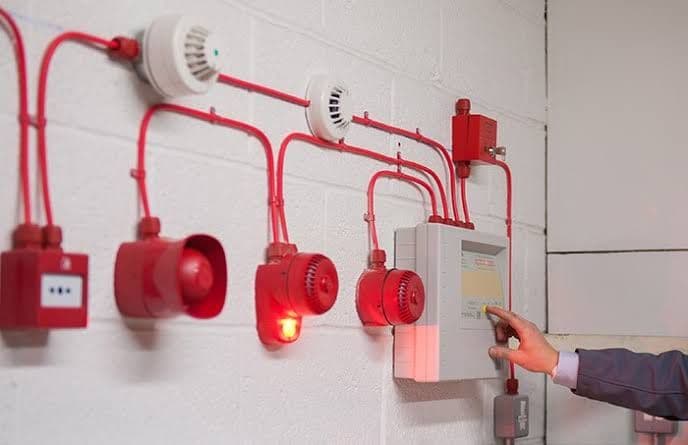
- Detectors matched to the risk: smoke detectors for ordinary areas, heat detectors where smoke would give false alarms, flame detectors for open process areas, linear heat cable along cable trays and tank seals, and aspirating detection where the earliest possible warning matters.
- Manual call points on escape routes.
- Sounders and beacons to raise the alarm.
- A control panel that monitors every device and its wiring, shows where the alarm came from, and drives the outputs.
Addressable and conventional
An addressable system identifies each device individually, so the panel names the exact detector in alarm and a fault can be traced to one device. A conventional system reports by zone. Addressable is the norm on industrial sites, where knowing precisely where a fire is changes the response.
Integration
The value is in the interfaces. The cause-and-effect matrix programmed into the panel decides what each alarm does — which suppression system it releases, which fans stop, which doors close — so detection and suppression work as one system rather than two.
| Detector | Senses | Suits |
|---|---|---|
| Optical smoke | Smoke scattering light | Offices, control rooms, most indoor areas |
| Heat, fixed or rate-of-rise | Temperature, or how fast it rises | Kitchens, workshops, dusty areas |
| Multi-sensor | Smoke and heat together | Areas prone to false alarms |
| Aspirating | Air sampled through pipes | Data halls, clean rooms, early warning |
| Beam | Smoke across a long open space | Warehouses, atria, hangars |
| Linear heat | Heat along a cable | Cable trays, conveyors, tank rim seals |
| Flame | Radiation from a flame | Open process areas |
Scope we take
- 1
Survey and design
Detector type for each area, zoning, device layout, and the cause-and-effect matrix that decides what each alarm does.
- 2
Supply
Panels and field devices from represented brands, to the approved specification.
- 3
Installation
Cabling, detectors, call points, sounders and panels.
- 4
Programming
The cause-and-effect programmed into the panel, with interfaces to suppression release, ventilation, lifts and public address.
- 5
Commissioning
Every device tested in place, and every interface proved end to end.
- 6
Handover
As-built drawings, test records and operating and maintenance manuals, with training for the people who will run the system.
Equipment used
Brands we supply and integrate











Standards
- NFPA 72National fire alarm and signalling code.
- IS 2189Selection, installation and maintenance of automatic fire detection and alarm systems.
- NBC 2016 Part 4Fire and life safety in buildings.
| Parameter | Figure | Source |
|---|---|---|
| Smoke detector spacing, smooth ceilings | 9.1 m nominal | NFPA 72 |
| Manual call points | Within 1.5 m of each exit; travel distance to one not more than 61 m | NFPA 72 |
Service and maintenance
A fire protection system only performs if it is kept in the condition it was commissioned in. Inspection, testing and maintenance to the intervals the code sets — under an annual maintenance contract or as a single visit.
| Task | Interval | Reference |
|---|---|---|
| Visual inspection of panels, devices and batteries | Six-monthly | NFPA 72 |
| Functional test of every detector and call point | Annually | NFPA 72 |
| Smoke detector sensitivity test | Every 2 years after the first | NFPA 72 |
| Test interfaces to suppression, ventilation and lifts | Annually | NFPA 72 |
Images · 2
Manual call point, sounder and beacon
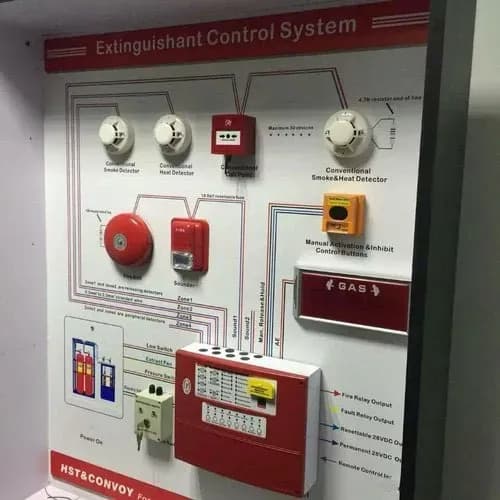
Extinguishant control panel


Video
Detection and response
How a detection and suppression scheme responds when an incident starts.
Why De’s Technico
Represented brands
Panels and field devices from the detection brands we represent, supplied, installed and integrated under the same contract as the suppression system.
4 installations on record
Our project record lists 4 fire detection and alarm installations, from design through commissioning.
One contract, design to handover
A lump-sum turnkey scope on single-window responsibility: design, engineering, supply, installation and commissioning answer to one schedule.
In fire protection since 1988
More than 35 years of designing and executing fire detection and protection systems for high-hazard industry.
Questions we are asked
Addressable or conventional?
Addressable identifies each device, so the panel names the exact detector in alarm; conventional reports by zone. Addressable is the norm on industrial sites.
Which detector for which area?
Smoke detectors for most indoor areas, heat detectors where smoke or dust would cause false alarms, and flame or linear heat detection for open process areas, cable trays and tank seals.
Can the alarm system release suppression?
Yes. The cause-and-effect programmed into the panel can release deluge, foam or gas systems, stop ventilation and close doors.
How often is it tested?
Under NFPA 72, every detector and call point is tested each year, with visual inspections in between and smoke detector sensitivity checked every two years.
Do you manufacture the detectors?
No. Panels and devices come from the brands we represent; we supply, install, program and commission them under the same contract as the suppression system.
Related systems
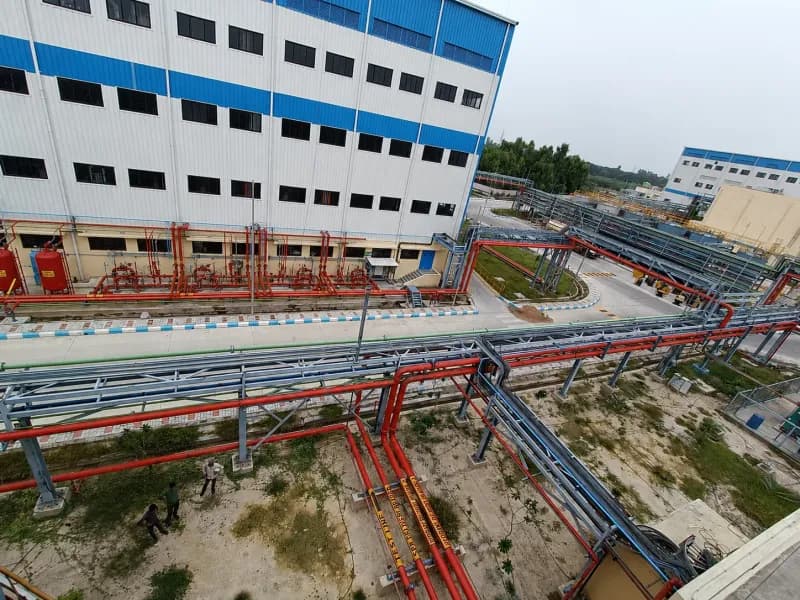
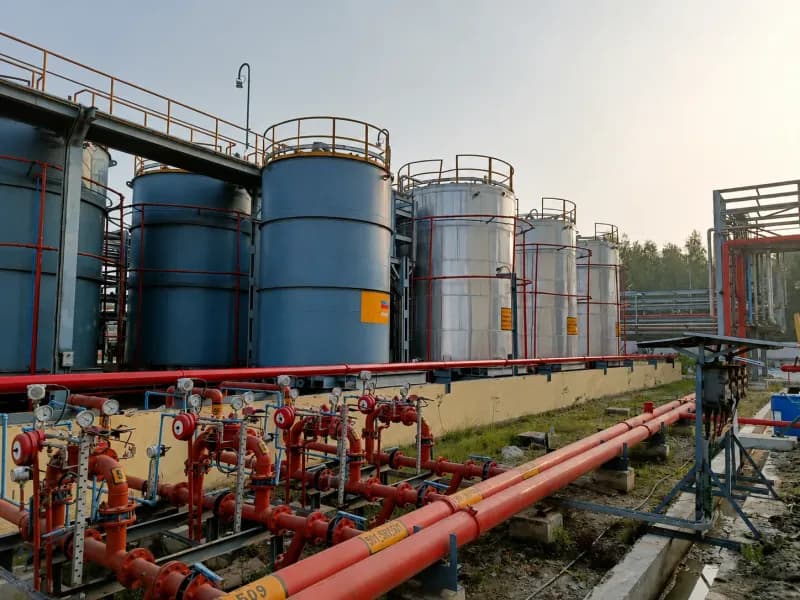
Projects with this system
Considering us for a turnkey scope?
Send the hazard, the code and the site. Our engineers reply with a scheme and a price.