
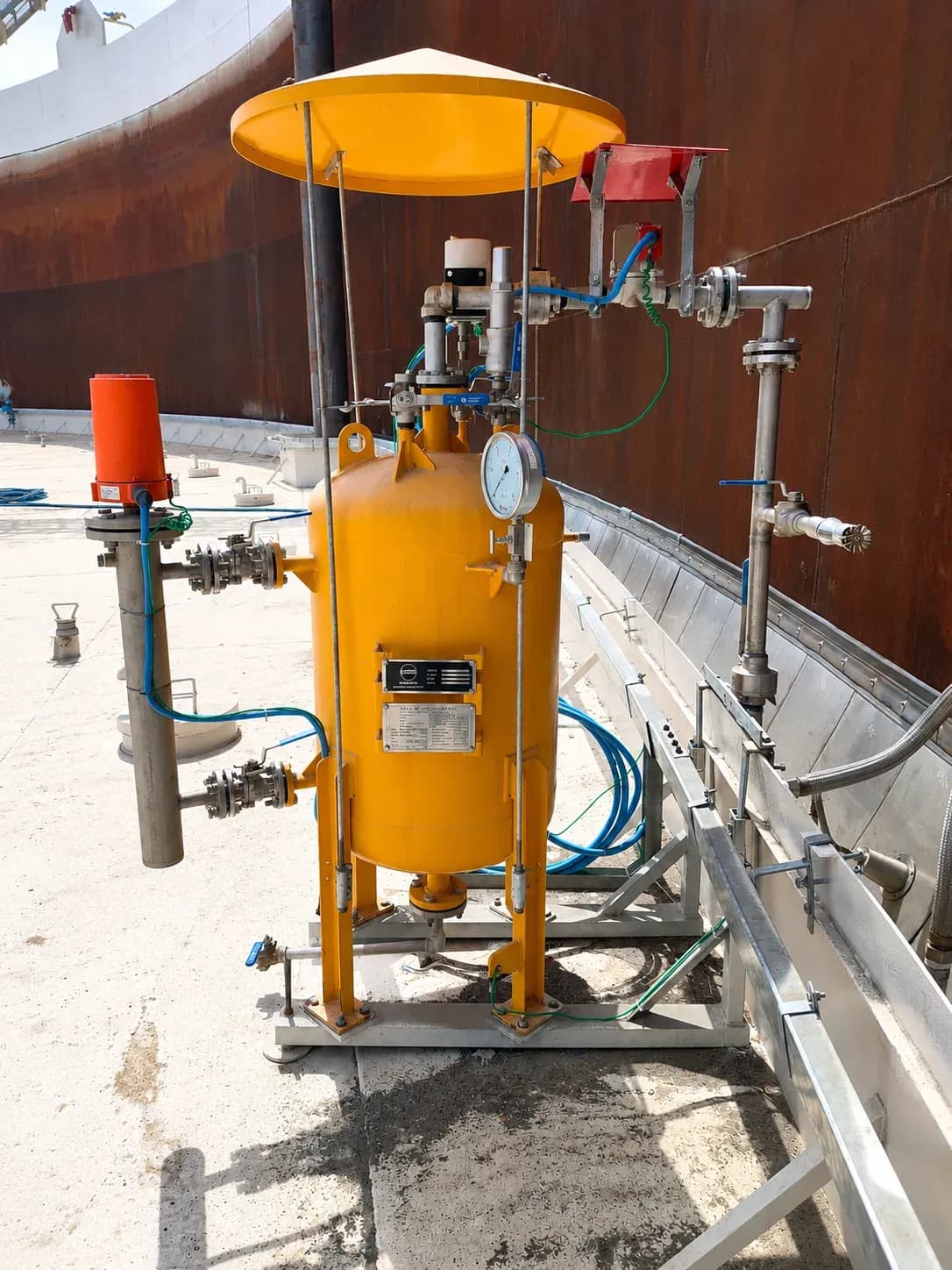
Rimseal Fire Protection System
Linear heat detection cable at the rim seal, with AFFF or AR-AFFF foam discharged into the seal area. Applied to floating roof storage tanks in crude and naphtha service.
At a glance
- Governing standard
- API 2021
- Designed to
- NFPA 11, OISD-STD-117
- Equipment source
- Our own works
How it works

On a floating roof tank the vulnerable place is the seal between the roof and the shell, where vapour escapes and a lightning strike or a hot work spark can ignite a fire that runs the whole circumference.
A rim seal system detects at the seal itself — usually a linear heat sensing cable laid in the rim space — and discharges foam into the rim area through pourers spaced around the roof, so the fire is fought where it starts rather than being allowed to develop into a full-surface fire. Because the roof moves, the discharge pipework and the detection line have to accommodate travel over the full range of the tank.
A full-surface fire is a different problem needing a different answer, and the two should not be conflated when a scheme is specified.
Main components
- Linear heat detection in the rim space, and its control panel.
- Foam storage: premixed solution or a bladder tank.
- A release valve that opens on detection.
- A foam line round the roof, pourers at intervals, and a foam dam to hold the foam over the seal.
Testing and maintenance
- Test the detection loop and the release sequence.
- Check the foam dam and the pourer outlets.
- Check the premixed solution or concentrate at the intervals the code sets.
| Arrangement | How it works | Suits |
|---|---|---|
| Fixed system | Foam solution piped from outside the bund to pourers round the rim, released on detection | Large tanks with a fire water network at hand |
| Roof-mounted modular | Premixed foam stored on the roof, released locally by the detection | Tanks without a nearby foam supply |
Scope we take
- 1
Design
Tank data, the seal and foam dam arrangement, detection along the rim, and the foam quantity the code requires.
- 2
Supply
Linear heat detection, foam pourers, the foam supply and the release equipment.
- 3
Installation on the tank
Detection laid in the rim space and pourers on the shell, planned around the tank’s operation and its hot-work permits.
- 4
Testing
Detection loop tests and a pressure test of the foam lines.
- 5
Commissioning
Simulated detection through to release, and a discharge test where the operator permits one.
- 6
Handover
As-built drawings, test records and operating and maintenance manuals, with training for the people who will run the system.
Equipment used
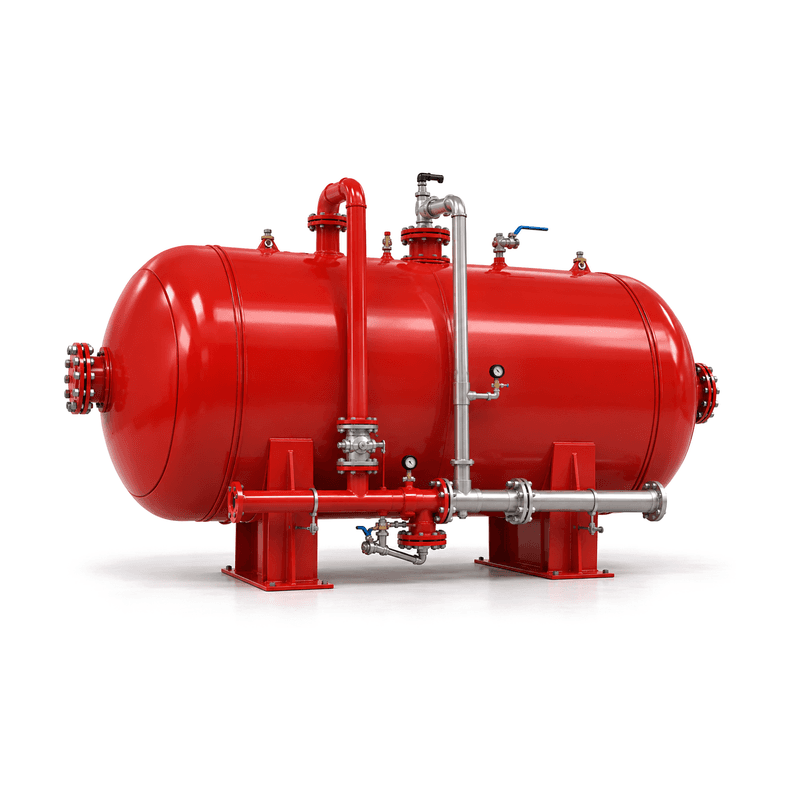

Foam Bladder Tank Horizontal with Ratio Controller
Horizontal, 1,000 to 15,000 litres

Foam Bladder Tank Vertical with Ratio Controller
Vertical, 200 to 7,500 litres
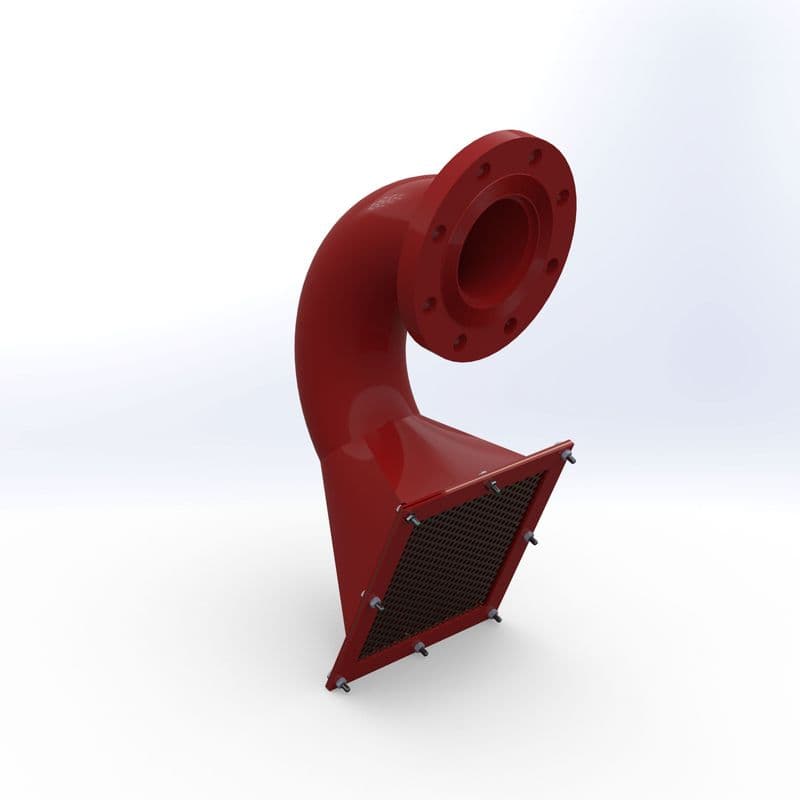
Foam Pourer Floating Roof Tank
For floating roof tanks, 50 to 80 NB inlet
Brands we supply and integrate

Standards
- NFPA 11Foam systems, including rim seal protection on floating roof tanks.
- OISD-STD-117Fire protection facilities for petroleum depots and terminals.
| Parameter | Figure | Source |
|---|---|---|
| Application rate, top-of-seal with foam dam | 12.2 L/min/m² of annular seal area | NFPA 11 — floating-roof tanks |
| Discharge time | 20 minutes | NFPA 11 — floating-roof tanks |
| Foam dam height | At least 0.3 m | NFPA 11 — floating-roof tanks |
| Discharge outlet spacing on the circumference | 12.2 m with a 0.3 m dam; 24.4 m with a 0.6 m dam | NFPA 11 — floating-roof tanks |
Service and maintenance
A fire protection system only performs if it is kept in the condition it was commissioned in. Inspection, testing and maintenance to the intervals the code sets — under an annual maintenance contract or as a single visit.
| Task | Interval | Reference |
|---|---|---|
| Test the detection loop and the release sequence | Six-monthly | NFPA 72 / NFPA 25 |
| Inspect pourers, foam dam and roof pipework | Six-monthly | NFPA 25 |
| Check the premixed solution or concentrate | Annually | NFPA 11 |
Where it applies
Images · 8
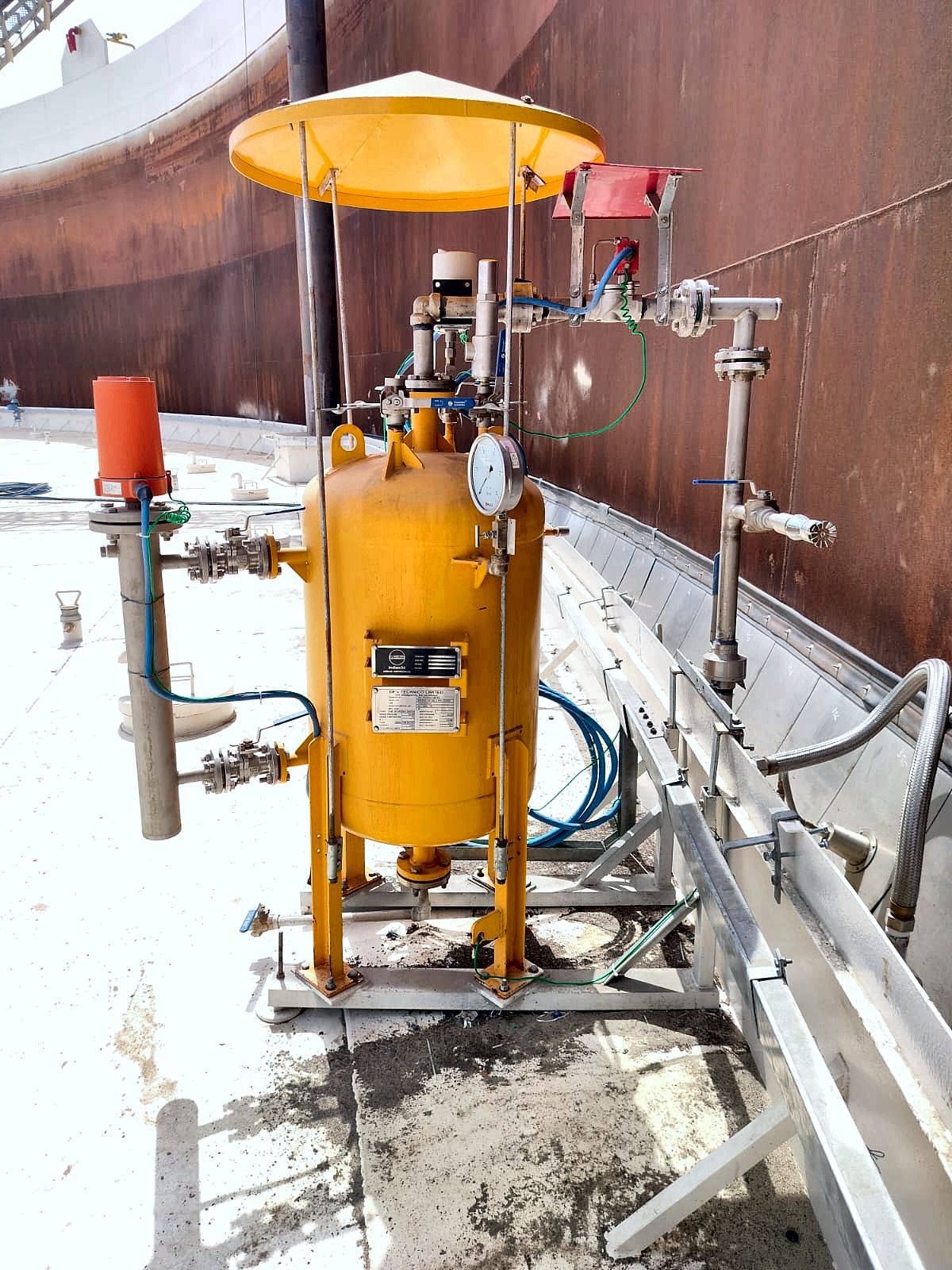
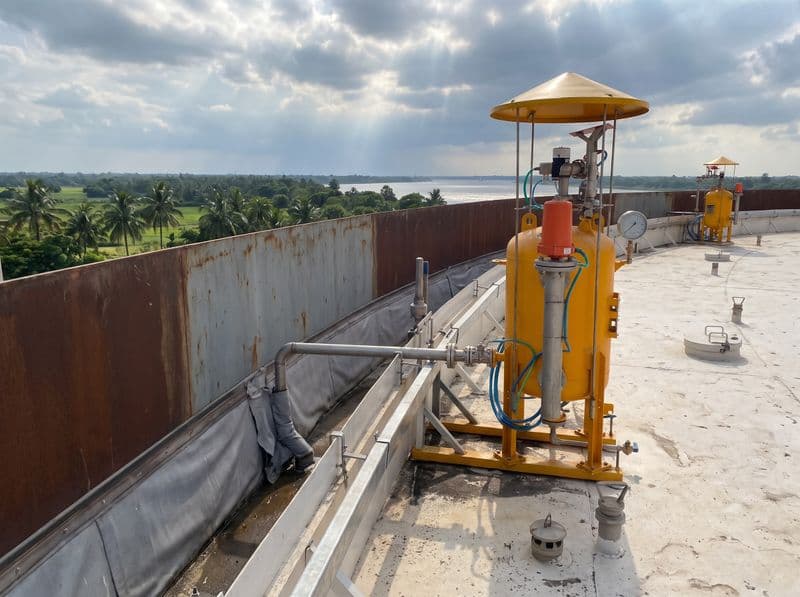
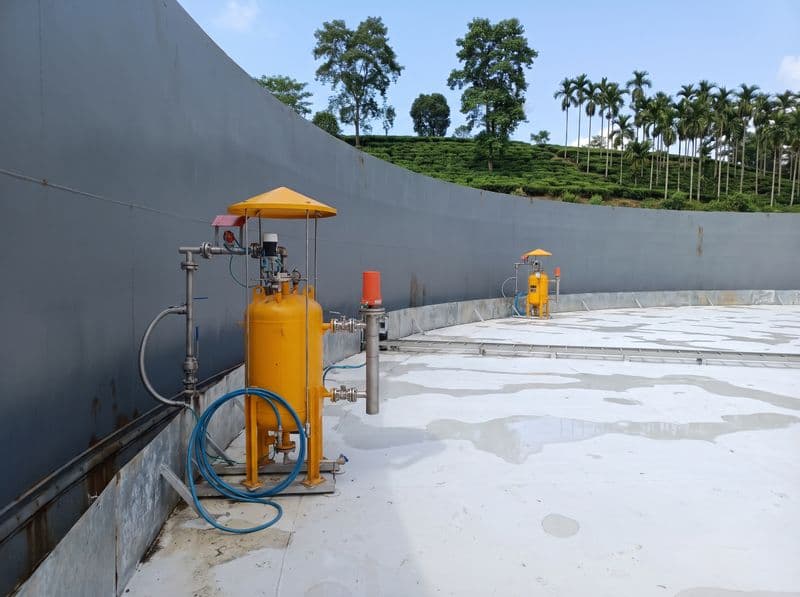
Rimseal foam vessel on a floating roof tank
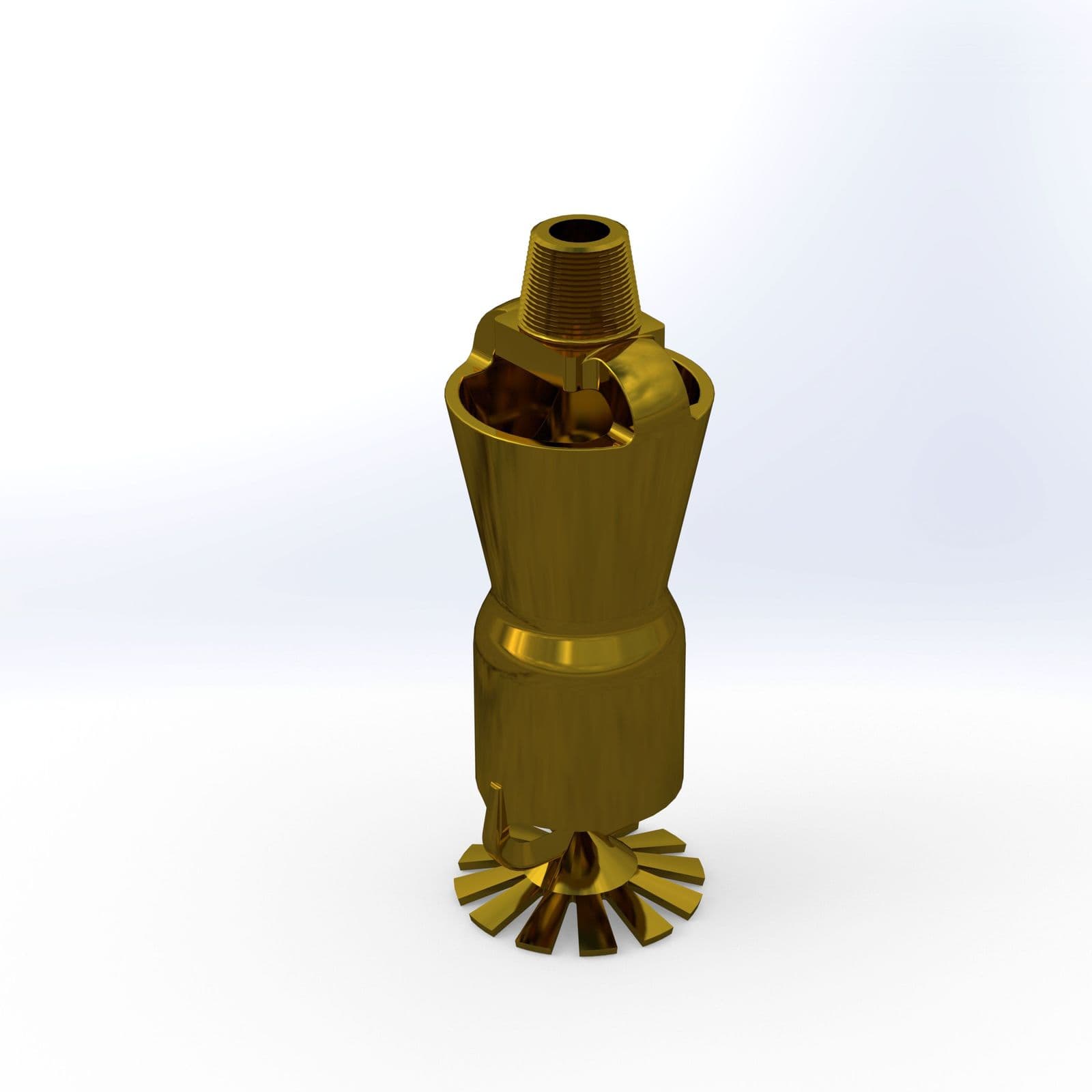
Rim seal nozzle
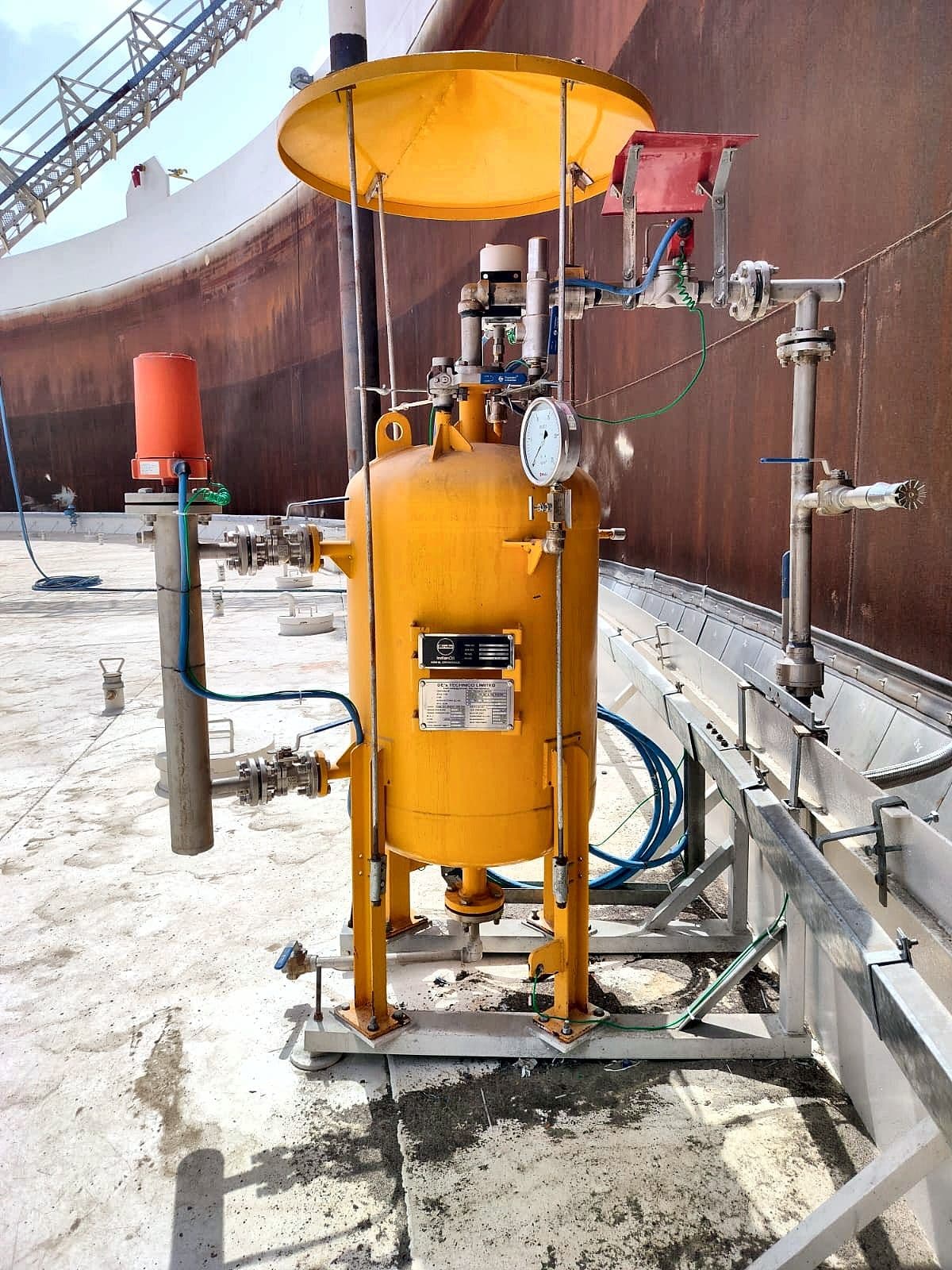
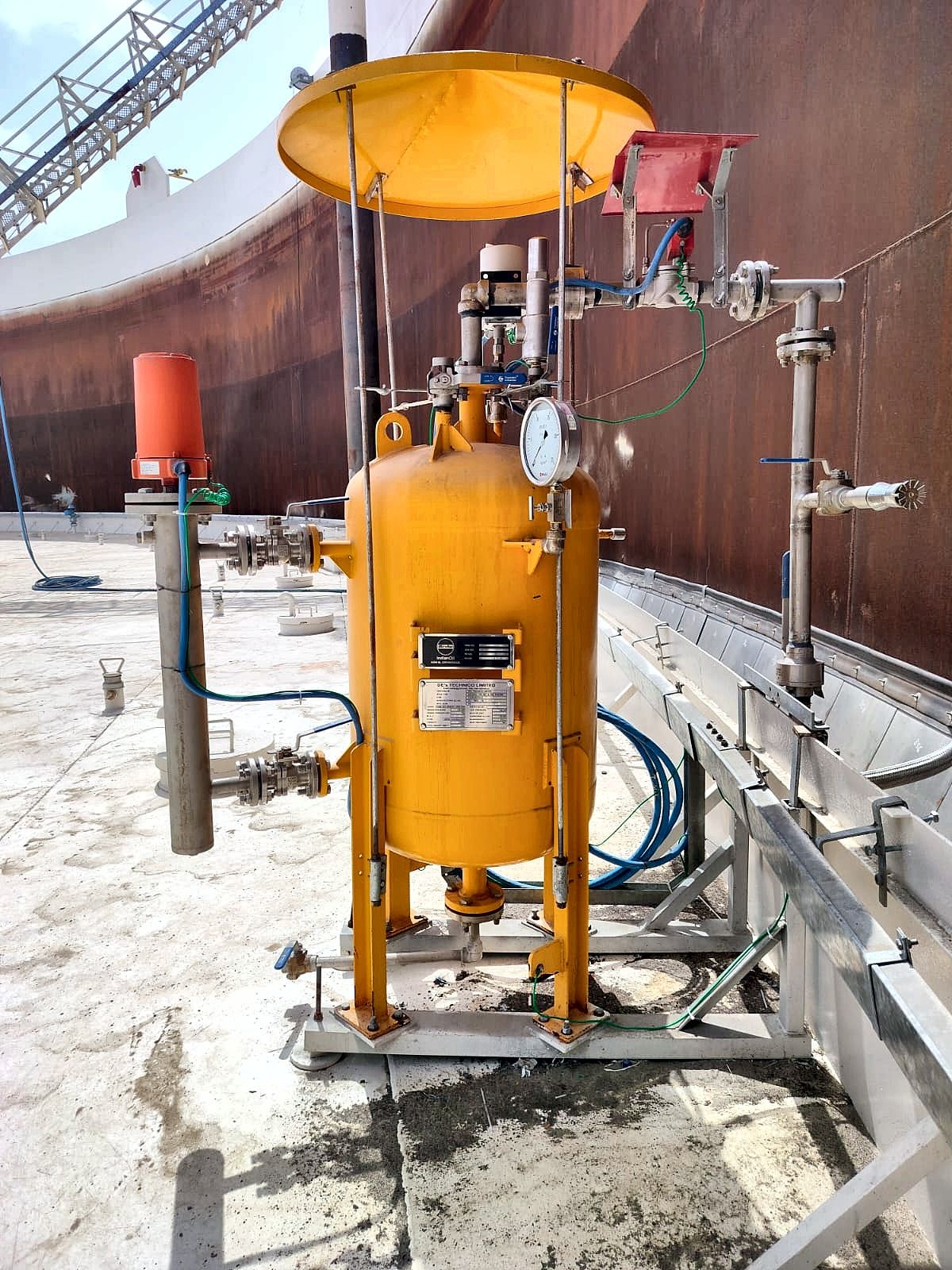
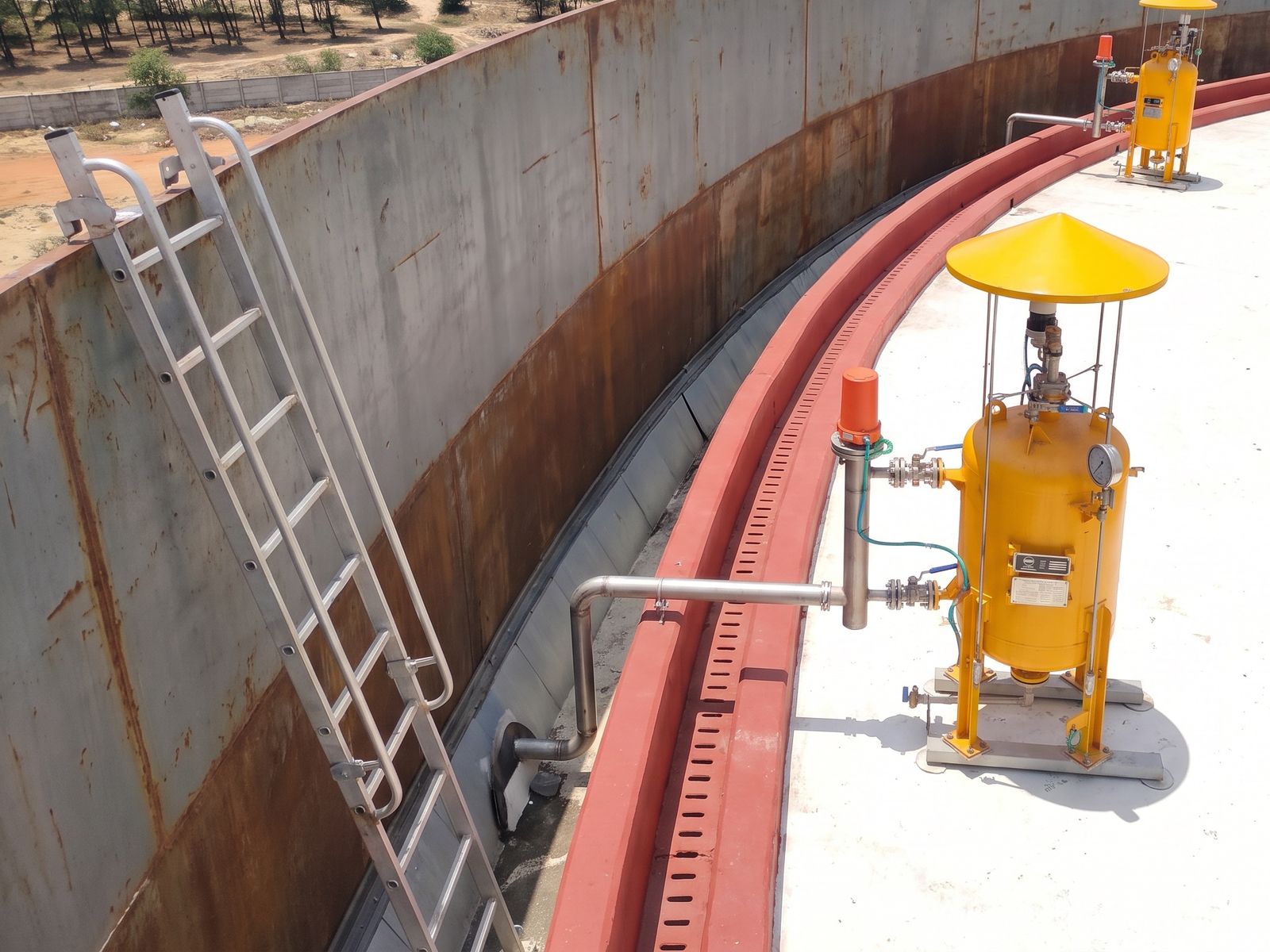
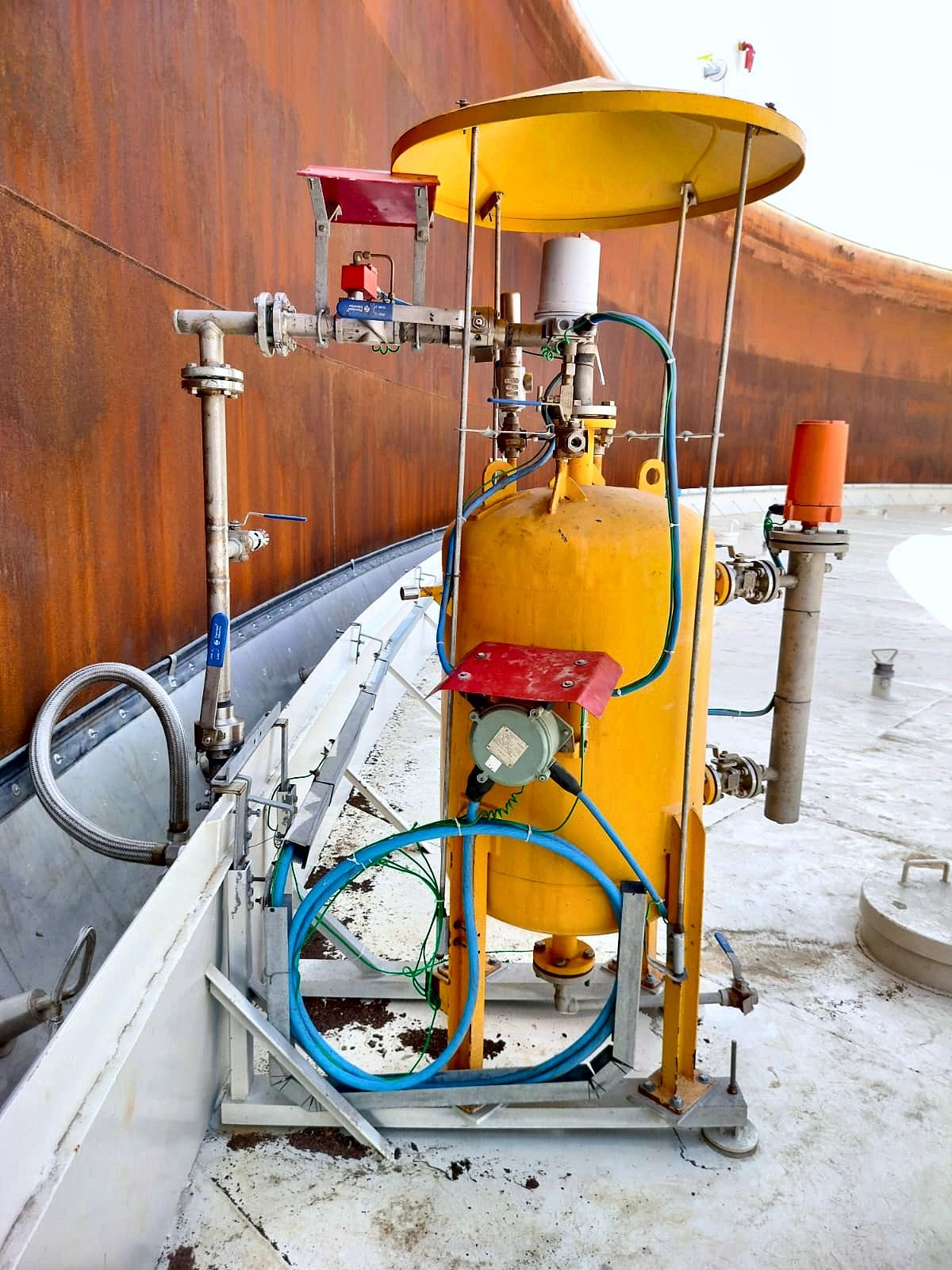
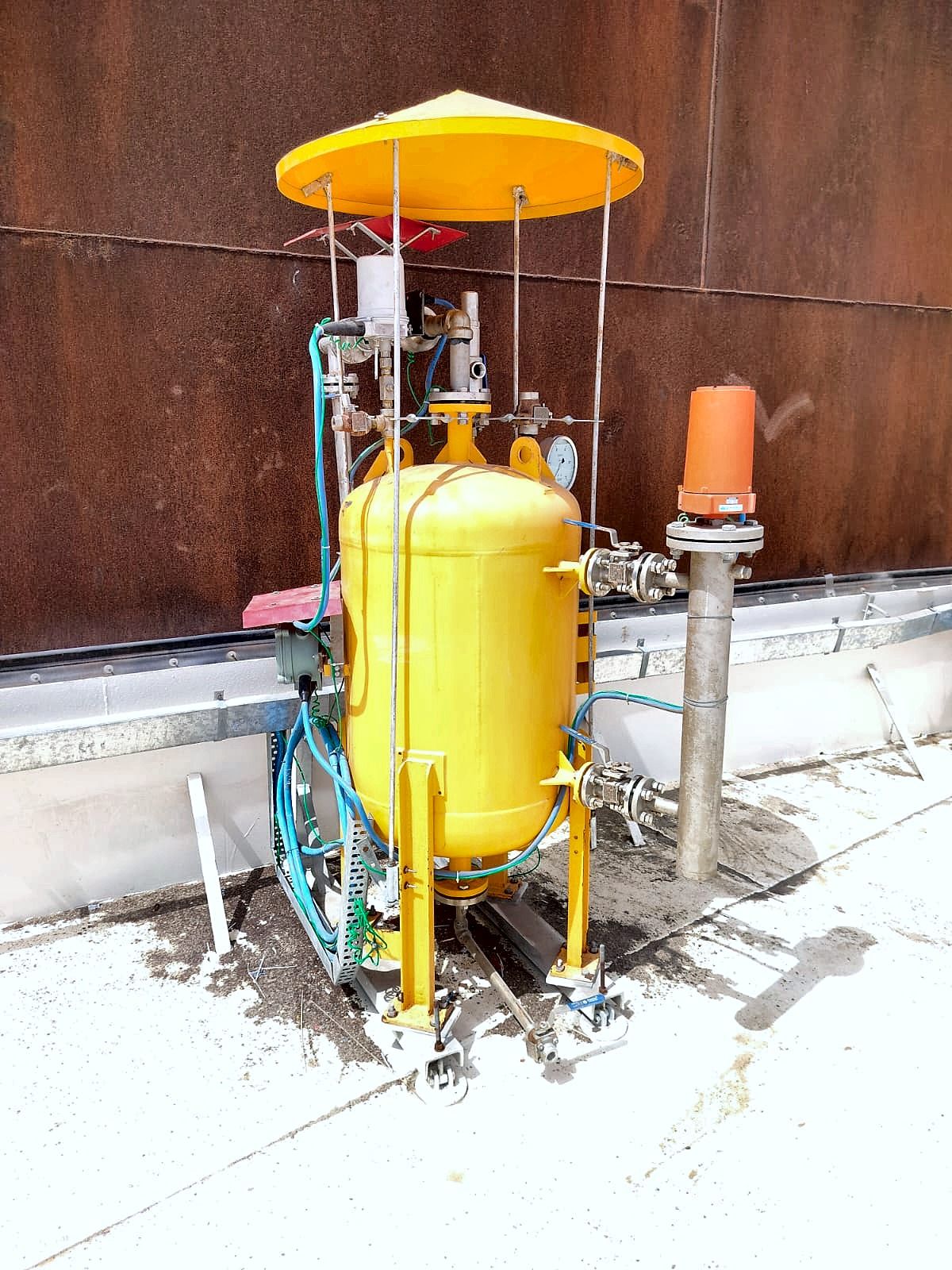
Rim seal fire protection unit installed on a floating roof beside the tank shell
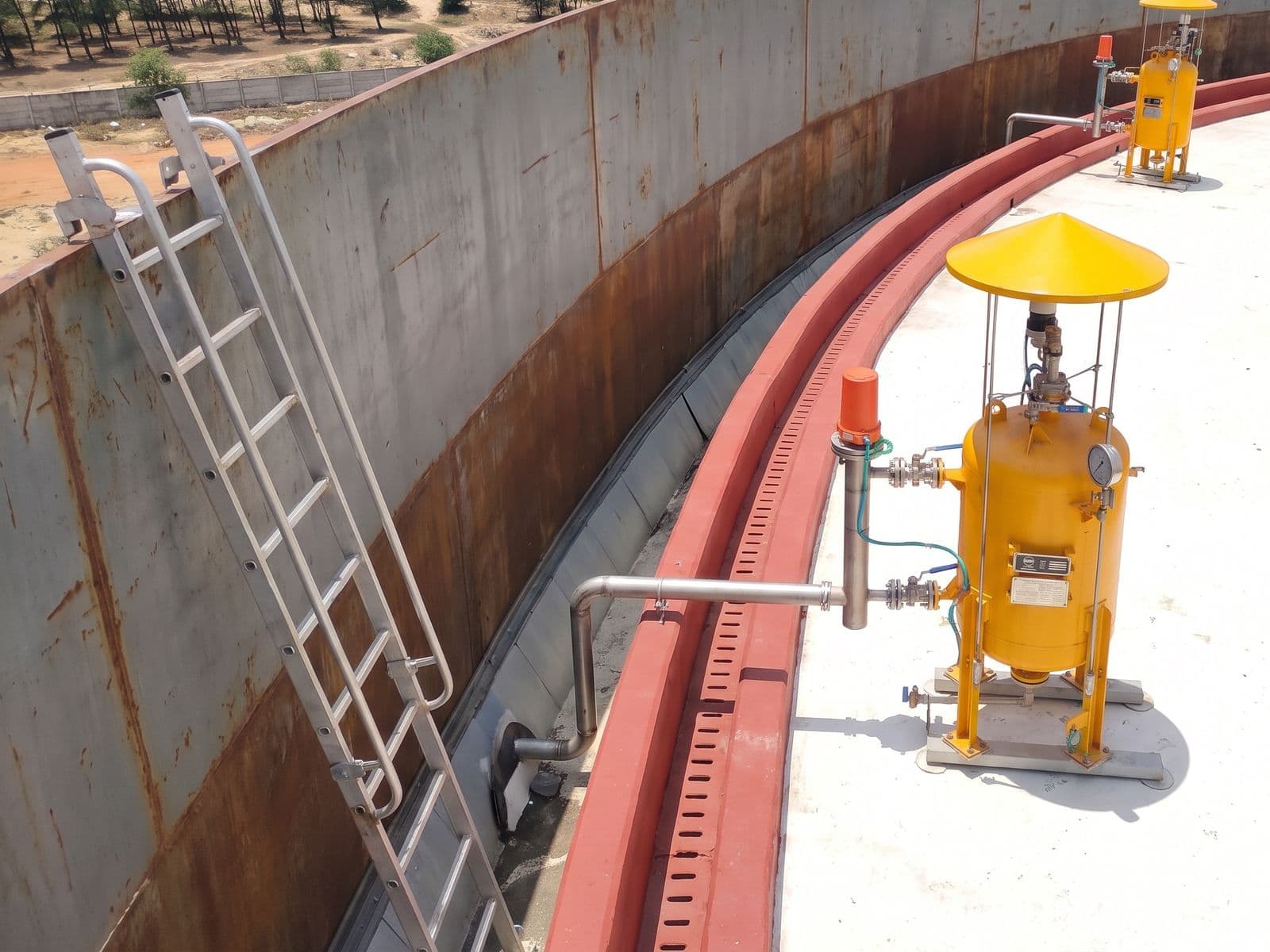
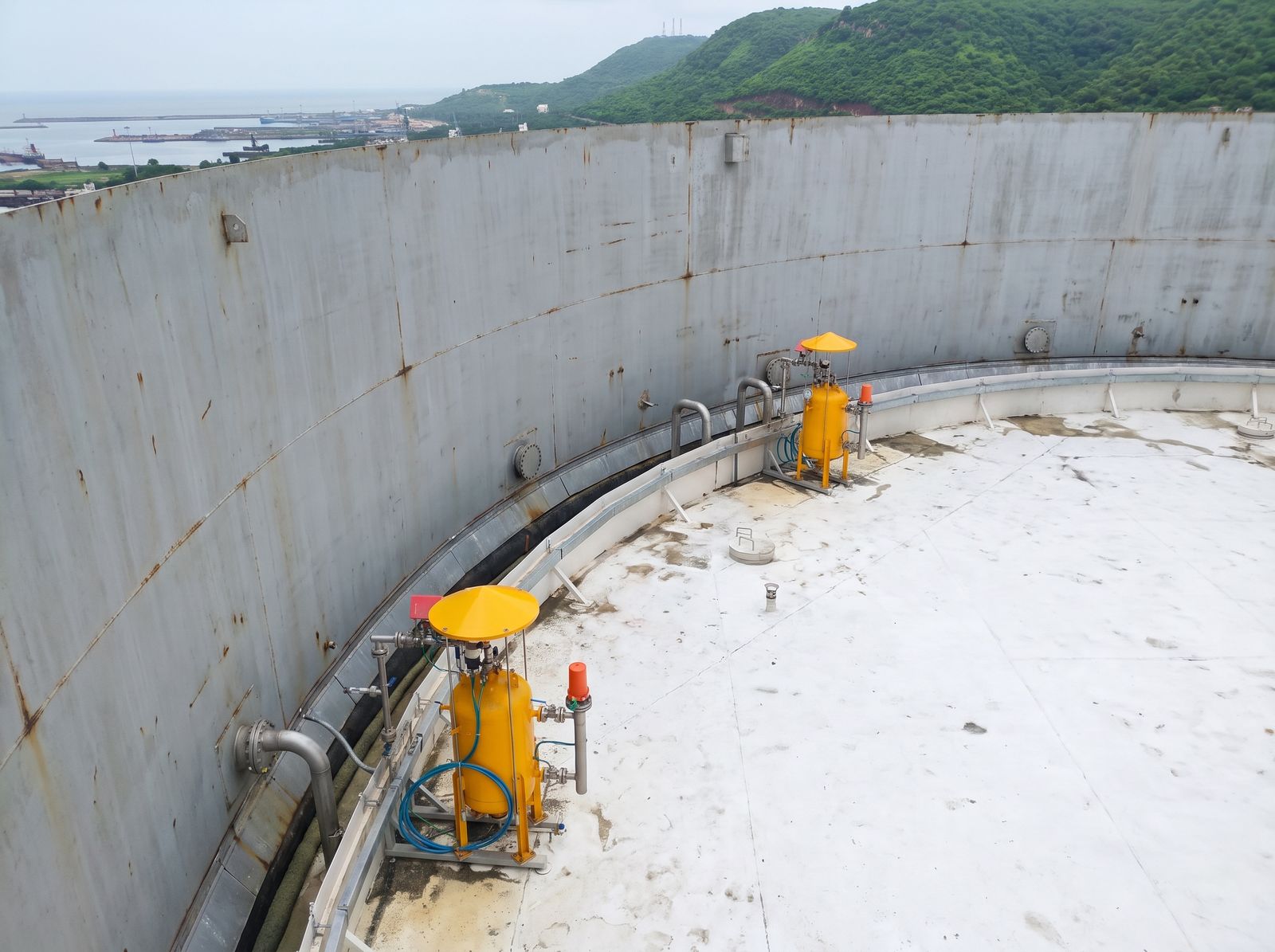
Rim seal fire protection units around the floating roof of a storage tank at a coastal terminal
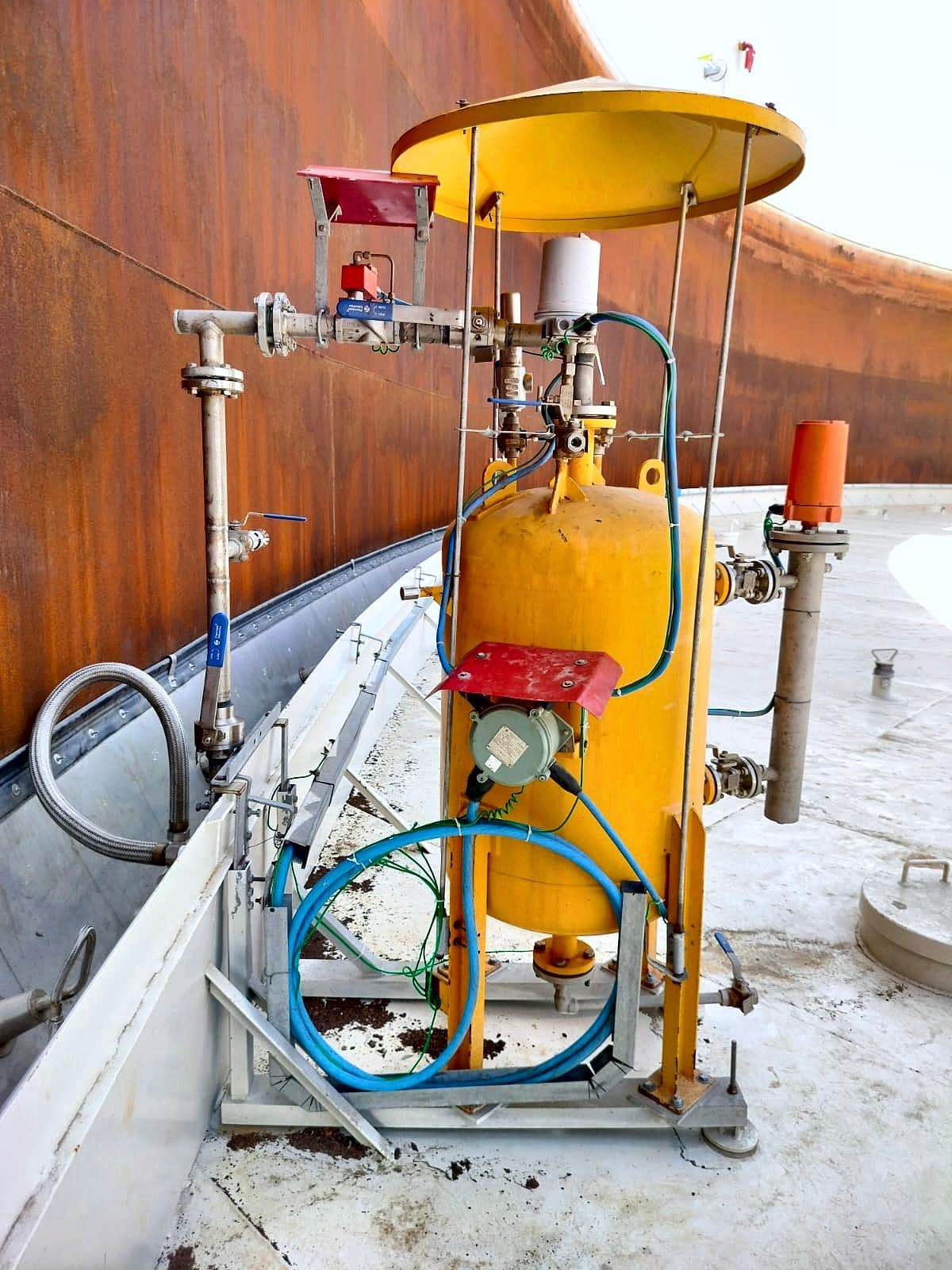
Rim seal fire protection unit installed on a floating roof beside the tank shell
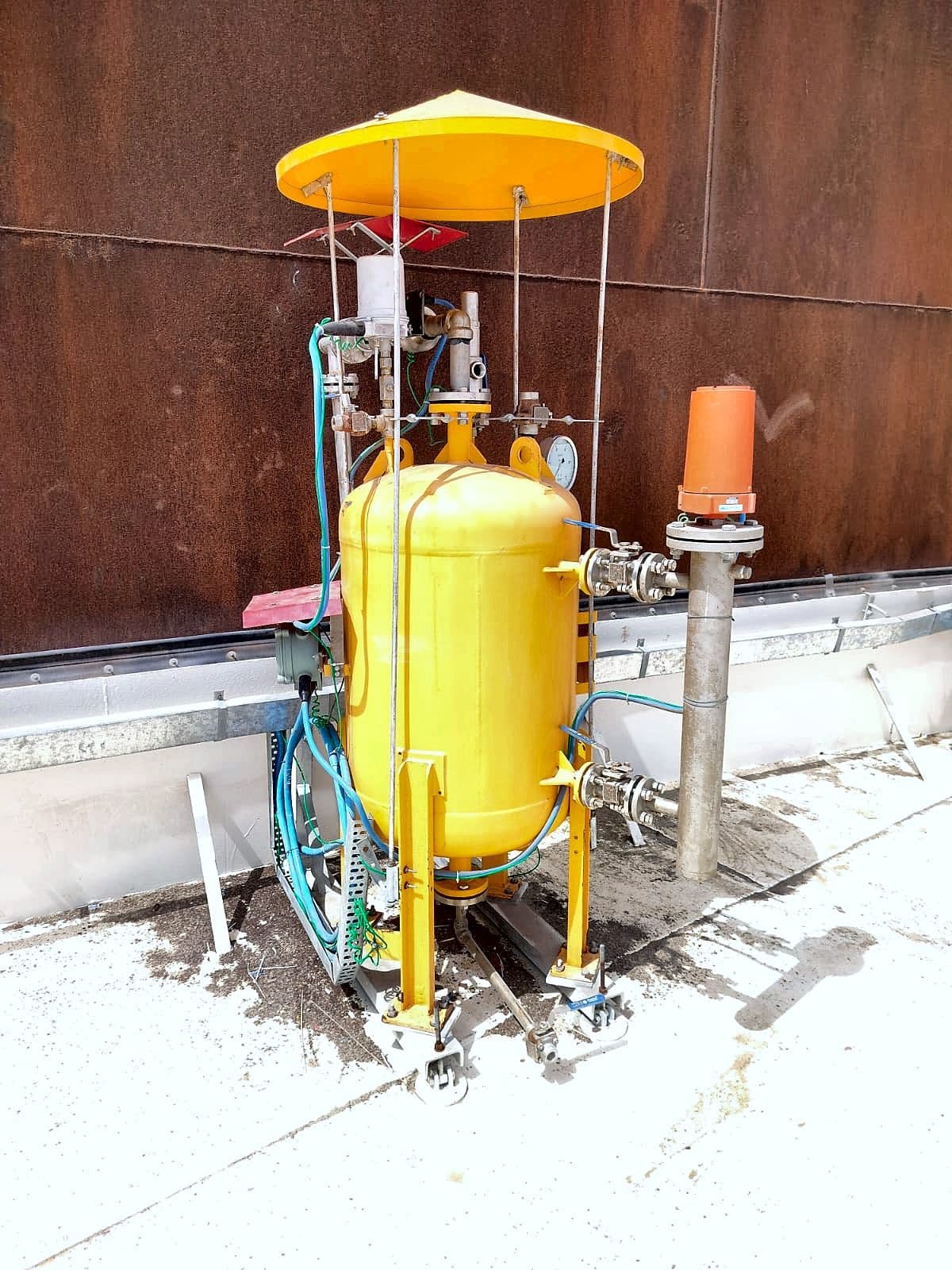
Rim seal fire protection unit installed on a floating roof beside the tank shell
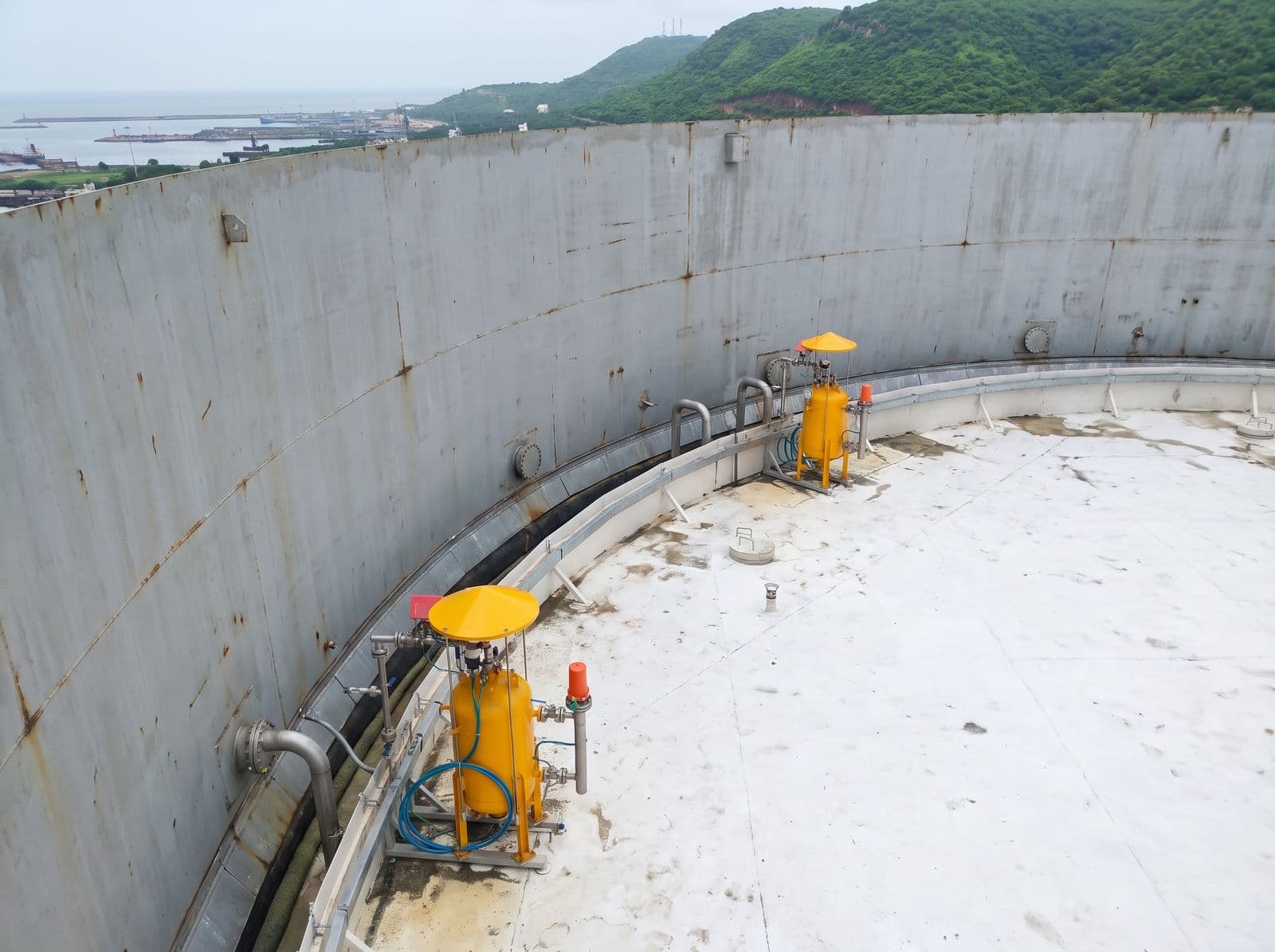
Rim seal fire protection units around the floating roof of a storage tank at a coastal refinery
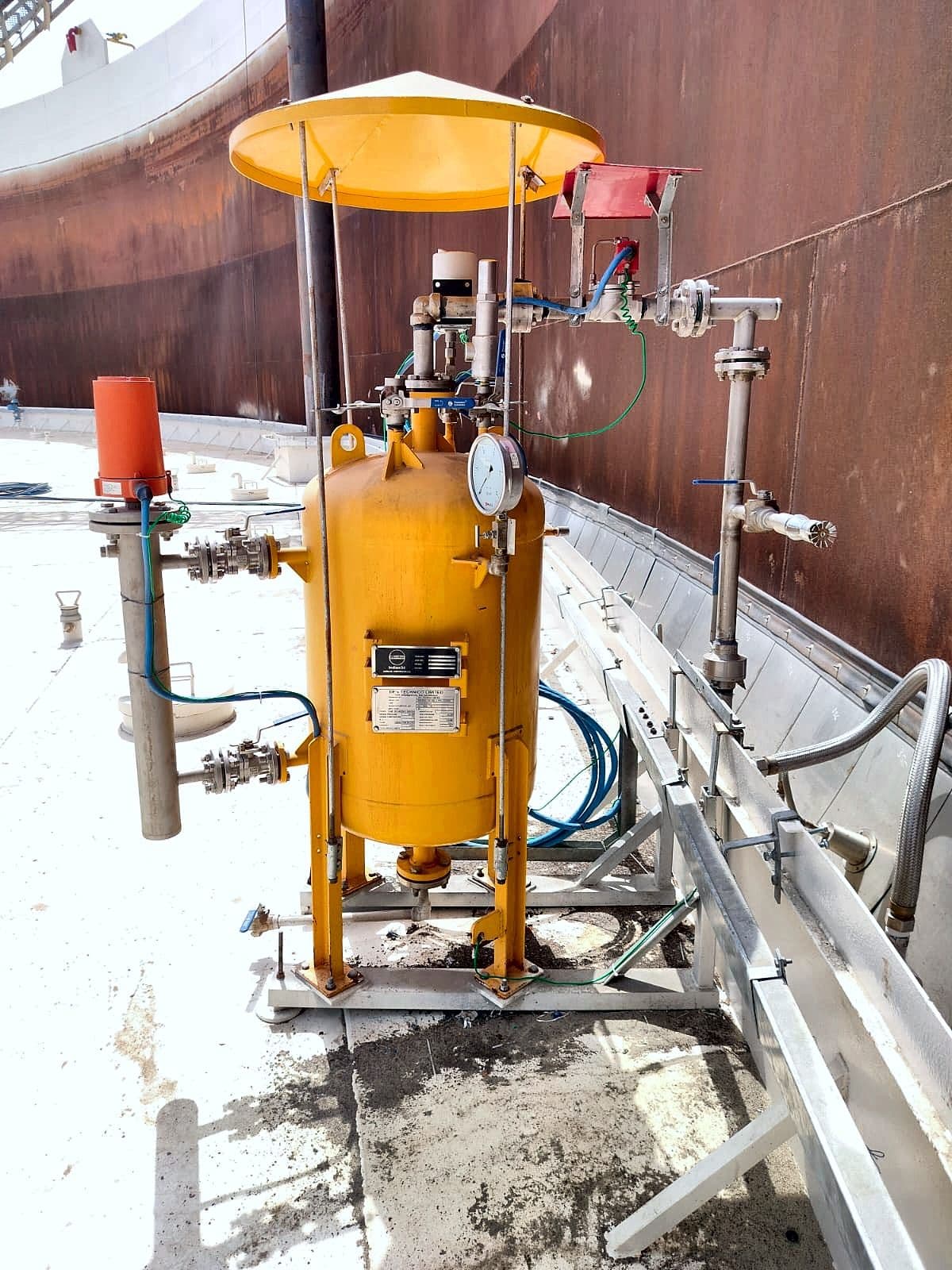
Rim seal fire protection unit installed on a floating roof beside the tank shell


Why De’s Technico
Equipment from our own catalogue
Foam pourers and bladder tanks are made in our own works, so supply and execution answer to one schedule.
9 installations on record
Our project record lists 9 rim seal fire protection installations, from design through commissioning.
Built and tested in our works
Manufactured in two factory units of 48,000 and 30,000 sq ft, with in-house testing before despatch.
One contract, design to handover
A lump-sum turnkey scope on single-window responsibility: design, engineering, supply, installation and commissioning answer to one schedule.
Questions we are asked
Why protect the rim seal specifically?
Most floating-roof tank fires start at the seal, where vapour escapes and a lightning strike can ignite it. Put out there, the fire never becomes a full-surface fire.
What detects a rim seal fire?
Usually linear heat detection cable laid in the rim space, which senses heat along its whole length.
What is the foam dam for?
It holds the foam over the seal area so it does not run off across the roof. NFPA 11 sets a minimum height of 0.3 m.
Can it be installed on a tank in service?
Much of the work can, planned around the tank’s operation and its hot-work permits; some roof work may need the tank emptied, which the survey establishes.
How often should it be tested?
The detection and release sequence is tested routinely, and the foam supply checked at the intervals the code sets; a discharge test is run where the operator permits one.
Related systems
Projects with this system
 Reliance
Automatic rim seal fire protection system — Reliance
Automatic rim seal fire protection system for floating roof tanks for Reliance at four sites. · Patalganga, Gadimoga, JNPT, Vadodara
 HPL
Automatic rim seal fire protection system — HPL
Automatic rim seal fire protection system for floating roof tanks for HPL at Haldia. · Haldia
 BPCL
Automatic rim seal fire protection system — BPCL
Automatic rim seal fire protection system for floating roof tanks for BPCL at Krishnapatnam. · Krishnapatnam
 Bridge & Roof
Automatic rim seal fire protection system — Bridge & Roof
Automatic rim seal fire protection system for floating roof tanks for Bridge & Roof at six sites. · BPCL Bina, Manmad, Irimpanam, Manglya, Piyala, Kandla
 Bridge & Roof
Automatic rim seal fire protection system — Bridge & Roof
Automatic rim seal fire protection system for floating roof tanks for Bridge & Roof at 14 sites. · IOCL Haldia, Paradip, Cochin, Mangalore, Narimannam, Tuticorin, Mourigram, Rajbandh, Siliguri, Barauni, Madurai, Devanganthi, Visakhapatnam, Korukkupet
 Oil India
Automatic rim seal fire protection system — Oil India
Automatic rim seal fire protection system for floating roof tanks for Oil India at Duliajan. · Duliajan
 IOCL
Automatic rim seal fire protection system — IOCL
Automatic rim seal fire protection system for floating roof tanks for IOCL at three sites. · Barauni, AOD, Paradip
 HPCL
Automatic rim seal fire protection system — HPCL
Automatic rim seal fire protection system for floating roof tanks for HPCL at two sites. · Visakhapatnam, Barauni
Considering us for a turnkey scope?
Send the hazard, the code and the site. Our engineers reply with a scheme and a price.