
Flame Detection System
Optical detectors see the radiation from a flame, so they respond in seconds and work in the open, where smoke and heat never reach a detector. Used on process units, gantries and pump and compressor areas, feeding a panel that raises the alarm and releases water spray or foam.
At a glance
- Governing standard
- EN 54-10
- Designed to
- EN 54-10, NFPA 72
How it works

A flame gives off ultraviolet and infrared radiation with a characteristic flicker. Flame detectors look for that signature within a cone of vision, so they respond in seconds and do not wait for smoke or heat to reach them — which, outdoors, they may never do.
Detector types
- UV detectors: very fast, but can be triggered by welding arcs and lightning.
- UV/IR detectors, which alarm only when both bands agree, rejecting most false sources.
- Multi-spectrum IR detectors, which compare several infrared bands for the longest range and the best rejection of sunlight and hot surfaces.
Coverage and voting
Each detector covers a cone that narrows with distance. Layouts are drawn in three dimensions so every part of the hazard is seen, usually by more than one detector. Where a detection releases a deluge or trips a plant, two detectors must agree before the system acts, so a single faulty or blinded detector cannot cause a spurious trip.
Testing and maintenance
- Clean detector windows: oil mist and dust blind them gradually.
- Test each detector in place with a portable test lamp.
- Recheck the field of view whenever new equipment or scaffolding is placed nearby.
| Detector | Speed | False-alarm immunity | Notes |
|---|---|---|---|
| UV | Very fast | Low — welding arcs and lightning can trigger it | Blinded by oil films and smoke |
| UV/IR | Fast | Good — both bands must agree | A common choice for process areas |
| Multi-spectrum IR | Fast | Highest — rejects sunlight and hot surfaces | Longest range |
Scope we take
- 1
Survey and design
The fire types expected, detector type, a coverage study in three dimensions, and the voting logic.
- 2
Supply
Flame detectors, mounting brackets, fire and gas panel, and cabling.
- 3
Installation
Detectors aimed as the coverage study sets, with hazardous-area certification observed.
- 4
Commissioning
Every detector tested with a test lamp, and every release and shutdown action proved.
- 5
Handover
As-built drawings, test records and operating and maintenance manuals, with training for the people who will run the system.
Standards
- EN 54-10Point flame detectors.
- NFPA 72Detection and alarm signalling.
| Parameter | Figure | Source |
|---|---|---|
| Response class 1 / 2 / 3 | Detects the test fire at 25 m / 17 m / 12 m | EN 54-10 |
| Voting for executive action | Two detectors must agree before release or shutdown | Common industry practice |
Service and maintenance
A fire protection system only performs if it is kept in the condition it was commissioned in. Inspection, testing and maintenance to the intervals the code sets — under an annual maintenance contract or as a single visit.
| Task | Interval | Reference |
|---|---|---|
| Clean detector windows | As conditions require, at least six-monthly | Manufacturer |
| Test each detector with a portable test lamp | Six-monthly to annually | Manufacturer / NFPA 72 |
| Recheck the field of view after any change nearby | After alterations | NFPA 72 |
Images · 2
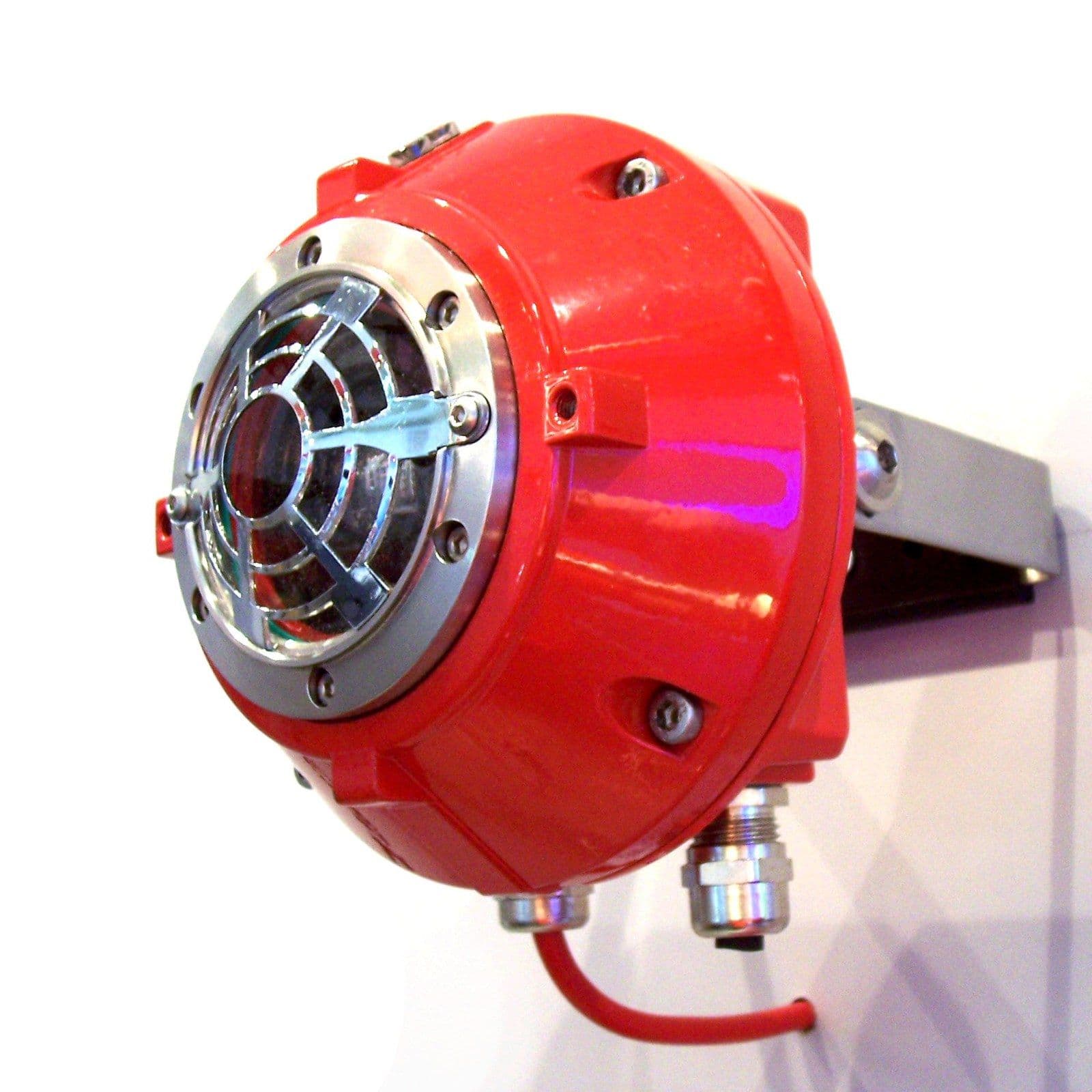
Explosion-proof UV flame detector on a wall bracket
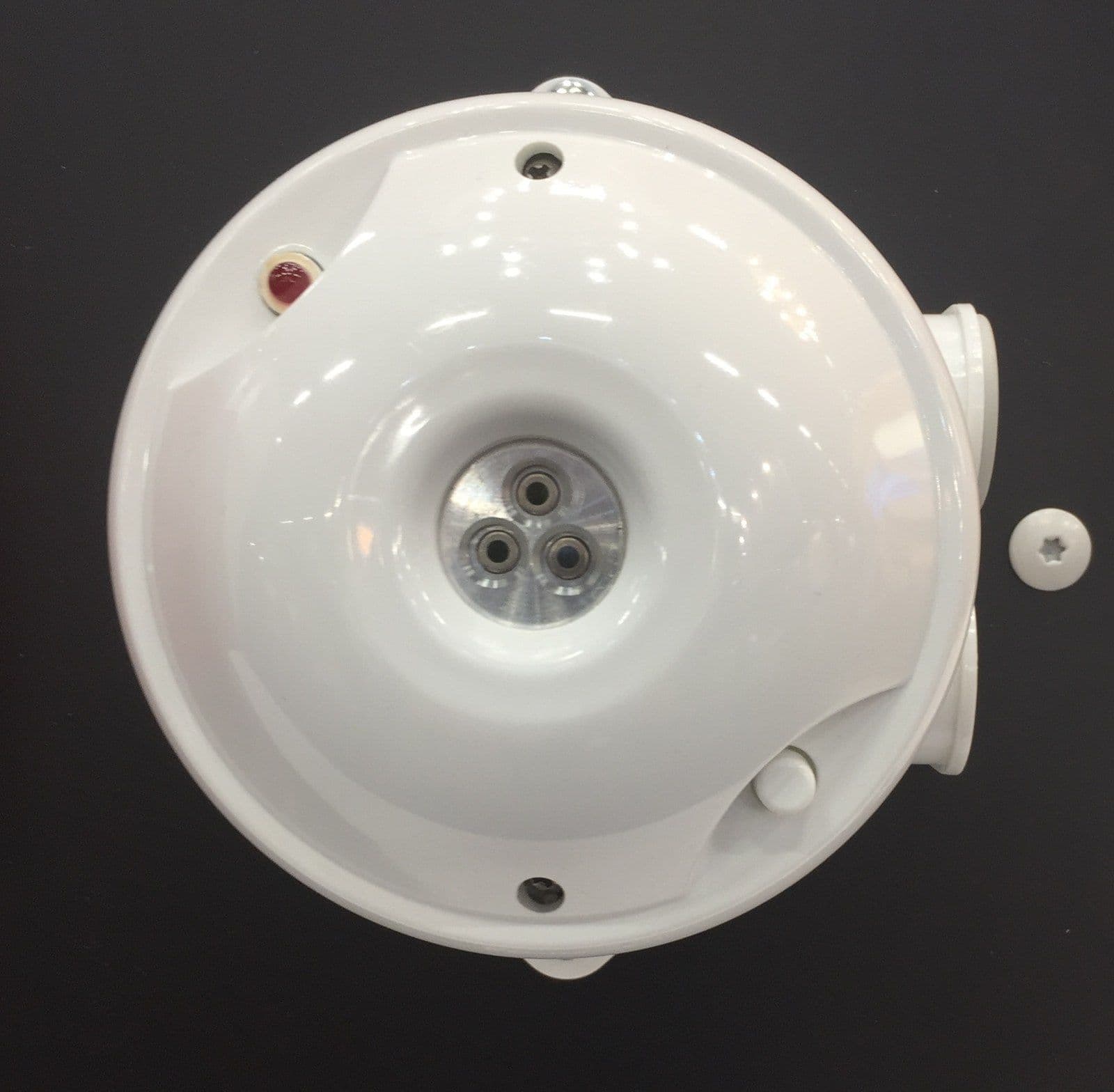
Triple IR flame detector, front view


Why De’s Technico
One contract, design to handover
A lump-sum turnkey scope on single-window responsibility: design, engineering, supply, installation and commissioning answer to one schedule.
In fire protection since 1988
More than 35 years of designing and executing fire detection and protection systems for high-hazard industry.
Detection that releases suppression
Flame detection designed with the deluge and foam systems it releases, under one contract.
Questions we are asked
Why flame detection outdoors rather than smoke?
Outdoors, smoke and heat disperse before reaching a detector. Flame detectors see the radiation from a fire directly, in seconds.
How far can a flame detector see?
It depends on the detector and the fire. EN 54-10 classes detectors by the distance at which they detect a standard test fire: 25 m, 17 m or 12 m.
What causes false alarms?
Welding arcs, lightning, sunlight reflections and hot surfaces. UV/IR and multi-IR detectors compare several bands to reject them.
Why do two detectors have to agree?
So a single faulty or blinded detector cannot release a deluge or trip the plant. Voting is used wherever detection takes executive action.
How are flame detectors maintained?
Keep the windows clean — oil mist and dust blind them gradually — and test each detector in place with a test lamp.
Related systems
Considering us for a turnkey scope?
Send the hazard, the code and the site. Our engineers reply with a scheme and a price.