
Water Mist System
Water broken into very fine droplets, which cool the fire and starve the flame of oxygen while using a small fraction of the water a sprinkler or spray system would — for turbine and generator enclosures, machinery spaces, cable tunnels and electrical rooms, where water damage must be kept low and people may be present.
At a glance
- Governing standard
- NFPA 750
- Designed to
- NFPA 750, EN 14972, FM 5560
How it works
A water mist system discharges water as a very fine spray. Breaking the same water into much smaller droplets gives it far more surface area, so it absorbs heat from the fire quickly; the droplets turn to steam in the flame, and the expanding steam displaces oxygen locally, while the mist also blocks radiant heat from reaching surrounding surfaces.
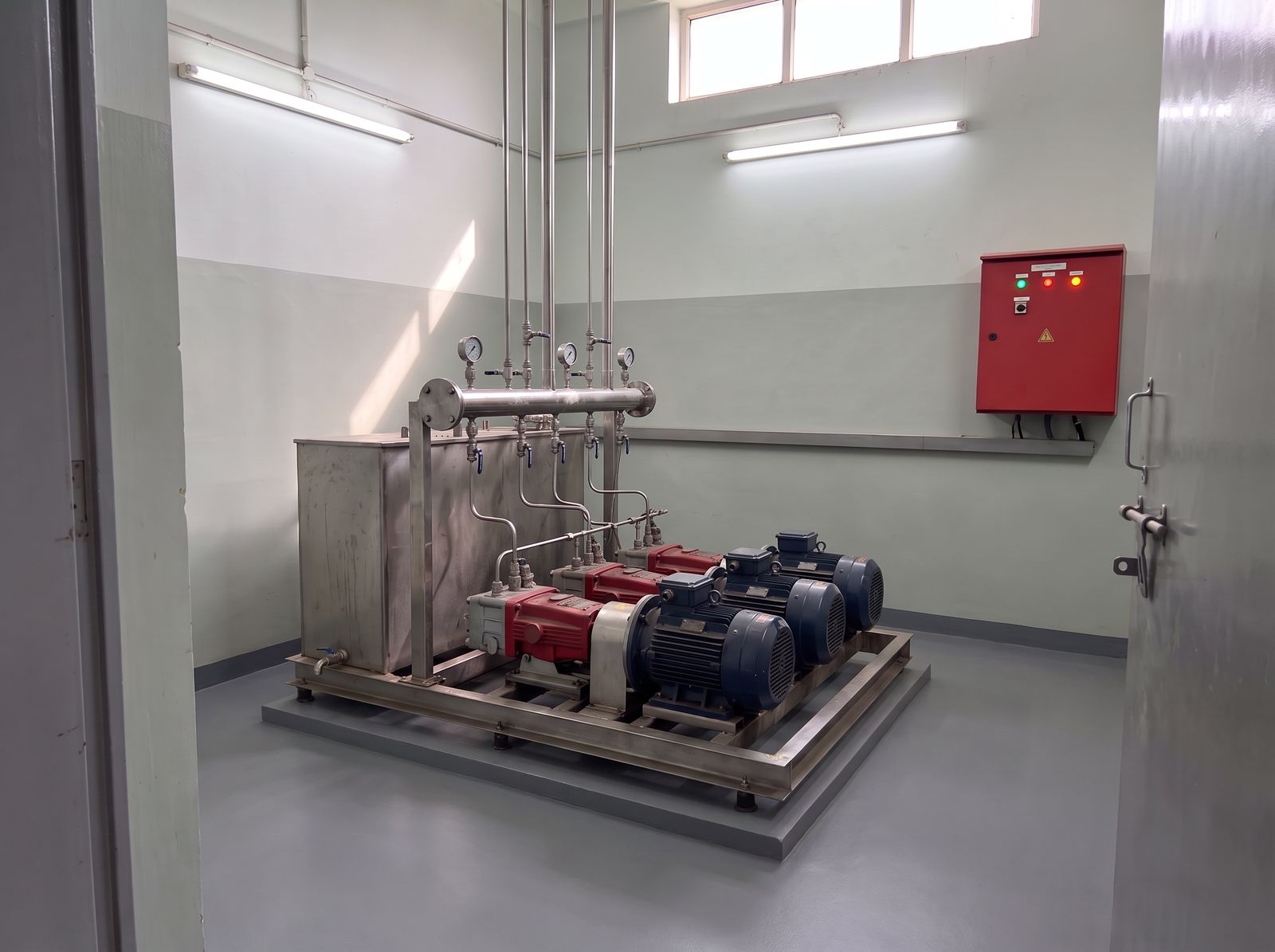
NFPA 750 defines water mist as a spray in which 99% of the water volume is in droplets smaller than 1,000 microns at the minimum design pressure, and groups systems by operating pressure: low (12.1 bar or less), intermediate (12.1 to 34.5 bar) and high (34.5 bar or more). High-pressure systems give the finest droplets and use the least water, from a pump unit or gas-driven cylinders through small-bore stainless steel tubing.
Unlike a sprinkler or spray system, a water mist system is not designed from a generic density. Each system is listed for a hazard after fire testing, and the nozzle type, spacing, pressure and duration come from that listing. Systems can protect a single machine (local application), a whole enclosure (total compartment) or sections of a larger space, with automatic or open nozzles released by detection.
Main components
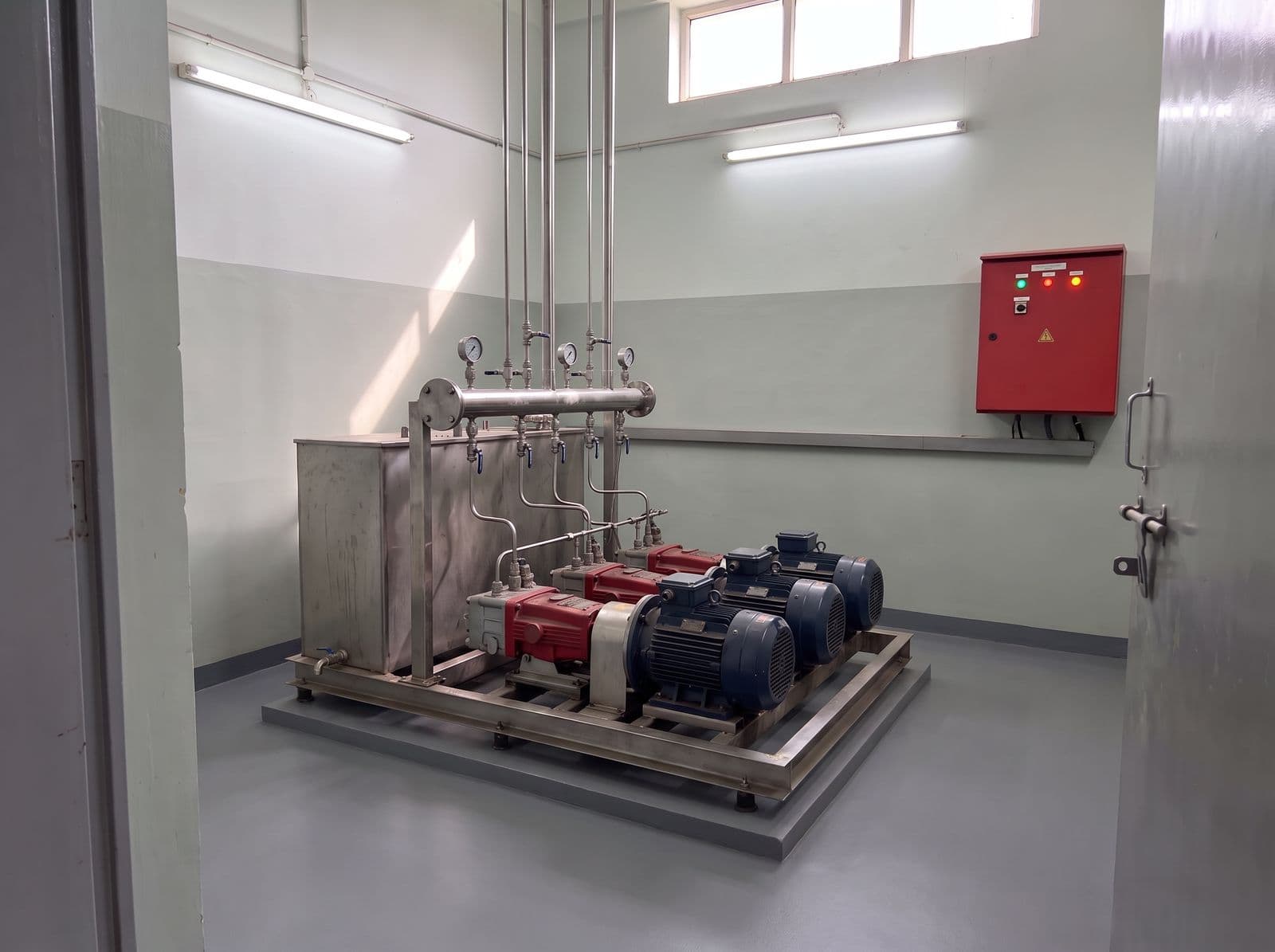
- Pump unit (positive-displacement pumps) or gas-driven water and nitrogen cylinders
- Break tank and filtration for clean water
- Section valves, one for each protected zone
- Stainless steel tubing and high-pressure fittings
- Water mist nozzles, automatic or open
- Detection and release control
Testing and maintenance
- Pump unit, water supply and control panel checked regularly
- Strainers and filters cleaned — the small nozzle orifices depend on clean water
- Nozzles inspected for damage, paint or obstruction
- Section valves operated and the system flushed and flow tested to the listing
| Class | Operating pressure | Typical supply | Character |
|---|---|---|---|
| Low pressure | 12.1 bar or less | Fire pump or a sprinkler-type supply | Larger droplets, more water |
| Intermediate pressure | 12.1 to 34.5 bar | Pump unit | Between the two |
| High pressure | 34.5 bar or more | Positive-displacement pump unit or gas-driven cylinders | Finest droplets, least water, stainless steel tubing |
Scope we take
- 1
Design
Hazard and enclosure assessment, choice of a system listed for that hazard, and nozzle layout, pressure and duration to its listing and test protocol.
- 2
Supply
Pump unit or cylinders, break tank and filtration, section valves, stainless steel tubing and nozzles.
- 3
Installation
Stainless steel tubing installed clean, with high-pressure fittings and supports, and the network flushed before nozzles are fitted.
- 4
Testing and commissioning
Pressure testing, flushing, flow testing of each section and verification of the detection and release interface.
- 5
Handover
As-built drawings, test records and operating and maintenance manuals, with training for the people who will run the system.
Standards
- NFPA 750Standard on water mist fire protection systems.
- EN 14972Fixed firefighting systems — water mist systems.
- FM 5560Approval standard for water mist systems.
| Parameter | Figure | Source |
|---|---|---|
| Water mist | 99% of water volume in droplets under 1,000 µm at minimum design pressure | NFPA 750 — definition |
| Pressure classes | Low ≤ 12.1 bar · intermediate 12.1–34.5 bar · high ≥ 34.5 bar | NFPA 750 |
| Nozzle layout, pressure and duration | From the system listing and the fire test protocol for the hazard | NFPA 750 |
Service and maintenance
A fire protection system only performs if it is kept in the condition it was commissioned in. Inspection, testing and maintenance to the intervals the code sets — under an annual maintenance contract or as a single visit.
| Task | Interval | Reference |
|---|---|---|
| Inspect pump unit, water supply and control panel | Weekly to monthly | NFPA 750 |
| Check and clean strainers and filters | Quarterly | NFPA 750 |
| Inspect nozzles for damage and obstruction | Annually | NFPA 750 |
| Operate section valves, flush and flow test | Annually | NFPA 750 |
Images · 4
High-pressure water mist pump unit with stainless steel manifold in a pump room
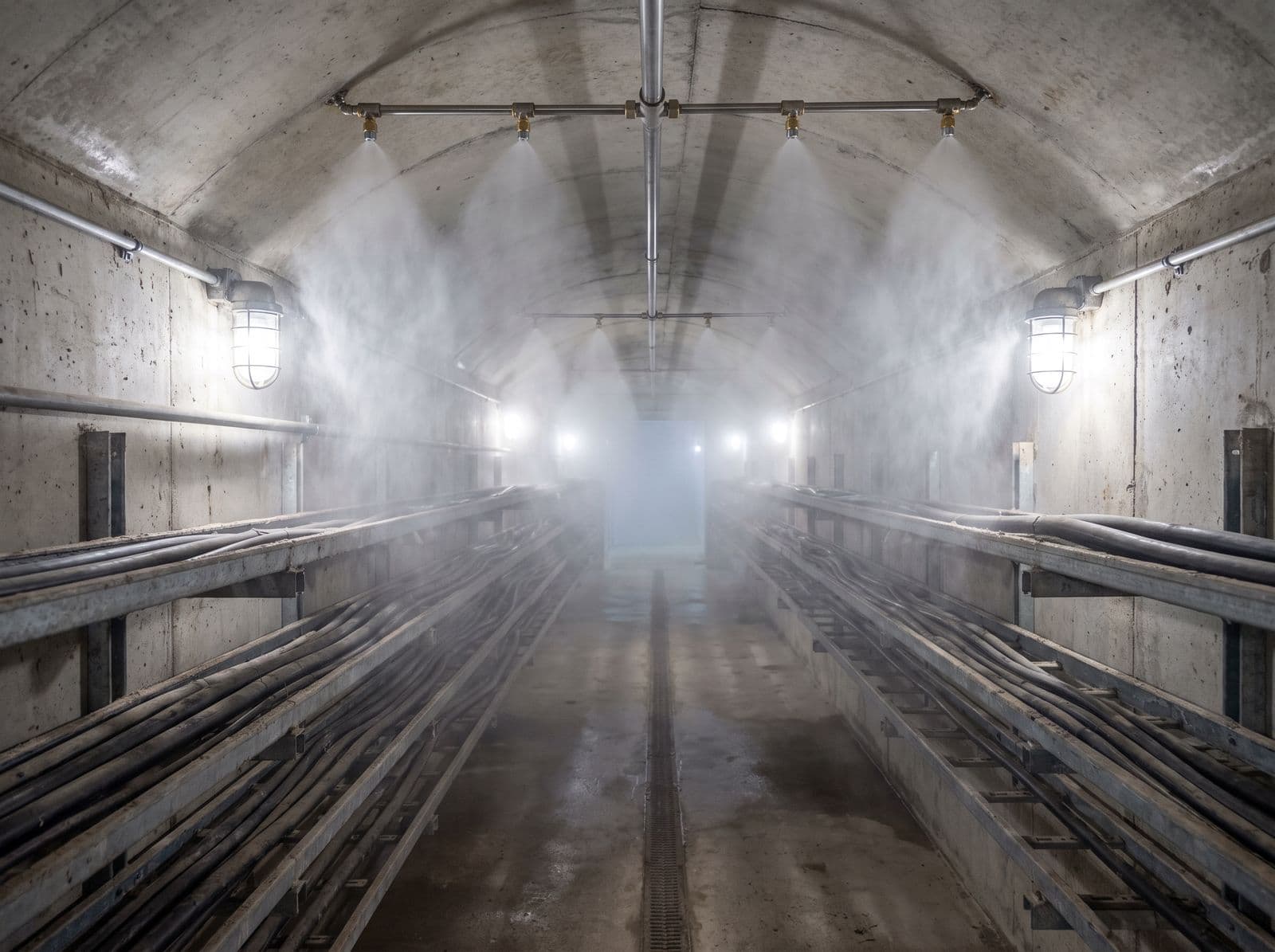
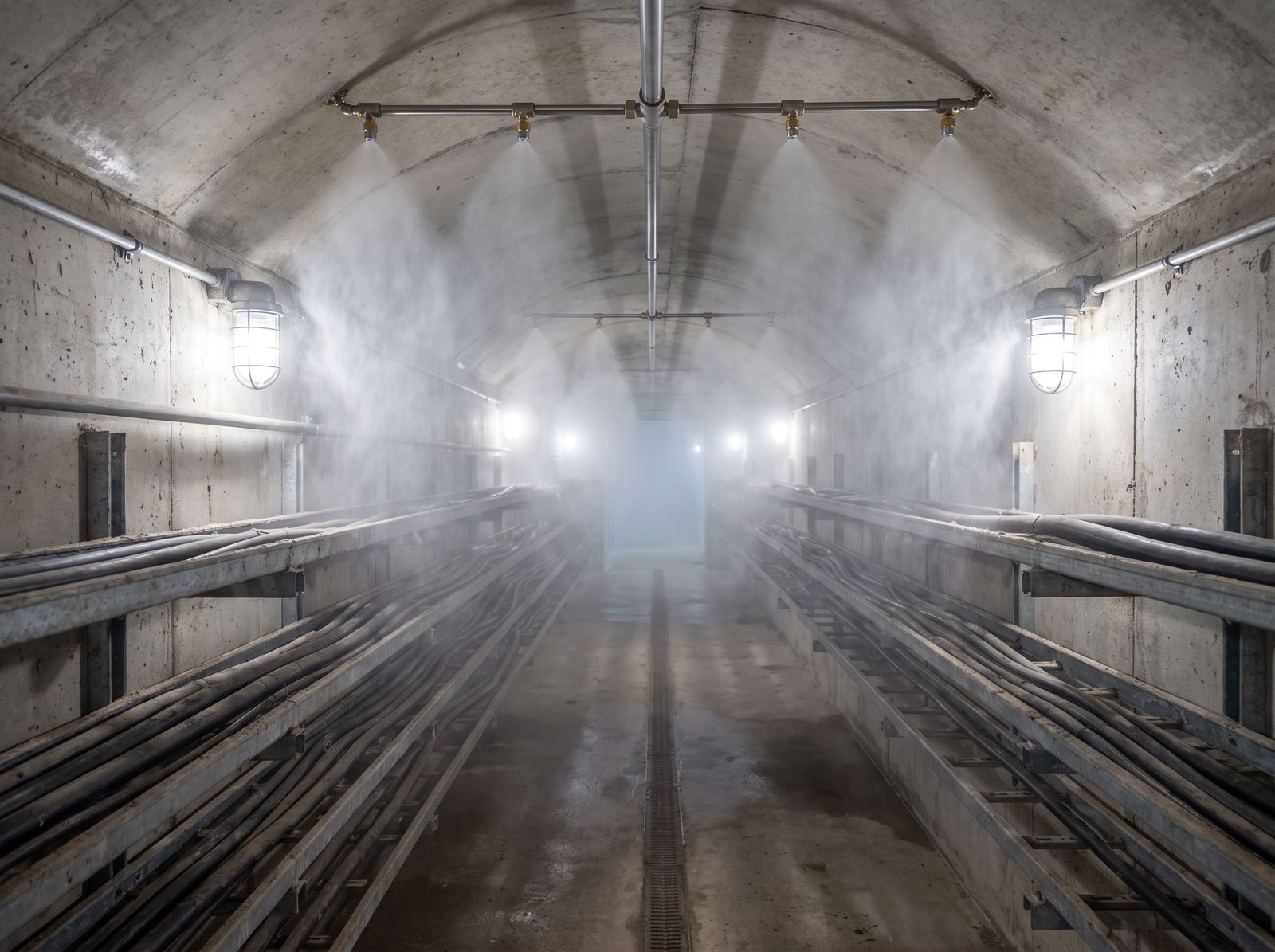
Water mist nozzles discharging fine mist over cable racks in a cable tunnel
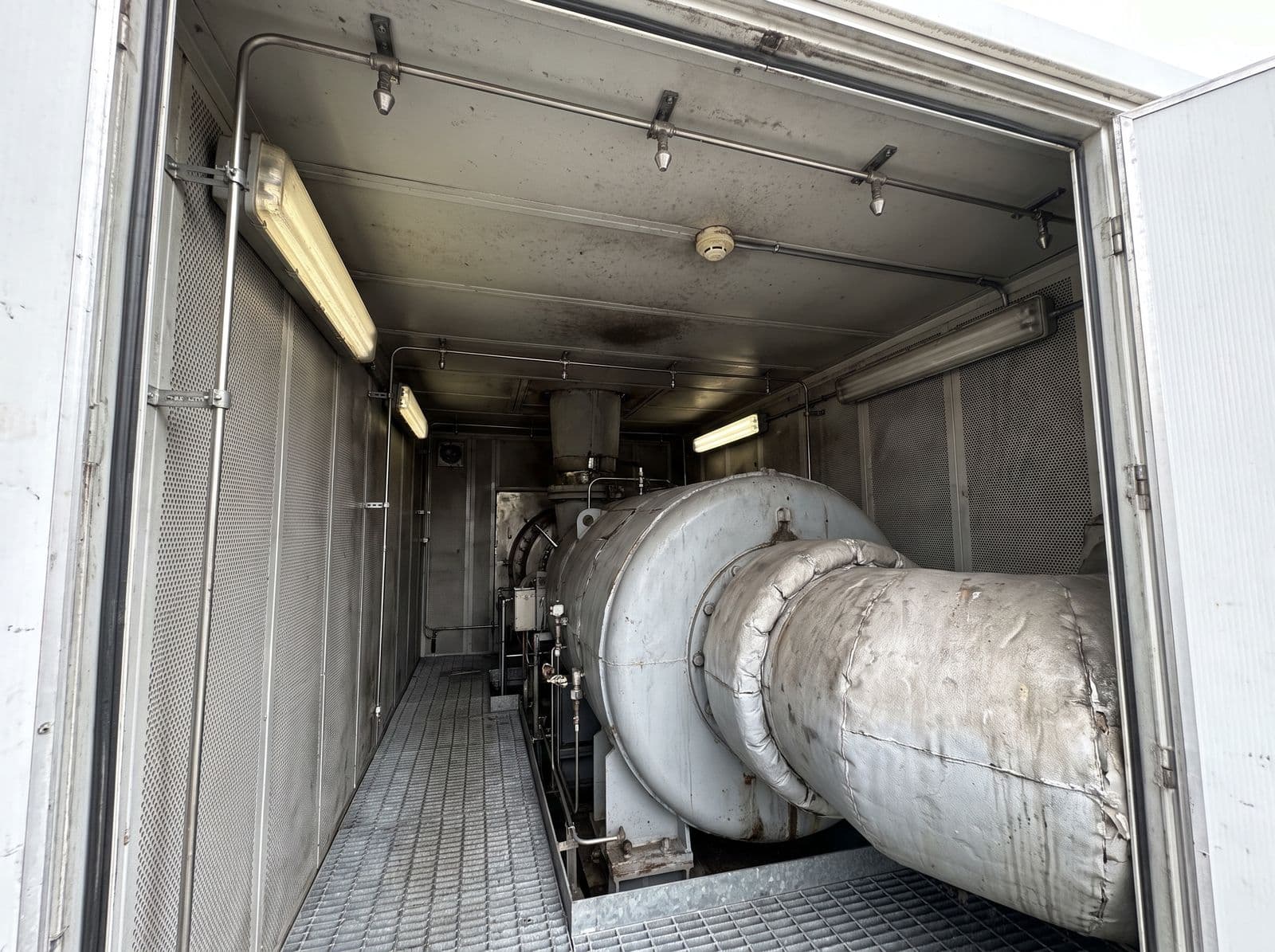
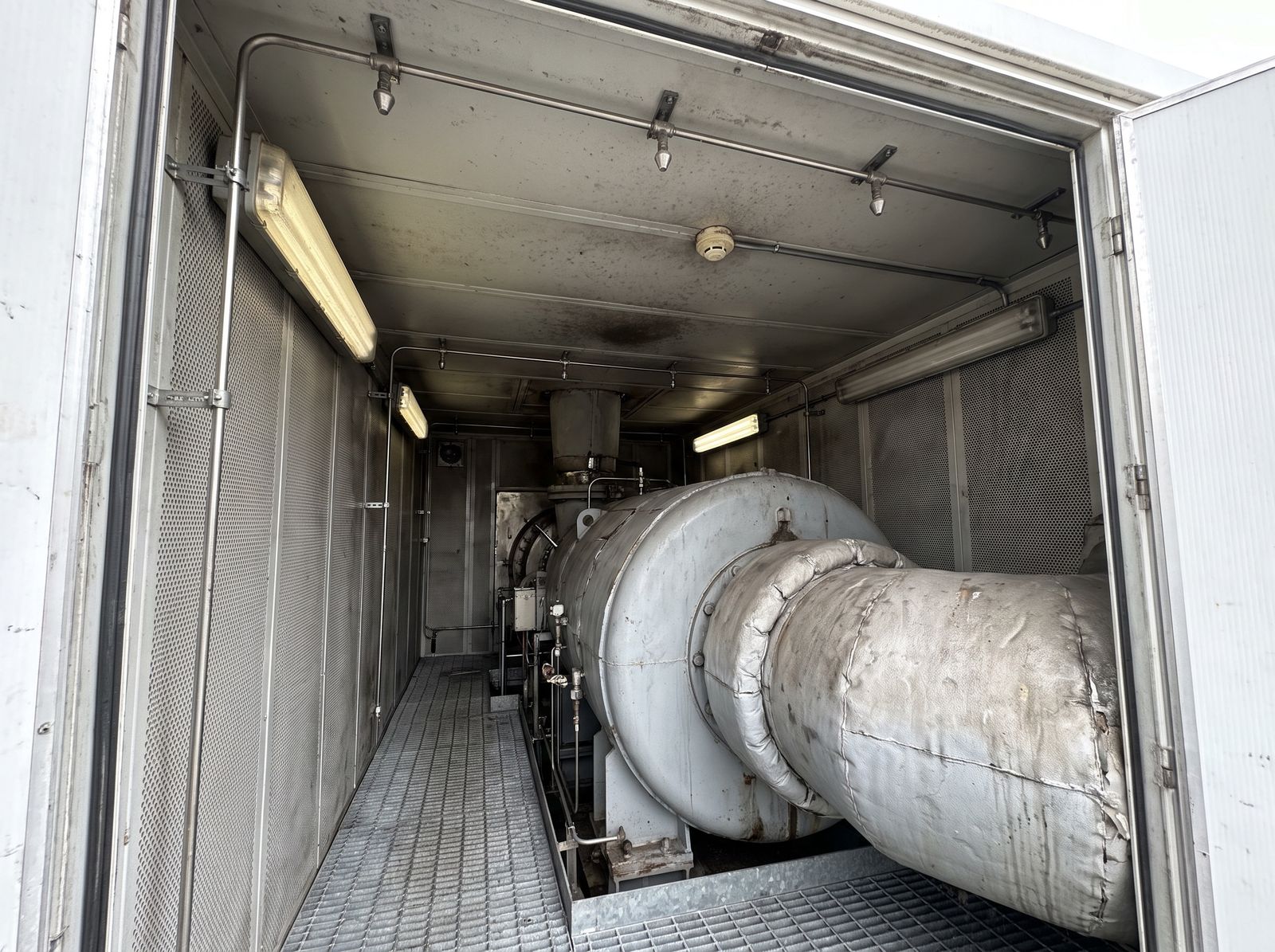
Stainless steel water mist tubing and nozzles inside a gas turbine enclosure
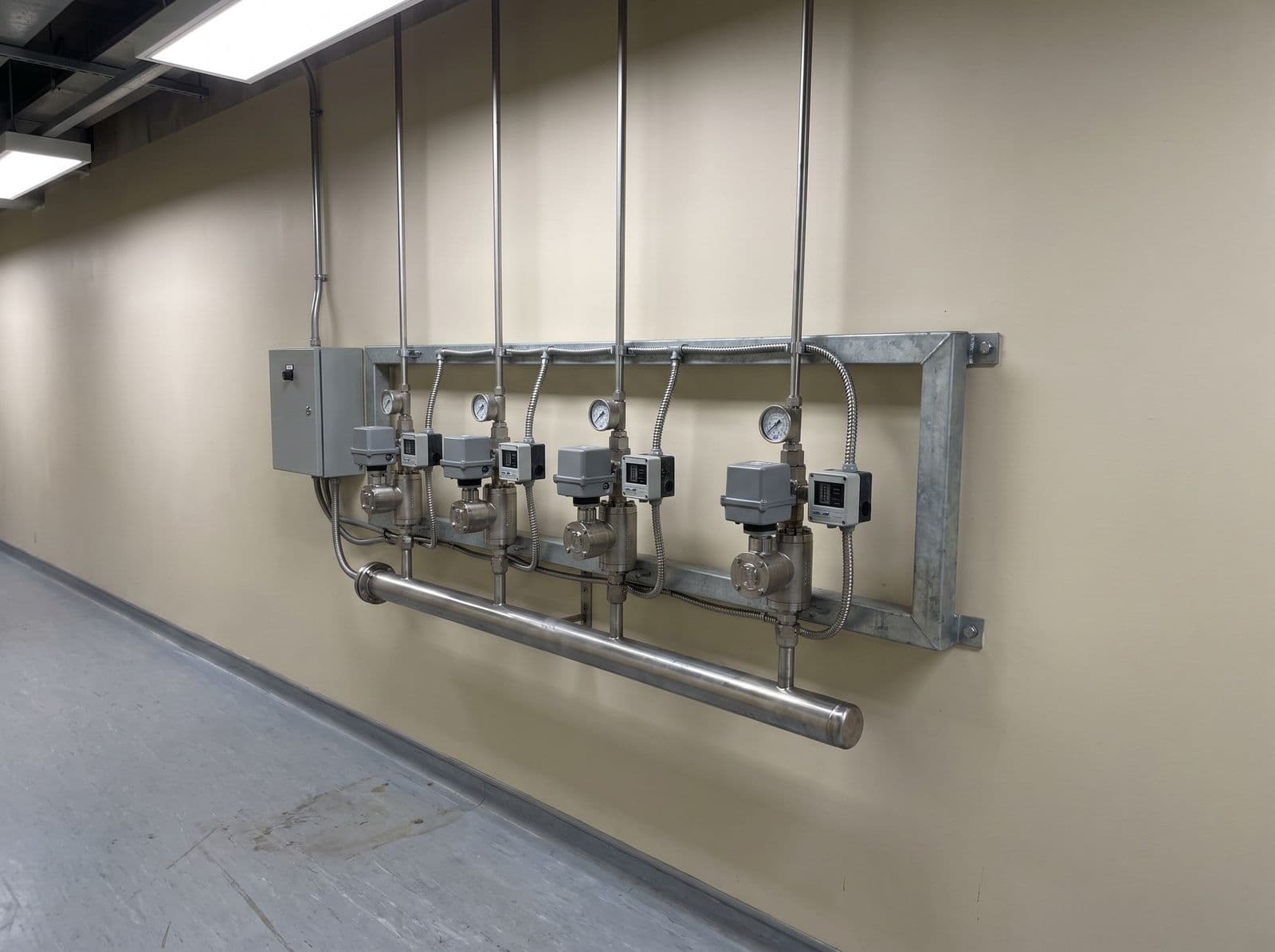
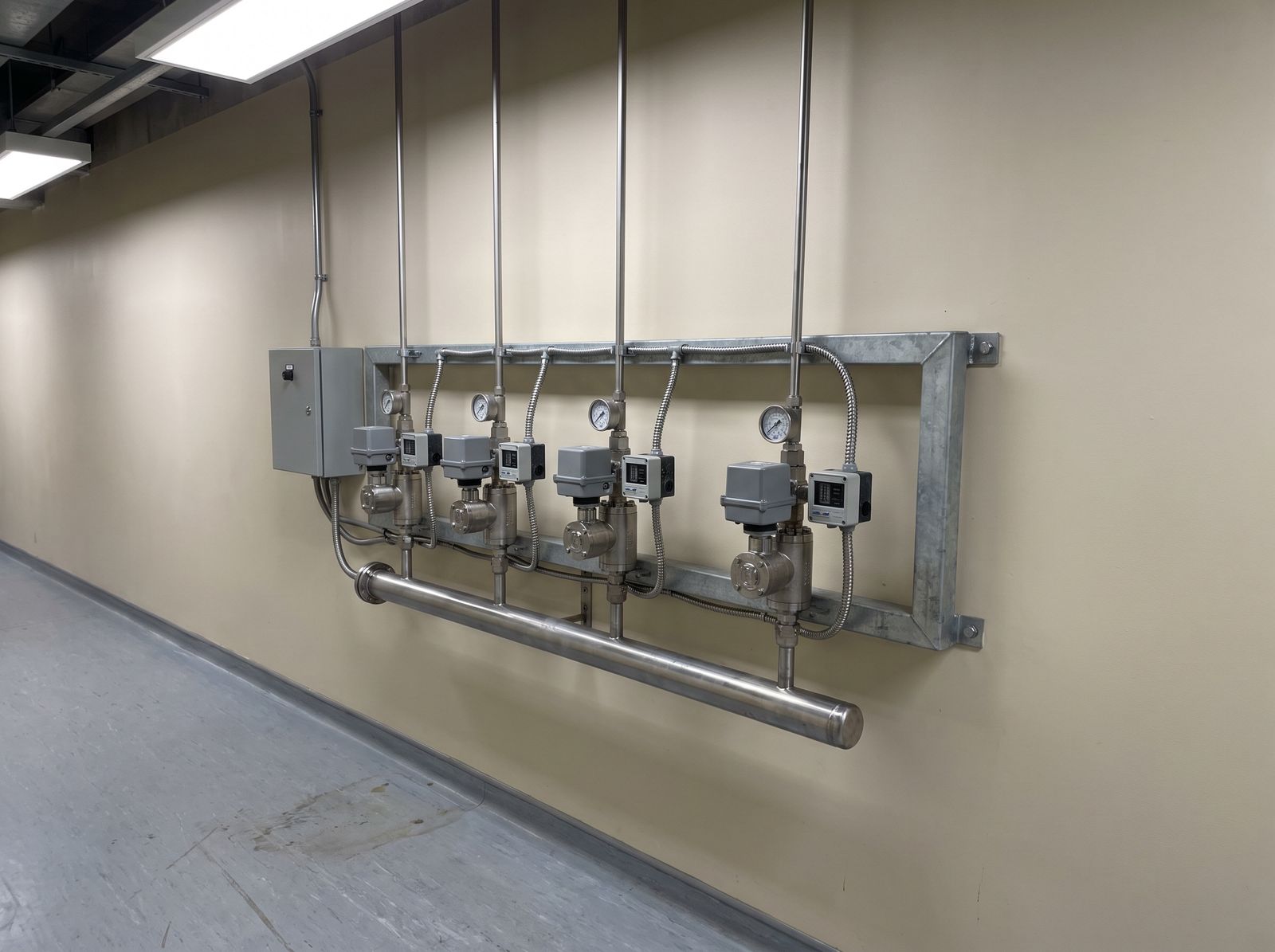
Row of water mist section valves on a stainless steel header
Why De’s Technico
One contract, design to handover
A lump-sum turnkey scope on single-window responsibility: design, engineering, supply, installation and commissioning answer to one schedule.
In fire protection since 1988
More than 35 years of designing and executing fire detection and protection systems for high-hazard industry.
Questions we are asked
How is water mist different from a sprinkler or spray system?
It uses much finer droplets at higher pressure, so it controls or puts out a fire with a fraction of the water. That means far less water damage and smaller pipes, but each system must be designed to its listing for the hazard rather than to a general density.
Is it safe for people in the room?
Yes. The agent is plain water, so unlike a gaseous system it is not a risk to occupants, and the protected space does not have to be evacuated before discharge for the agent itself.
Can it be used on electrical equipment?
Water mist is used on transformers, switchgear rooms and cable tunnels, where its fine droplets conduct far less than a solid stream. Whether a particular system suits energised equipment depends on its listing and test results for that application.
Related systems
Considering us for a turnkey scope?
Send the hazard, the code and the site. Our engineers reply with a scheme and a price.