
CO₂ Fire Suppression System
Carbon dioxide, discharged from a cylinder bank through fixed pipework, floods an enclosure and puts the fire out by lowering the oxygen. For normally unoccupied spaces where water would do harm — turbine enclosures, cable galleries, electrical and machinery rooms.
At a glance
- Governing standard
- NFPA 12
- Designed to
- NFPA 12, IS 15325
How it works

CO₂ extinguishes by displacing oxygen until combustion cannot continue, with some cooling as the gas expands. It is stored as a liquid under pressure in cylinders and discharged through a fixed pipe network to nozzles in the protected space.
A total flooding system fills the whole enclosure to a design concentration and holds it long enough for hot surfaces to cool below re-ignition. A local application system discharges directly onto a specific hazard, such as a dip tank or a printing press, without enclosing it.
Safety comes first
At extinguishing concentrations CO₂ is lethal, which is why it is used in spaces people do not normally occupy. A system protecting any space that people can enter carries a pre-discharge alarm, a time delay long enough to leave, a lock-off valve for maintenance, and warning signs at every entrance.
Main components
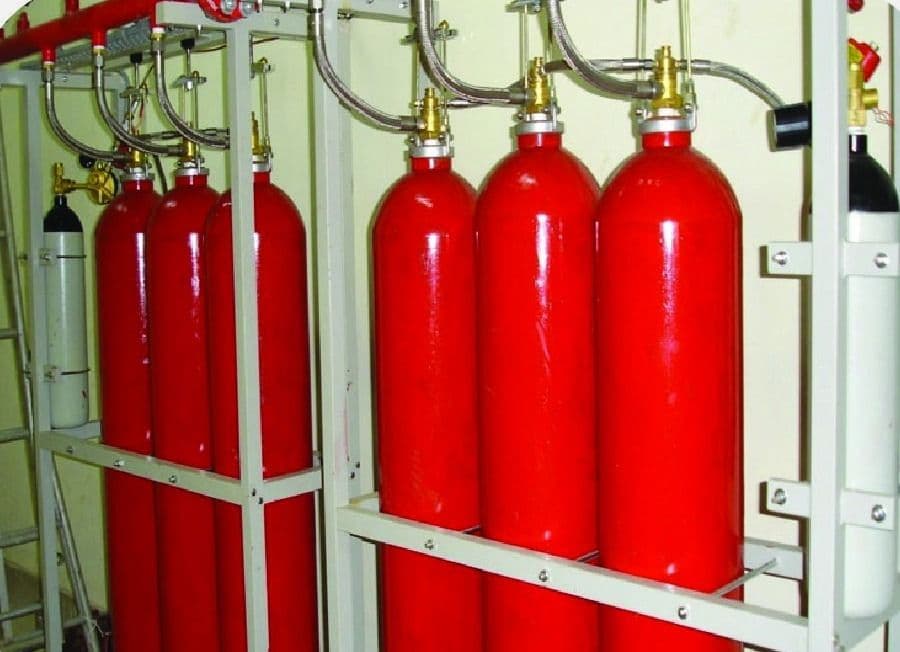
- CO₂ cylinders with discharge valves, and pilot cylinders that open the bank.
- Manifold, selector valves where one bank serves several spaces, and the pipe network.
- Discharge nozzles sized to deliver the agent in the design time.
- Detection and a release panel with time delay, abort and manual release.
- Pre-discharge alarms, lock-off valve and warning signs.
Testing and maintenance
- Weigh the cylinders at the intervals the code sets, and refill any that have lost more than the allowed amount.
- Test the detection, time delay, alarms and release sequence without discharging agent.
- Keep the enclosure sealed: every new cable or pipe penetration is a leak that lowers the concentration.
- Hydrostatically test cylinders when their statutory test falls due.
| Type | How it works | Suits |
|---|---|---|
| Total flooding | Fills the whole enclosure to a design concentration | Unoccupied enclosed spaces: turbine enclosures, cable galleries, electrical rooms |
| Local application | Discharges directly onto the hazard without enclosing it | Dip tanks, printing presses, open machinery |
| High-pressure storage | CO₂ in cylinders at ambient temperature | Most systems |
| Low-pressure storage | Refrigerated bulk tank at about −18 °C | Very large quantities |
Scope we take
- 1
Hazard survey
The space, its openings and ventilation, what is in it, and whether people can enter it.
- 2
Design
Total flooding or local application, design concentration and hold time, agent quantity, nozzle layout and flow calculation.
- 3
Supply
Cylinders and valves, pilot cylinders, manifold, selector valves, nozzles, and the detection and release panel.
- 4
Installation
Cylinder bank, pipe network, nozzles, detection, alarms, lock-off valve and warning signs.
- 5
Commissioning
Detection, time delay, alarms, abort and release sequence tested, and the enclosure checked for leakage.
- 6
Handover
As-built drawings, test records and operating and maintenance manuals, with training for the people who will run the system.
Standards
- NFPA 12Carbon dioxide extinguishing systems.
- IS 15325Design and installation of fixed automatic high and low pressure CO₂ fire extinguishing systems.
| Parameter | Figure | Source |
|---|---|---|
| Minimum design concentration, surface fires | 34% | NFPA 12 |
| Surface fires, time to design concentration | Within 1 minute | NFPA 12 |
| Deep-seated fires, time to concentration | 30% within 2 minutes; design concentration within 7 minutes | NFPA 12 |
| Deep-seated fires, dry electrical hazards | 50% design concentration | NFPA 12 |
Service and maintenance
A fire protection system only performs if it is kept in the condition it was commissioned in. Inspection, testing and maintenance to the intervals the code sets — under an annual maintenance contract or as a single visit.
| Task | Interval | Reference |
|---|---|---|
| Weigh cylinders; refill any that have lost more than 10% | Six-monthly | NFPA 12 |
| Test detection, time delay, alarms and release without discharge | Annually | NFPA 12 |
| Check lock-off valve, warning signs and enclosure openings | Annually | NFPA 12 |
| Hydrostatic retest of cylinders | When the statutory test falls due | Gas cylinder rules |
Where it applies
Image
Bank of CO₂ cylinders with flexible discharge hoses and pilot cylinders

Why De’s Technico
2 installations on record
Our project record lists 2 CO₂ system installations, from design through commissioning.
One contract, design to handover
A lump-sum turnkey scope on single-window responsibility: design, engineering, supply, installation and commissioning answer to one schedule.
In fire protection since 1988
More than 35 years of designing and executing fire detection and protection systems for high-hazard industry.
Questions we are asked
Is CO₂ safe to use where people work?
Not at extinguishing concentrations, which are lethal. CO₂ is for normally unoccupied spaces, with pre-discharge alarms, a time delay, a lock-off valve for maintenance and warning signs at every entrance.
What concentration is needed?
At least 34% for surface fires under NFPA 12, and more for deep-seated fires — 50% for dry electrical hazards — held long enough for hot surfaces to cool.
Why CO₂ rather than a clean agent?
CO₂ is inexpensive, leaves no residue and penetrates deep-seated fires well. Clean agents are chosen instead where people may be present.
How is the room kept safe during maintenance?
A lock-off valve isolates the discharge so the system cannot release while people are inside, and is reopened when they leave.
How often are cylinders checked?
Weighed every six months under NFPA 12, and refilled if they have lost more than 10% of their charge.
Related systems
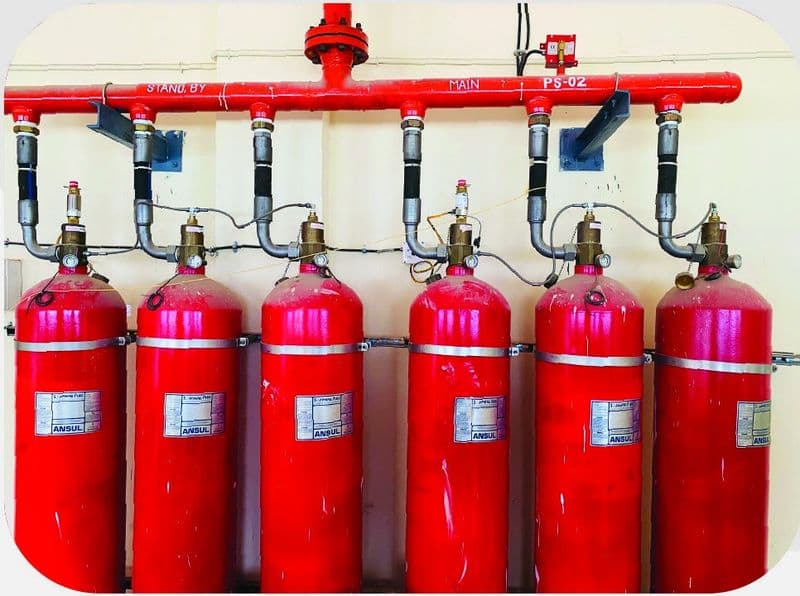 Clean Agent Fire SuppressionGaseous suppression for control rooms, server rooms and cable galleries.
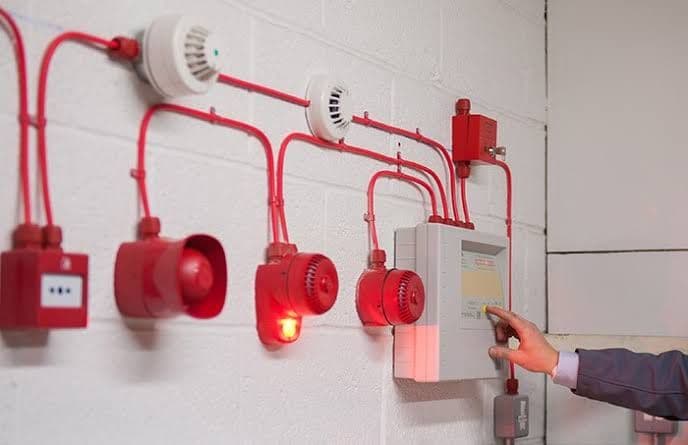 Fire Detection & Alarm SystemDetection and alarm, supplied and integrated under the same contract as the suppression system.
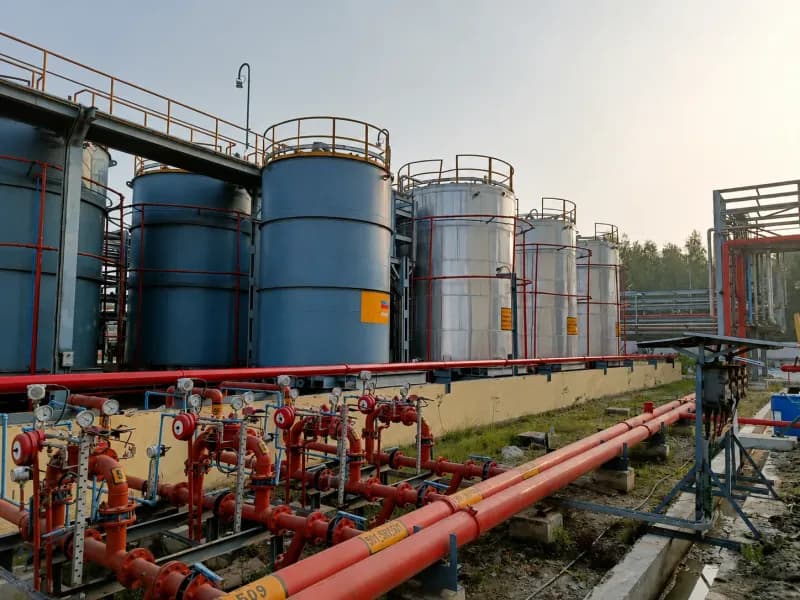 Fire Water Spray SystemMedium and high velocity spray for vessels, transformers and process equipment.
Considering us for a turnkey scope?
Send the hazard, the code and the site. Our engineers reply with a scheme and a price.